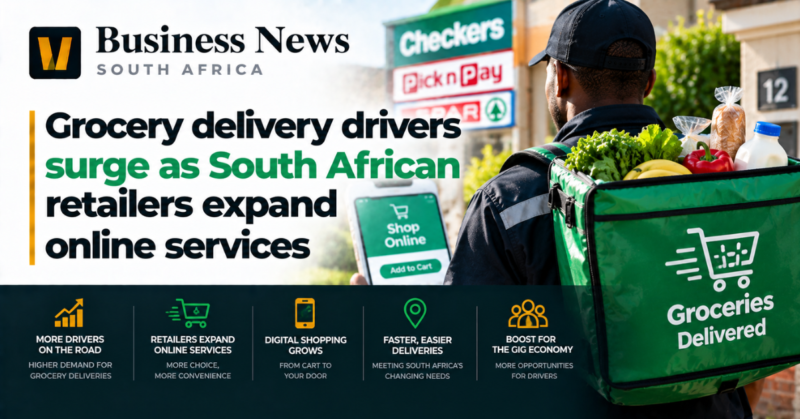
When the doors of a Woolworths store in Sandton opened this morning, the usual rush of shoppers was punctuated by a steady stream of delivery vans pulling up to the curb. That scene reflects a shift that the retailer highlighted in its latest financial release: annual profit rose 5.3% thanks largely to stronger online sales.
Profit, the amount left after all costs have been deducted from revenue, is the bottom-line figure investors watch most closely. Woolworths said the increase came from a higher volume of e-commerce orders, which helped offset the pressure on physical stores caused by load-shedding and lingering consumer caution.
The company did not disclose the exact size of its online revenue, but the 5.3% rise is a clear indication that the digital channel is now a material part of its earnings mix. For a retailer that operates more than 400 stores across South Africa, that shift matters not only to shareholders but also to the thousands of small producers, logistics firms and technology providers that sit in its supply chain.
Small-business owners who supply Woolworths, from local food manufacturers to boutique clothing designers, often rely on the retailer’s online platform to reach a wider audience. A stronger e-commerce performance can translate into larger orders, more predictable demand and the chance to showcase products to consumers who might never step into a physical store.
Woolworths’ statement also noted that the retailer continued to invest in its digital infrastructure, including a new fulfilment centre in the Western Cape. Fulfilment centres are large warehouses where online orders are packed and dispatched, a model that has become standard for retailers seeking to speed up delivery times.
Industry observers have pointed out that Woolworths is not alone in seeing online sales lift earnings. The broader South African retail sector has been grappling with a shift to digital channels for several years, a trend accelerated by the pandemic and by the need to offer contact-free shopping options. While the exact growth rate of e-commerce in the country varies by source, most analysts agree that online sales now account for a double-digit share of total retail turnover.
For SMEs, the message is clear: a retailer that can move products quickly and reliably online creates a more stable market for its suppliers. However, the upside comes with new pressures. Small producers must meet tighter delivery schedules and often need to adapt packaging and inventory practices to suit a fulfilment-centre model.
Woolworths also highlighted that its cost-control measures, such as tighter inventory management and renegotiated supplier contracts, helped protect margins. Margins, the difference between revenue and cost expressed as a percentage of sales, are a key indicator of profitability. By keeping costs in check while growing online sales, the retailer managed to improve its overall earnings without resorting to price hikes.
From a broader economic perspective, Woolworths’ performance offers a glimpse into how large retailers can act as a conduit for small-business growth. When a major chain expands its digital footprint, the ripple effect can reach farms, factories and service providers that would otherwise struggle to access a national customer base.
Nevertheless, the retailer’s reliance on online sales also underscores the importance of reliable electricity and logistics networks. Load-shedding episodes and road congestion remain challenges that can disrupt delivery schedules, a risk that both Woolworths and its suppliers must manage.
Looking ahead, Woolworths said it will continue to refine its omnichannel strategy, the integration of physical stores, online platforms and mobile apps, to give shoppers a seamless experience. For small businesses, staying aligned with that strategy could mean more opportunities to grow, provided they can meet the operational standards demanded by a fast-moving digital supply chain.
In short, the 5.3% profit rise is more than a headline number. It signals a retail environment where digital sales are becoming a core driver of earnings, and where the health of that channel can have real consequences for the thousands of small enterprises that depend on large retailers for market access.