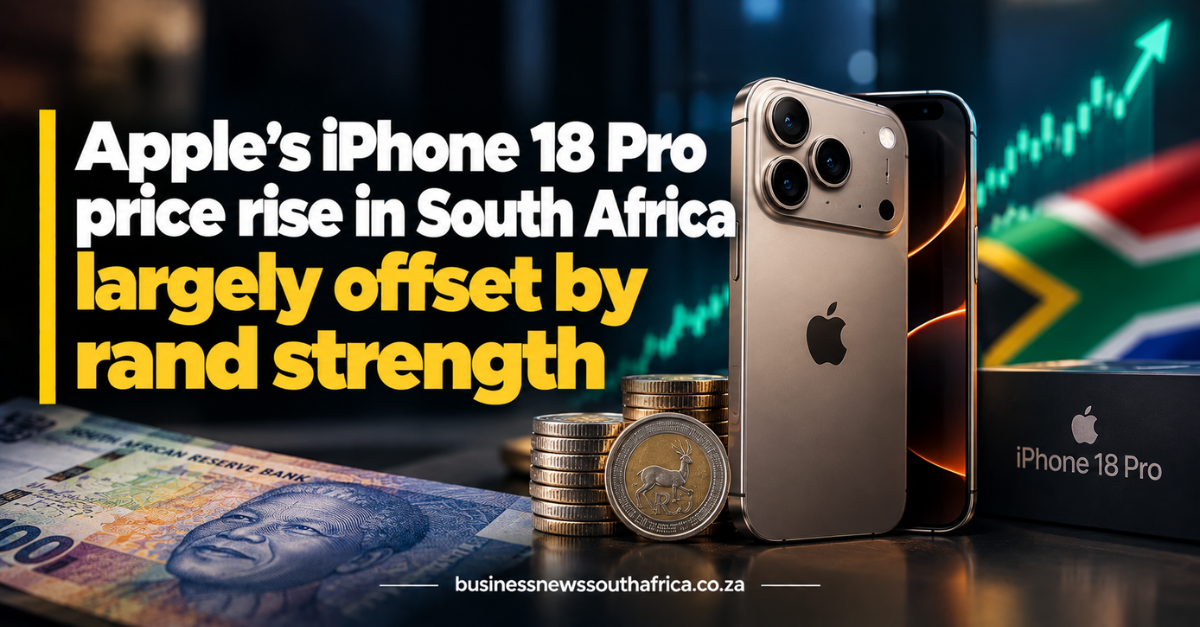
For South African retailers and the small businesses that depend on Apple devices for sales or service, the headline number, a modest 0.7 % increase for the entry-level iPhone 18 Pro, tells only part of the story. The real question is whether the price move will affect buying decisions, especially when the local rand has been unusually strong against the US dollar.
According to TechCentral, iStore’s pre-order pricing shows the 256 GB iPhone 18 Pro starting at R28 799, up R200 from the iPhone 17 Pro launch price a year ago. The Pro Max 256 GB starts at R31 299, exactly the same as its predecessor in September 2025. At higher storage levels the picture changes: the 512 GB Pro is R33 599, 1.2 % lower than last year, while the 1 TB version is R43 299, up 9.6 %. The 2 TB Pro Max now costs R59 999, a 14.3 % rise in cash terms.
Why the price shift matters
Apple raised its US starting price for the Pro line by roughly 9 %, from US$1 099 to $1 199 for the Pro and from $1 199 to $1 299 for the Pro Max. Over the same period the rand strengthened by about 7.7 %, moving from roughly R17.37 per dollar at the iPhone 17 launch to near R16.04 in early September. The two movements almost cancel each other, which explains why the entry-level models appear almost flat in local currency.
However, the stronger rand does not fully neutralise higher component costs. Apple’s new A20 Pro chip is built on a 2 nm process, and memory and storage components have risen in price across the industry. Apple has therefore lifted the price of larger storage tiers while keeping the base price steady. For a small business that sells iPhones, the higher-end models become noticeably more expensive for customers, potentially shifting demand toward lower-capacity versions.
Retailers iStore and Digicape both published the same pre-order figures, confirming the pricing data. Apple itself has not released an official statement on the pricing rationale, so the explanation of exchange-rate effects and component cost pressures remains a claim by analysts and the media.
Another factor for South African buyers is the absence of a standard iPhone 18 model at the September launch. Apple is expected to introduce a base model and an 18e in the first half of 2027, leaving this year’s lineup limited to the Pro range and the foldable iPhone Duo, whose local price is still unknown. This limited choice may concentrate sales on the Pro models, making the storage-tier price differences more significant for consumers and small retailers alike.
Smartphone pricing in South Africa is heavily influenced by the rand’s exchange rate against the US dollar, since Apple and most other major handset makers price their local range off a US dollar or euro base cost that retailers then convert locally. iStore’s own South African pricing pages carries further detail. For related coverage, see this site’s Tech and Telco coverage.
South African consumers have increasingly turned to instalment plans and trade-in programmes to manage the upfront cost of flagship smartphones, a shift retailers have leaned into as sticker prices for top-tier devices have climbed well past the R20 000 mark across most major brands.
Currency hedging decisions made by South African retailers months in advance of a launch also play a role in how much of any rand weakness gets passed on to consumers immediately versus absorbed temporarily until the next pricing cycle.
Grey imports, phones brought into the country outside of Apple’s official distribution channels, have also become a bigger factor in the local market in recent years, often undercutting official retail pricing but without the warranty and after-sales support that comes with a device bought through an authorised reseller.
Apple’s South African pricing has historically tracked the rand more closely than some rival brands, since the company adjusts its local price list less frequently but by larger increments when it does move.