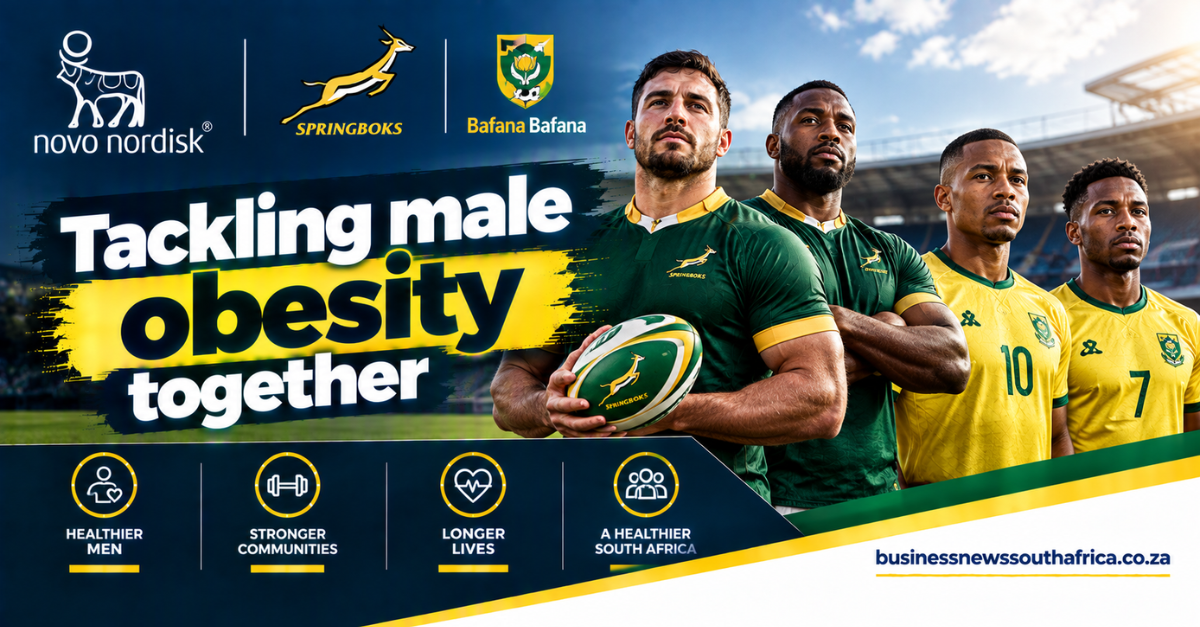
Grant Kekana, the Mamelodi Sundowns defender, once described his weight gain as “feeling like I was carrying a monkey on my back”. The image of a professional athlete struggling with the same issue many South African men face sets the tone for Novo Nordisk’s new health drive.
The pharmaceutical company has rolled out a series of short online videos that feature Kekana, Bafana Bafana goalkeeper Reyaad Pieterse and Springbok front-rower Trevor Nyakane. In each clip the stars talk openly about why they value healthy living, both on the field and at home. The campaign is framed around the idea of “living lighter”, a call for men to take small, sustainable steps toward better health.
According to the South African Heart Foundation, roughly 31% of South African men are classified as overweight or obese. Excess weight raises the risk of heart attack, stroke, high blood pressure, diabetes, certain cancers and joint problems. For small business owners, a workforce with these health challenges can mean higher sick-leave costs, reduced productivity and greater pressure on limited health-care budgets.
In the videos, Nyakane explains that his motivation goes beyond sport: “There’s life after rugby. It’s knowing that, as soon as I’m done, I can live longer for my daughter and my wife, as a healthier person.” Kekana adds that he once felt exhausted during matches until he asked questions about his weight and changed his habits. Their stories are meant to show that the same discipline that drives elite performance can be applied to everyday life.
Novo Nordisk has also launched an online portal that lets users calculate their body mass index (BMI, a simple ratio of weight to height used to gauge whether a person is underweight, normal weight, overweight or obese). The tool points users toward local healthcare professionals and offers information on factors that influence weight gain. Sara Norcross, vice president and general manager for South Africa at Novo Nordisk, says the portal is designed to make the first step toward health less intimidating.
For entrepreneurs and SME owners, the campaign offers a practical resource. Encouraging staff to use the portal or sharing the athletes’ stories can start conversations about nutrition, exercise and regular health checks. Small, consistent changes, such as a short walk during lunch or swapping sugary drinks for water, can add up over time, potentially lowering health-related absenteeism and insurance premiums.
Why it matters to small business owners
Male obesity is not just a personal issue; it has a ripple effect on the bottom line. A study by the South African Medical Research Council found that obesity-related illnesses cost the economy billions of rand each year in lost labour and health-care spending. By promoting a culture of health, SMEs can protect their most valuable asset, their people, and keep operating costs in check.
The campaign’s use of well-known sports figures gives the message credibility and reach. While the videos are short, the portal is a permanent, free tool that any South African man can access, regardless of income level. For a small business that cannot afford a full-time wellness coach, the portal offers a low-cost way to support employee health.
Ultimately, the success of the initiative will be measured by how many men take the first step, entering their weight, learning their BMI and seeking professional advice. If the numbers grow, the indirect benefits for workplaces across the country could be significant.
Obesity is a global public-health challenge, and South Africa mirrors many of the trends seen elsewhere: urbanisation, greater availability of calorie-dense foods and sedentary lifestyles. The health sector therefore places a strong emphasis on prevention, recognising that early intervention can reduce the burden on hospitals and clinics. In this context, digital tools such as the Novo Nordisk portal are increasingly seen as a complement to traditional face-to-face services, because they lower the barrier to entry for people who might otherwise delay seeking help.
For small and medium enterprises, the practical reality is that most do not have dedicated human-resource teams with the capacity to design comprehensive wellness programmes. Yet the financial impact of a workforce that is frequently unwell is tangible. When an employee misses work due to a preventable condition, the business not only loses the day’s output but also incurs the administrative cost of arranging temporary cover. Moreover, chronic conditions often lead to higher medical insurance contributions, a cost that is passed directly to the employer in many private-sector schemes.
Integrating the portal into everyday business practice can be as simple as adding a link to the company intranet, printing a QR code for the break-room, or dedicating a few minutes of a regular staff meeting to discuss a health tip from one of the athlete videos. Because the portal is free, there is no financial risk, and the information it provides is vetted by medical professionals, giving owners confidence that they are sharing reliable guidance.
Beyond the direct health benefits, there is a cultural advantage. When leaders model healthy behaviour, it normalises the conversation around weight, diet and activity. Employees are more likely to feel comfortable discussing personal health goals, which can foster a supportive workplace environment. This sense of community can improve morale, reduce turnover and enhance the overall reputation of the business among customers and suppliers who value corporate responsibility.
From a regulatory perspective, South African labour law requires employers to provide a safe and healthy work environment. While the law does not prescribe specific wellness programmes, it does expect employers to take reasonable steps to mitigate health risks that arise from the workplace. Offering access to a reputable health-assessment tool and encouraging regular check-ups can therefore be viewed as aligning with those statutory expectations.
In addition, many insurers offer premium discounts or incentives to companies that can demonstrate proactive health-management practices. By documenting participation in the Novo Nordisk portal, an SME may be able to provide evidence of such initiatives during insurance negotiations, potentially unlocking cost savings that can be reinvested in growth activities.
The broader community also stands to gain. When a small business champion’s healthy habits, it can inspire neighbouring enterprises, schools and local clubs to adopt similar approaches. The ripple effect can contribute to a healthier town or suburb, which in turn can attract new customers and talent who value a vibrant, health-focused environment.
Finally, the involvement of high-profile athletes underscores a powerful message: health is not the exclusive domain of elite sport, but a universal pursuit that benefits every individual, regardless of occupation. By translating the discipline of training into everyday choices, the campaign offers a relatable roadmap for men who may have previously felt that weight management was beyond their reach.
For South African business owners looking to safeguard their operations against the hidden costs of poor health, the Novo Nordisk initiative provides a concrete, low-cost entry point. By encouraging staff to engage with the portal, sharing the athletes’ stories, and fostering a workplace culture that values incremental, sustainable change, SMEs can take meaningful steps toward a healthier, more productive future.