When Thabo, who runs a small delivery service in Durban, opened his fuel receipt on 15 August, he was surprised to see the price of petrol 52 cents per litre lower than the previous month. The same receipt, however, showed diesel, the fuel his vans need for heavy loads, up by R1.23 per litre. That split in fuel costs mirrors the latest consumer price data released by Statistics South Africa.
According to Statistics South Africa, the consumer price index (CPI), the headline measure of inflation that tracks the price change of a basket of goods and services, rose to 4.4% in August 2026, a 0.1 percentage-point increase from July’s 4.3%. The figure was lower than the 5.0% many economists had forecast.
The CPI is a weighted average; each component, such as housing, transport or food, contributes a share of the total. In August, the biggest contributors were housing and utilities, which added 1.3 percentage points, and transport, which added 1.2 points. Insurance and financial services added a smaller 0.6 points. When fuel and energy are stripped out, the CPI fell to 3.5%, comfortably inside the South African Reserve Bank‘s (SARB) 3% target range.
Standard Bank Group’s Head of South Africa Macroeconomic Research, Dr Elna Moolman, said the lower headline number was largely thanks to the drop in petrol prices. She noted, however, that the rise in diesel costs hurt producers and transporters, a group that includes many small-scale manufacturers and logistics firms.
For small businesses, the mixed fuel picture can be a double-edged sword. Lower petrol prices ease the cost of employee travel and small-scale deliveries, but higher diesel raises the operating expense of any business that relies on heavy vehicles. The net effect on profit margins will depend on how much of a firm’s cost base is tied to each fuel type.
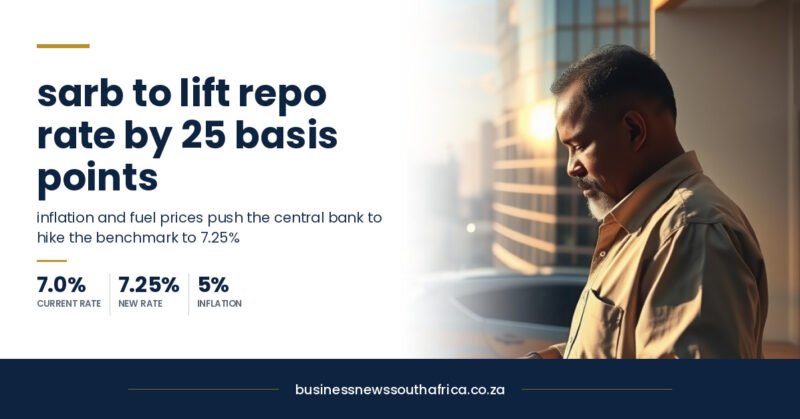
Moolman also warned that the recent dip in inflation does not guarantee a pause in monetary tightening. She said the Reserve Bank is likely to raise its policy rate by 25 basis points, a basis point is one hundredth of a percentage point, at its meeting on 26 September.
A 25-basis-point hike would move the repo rate from 8.25% to 8.50%. The move is intended to keep inflation anchored while the central bank assesses whether the recent easing in consumer prices is durable. Moolman added that, if the hike proceeds, it could also signal the end of the current tightening cycle, after which the SARB may hold rates steady for a longer period.
Investec Chief Economist Annabel Bishop echoed the concern about fuel volatility. She pointed out that fuel price inflation in the CPI index remains high at 20.6% year-on-year, even though it has fallen from 23.3% in July. She also highlighted that food and non-alcoholic beverage prices showed only modest movement, with deflation still present in some agricultural outputs.
For entrepreneurs, the key takeaway is twofold. First, borrowing costs are set to rise slightly, which could affect loan repayments for businesses that depend on credit. Second, consumer spending may stay resilient if transport costs stay low, but any rebound in diesel prices could quickly erode that cushion.
The upcoming SARB decision will be the next data point for small-business owners planning budgets for the fourth quarter. A higher rate could tighten credit, while a pause would give firms a brief window to stabilise cash flow before the next cycle begins.
What small businesses can watch
• Fuel price trends, keep an eye on both petrol and diesel, as they affect different parts of the cost chain.
• Interest-rate moves, a 25-basis-point hike will raise loan interest, so factor that into any financing plans.
• Consumer sentiment, a CPI under 5% suggests price pressure is easing, but volatility remains, especially in energy.
For more analysis on how monetary policy shifts affect small enterprises, see our Markets & Finance coverage.
BusinessTech reported that Stats SA confirmed annual consumer price inflation held at 4.4% in August 2026, a modest rise of 0.1 percentage point from July’s 4.3%. The drop in petrol of 52 cents per litre helped offset a diesel surge of R1.23 per litre, while housing and utilities contributed 1.3 percentage points and transport added 1.2 points to the headline figure. Insurance and financial services weighted in at 0.6 points, with their underlying index at 5.7%. Fuel-price inflation in the CPI remained high at 20.6% year-on-year, down from 23.3% in July, and the core CPI, excluding food, non-alcoholic beverages, fuel and energy, registered 4.1% year-on-year.
The CPI is compiled by aggregating price changes across a basket of goods and services, each assigned a statistical weight that reflects its share of household expenditure. When a component such as transport moves sharply, it can pull the overall index up or down, influencing the Reserve Bank’s assessment of price stability. A lower headline CPI can create space for the SARB to pause or moderate rate hikes, but persistent fuel volatility may keep inflation expectations elevated. Business owners should watch the weightings of items that dominate their cost structures, as shifts can quickly alter profit margins.
For small-scale operators, the interplay between CPI movements and the repo rate directly affects borrowing costs and cash-flow planning. A 25-basis-point increase to 8.50% would raise the interest component on variable loans, stretching repayment schedules that already factor in operating expenses such as diesel. Companies that rely heavily on heavy-vehicle fleets may need to reassess fuel-hedging strategies or explore alternative logistics arrangements. Monitoring the SARB’s policy statement and any forward guidance will help firms decide whether to lock in fixed-rate financing before further tightening.
Looking ahead, entrepreneurs should keep an eye on the next CPI release, which will reveal whether the recent dip in petrol prices is temporary or part of a broader trend. The upcoming SARB meeting on 26 September will test the central bank’s tolerance for the still-elevated fuel-price inflation of 20.6% and the core CPI at 4.1%. Observers will also watch oil market developments and any resurgence in diesel costs, as these factors have been flagged as key risks for a second-round price rise. Staying informed about these indicators will enable small businesses to adjust pricing, budgeting and financing decisions in real time.