For employees who drive to an office each day, the price of petrol and diesel is eating a sizable slice of the household budget, and the pressure is now spilling over into how companies design their employee value proposition.
According to BusinessTech, the average South African employee who commutes by car has spent almost R20,000 on fuel by the end of September 2026. The calculation is based on Discovery data that tracks more than 295,000 active vehicles through its Vitality Drive telematics programme. The programme records mileage and vehicle use, and the average user drives roughly 1,100 kilometres each month and spends about 35 hours behind the wheel.
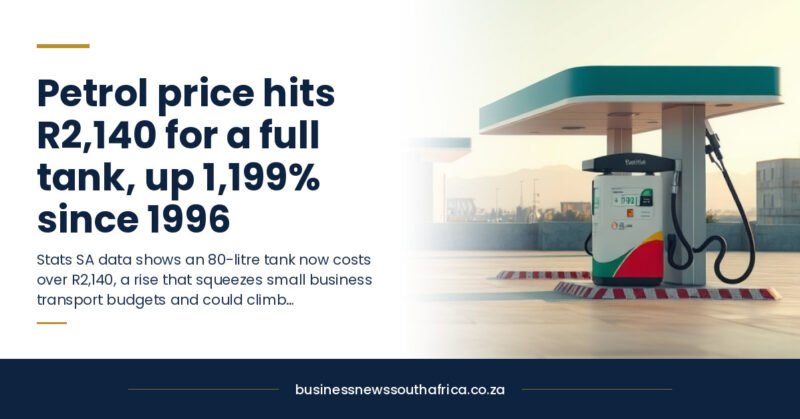
Using the International Energy Agency estimate that a passenger car in South Africa consumes 7.4 litres per 100 kilometres, an average driver would need about 81.4 litres of fuel each month. When petrol was R20.75 per litre in January, the monthly bill was R1,689.05. By September, with the price at R26.92 per litre, the monthly cost rose to R2,191.29, an increase of R502.24. Over the first nine months, the total rose to R17,728.91.
Diesel showed even greater swings. Starting the year at R18.52 per litre, diesel peaked at R31.88 in May before settling at R30.05 in September. For the same 81.4-litre usage, the monthly diesel bill varied by as much as R1,133 between February and May, ending September R938.54 higher than in January and reaching a nine-month total of R18,310.11.
Lindiwe Sebesho, managing director of remuneration and workforce research consultancy Remchannel, said fuel and living costs should be factored into a company’s employee value proposition. “It’s an important consideration from a value proposition perspective. Flexibility, as you’ve said, is one of the key requirements when one looks at a job, especially for those jobs that can be done remotely,” she told HOT Business.
Sebesho noted that 77% of employers surveyed had not introduced additional flexibility in response to rising fuel costs. She suggested practical steps for firms that cannot shift to full remote work: flexible start and finish times, shift-swapping where operationally feasible, and targeted transport assistance such as employer-funded transport options.
Future price pressure looks likely. Data from the Central Energy Fund points to a possible petrol increase of roughly R2.47 to R2.62 per litre and a diesel rise of R2.42 to R2.81 per litre. If realised, petrol could reach about R29.54 per litre and diesel around R32.86, pushing annual commuting costs even higher.
For businesses, the challenge is to balance short-term support for commuting staff with long-term financial sustainability. Piloting flexible arrangements, monitoring uptake, and avoiding measures that could force restructuring or retrenchments are key considerations, Sebesho warned.
Employers that act now may avoid a wave of disengagement as fuel costs continue to climb, while workers who cannot work remotely will feel the squeeze of an almost R20,000 annual commute bill.
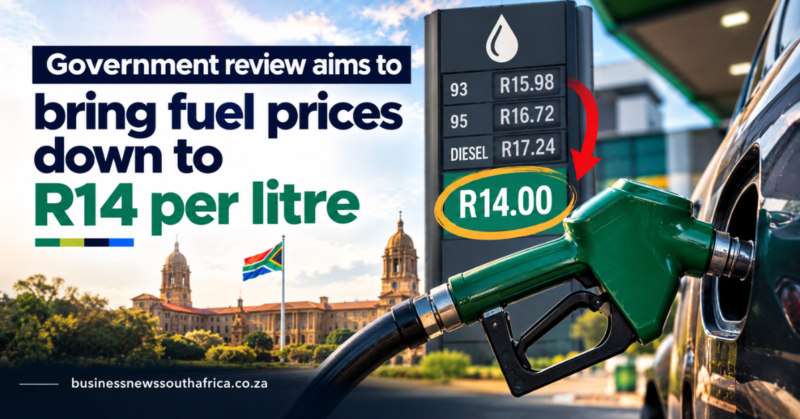
BusinessTech reported that petrol prices hit a record R28.06 per litre in June 2026 after an early-year dip to R20.10 in February, before easing to R25.58 in July and August and climbing again to R26.92 in September. Diesel followed a similar pattern, jumping from its January start of R18.52 to a May peak of R31.88, then falling to R25.67 in July and rising to R30.05 by September. These fluctuations mean the monthly petrol bill for an average 81.4-litre user rose from R1,689.05 in January to R2,191.29 in September, while the diesel bill varied by as much as R1,133 between February and May, ending the nine-month period at R18,310.11.
BusinessTech also highlighted Central Energy Fund data that project a possible petrol increase of roughly R2.47 to R2.62 per litre and a diesel rise of between R2.42 and R2.81 per litre. If realised, petrol could reach approximately R29.54 per litre and diesel could climb to around R32.86 per litre, with the latter figure reflecting a 0.005 % diesel premium. These forward-looking estimates suggest that the annual commuting cost could breach the R20,000 threshold, intensifying pressure on both employees and employers.
The Vitality Drive telematics programme captures vehicle mileage and usage through a device linked to Discovery Insure, covering more than 295,000 active vehicles. By recording the average 1,100 kilometres driven each month and the 35 hours spent behind the wheel, the system generates reliable fuel consumption data based on the International Energy Agency’s 7.4 litres per 100 km benchmark. For business owners, this granular insight enables precise budgeting for travel allowances and informs decisions on whether to subsidise fuel, adjust salaries or explore alternative commuting options.
Employers facing these rising costs can test flexible start and finish times, shift-swapping and targeted transport assistance on a trial basis, monitoring employee uptake before committing to permanent programmes. With 77 % of surveyed firms yet to introduce additional flexibility, piloting measures helps avoid premature financial strain that could lead to restructuring or retrenchments. Companies should watch forthcoming CEF price updates and employee feedback to fine-tune support while maintaining fiscal sustainability.