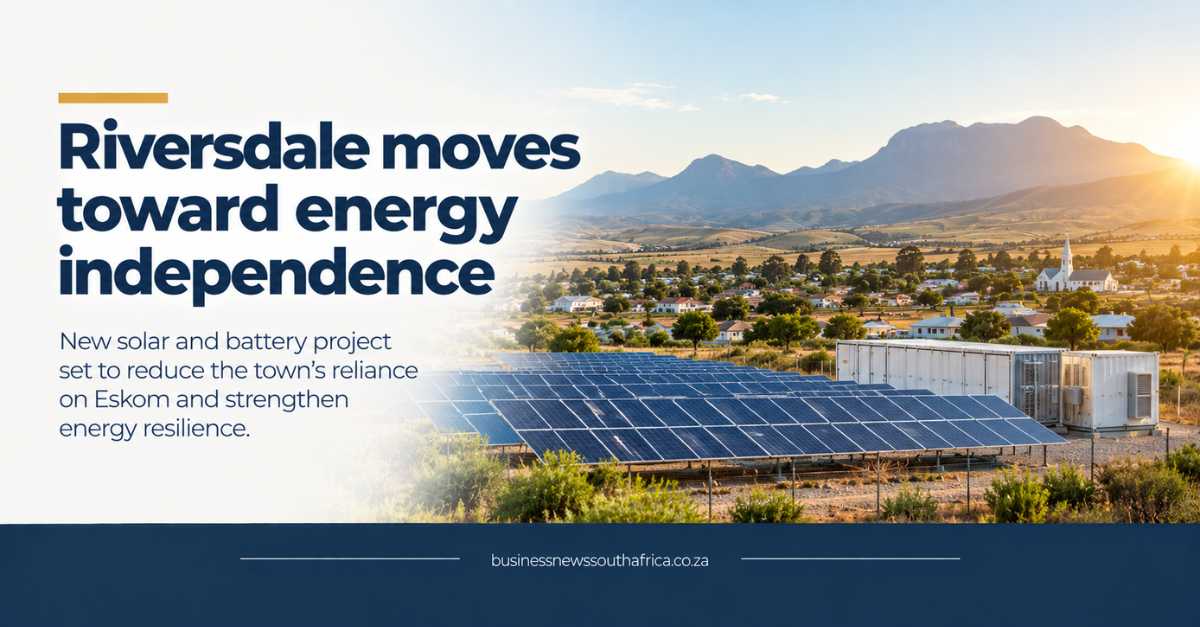
The Riversdale Solar Plant, which Western Cape Premier Alan Winde called “an important step towards energy independence”, was inaugurated on 30 September 2026 and is designed to lessen the town’s dependence on Eskom, the national power utility.
The plant delivers a peak capacity of 10 megawatt peak (MWp), the maximum output the solar panels can generate under ideal sunlight, and is expected to produce up to 15 million kilowatt-hours of electricity each year. It is paired with a battery system that can store up to 10 megawatt-hours, allowing excess solar power to be used when the sun is not shining.
Energy advisor Alwie Lester told CapeTalk that the combined solar array and battery could “effectively power Riversdale on its own” if Eskom supply is interrupted. Western Cape Premier Alan Winde said the installation is “an important step towards energy independence” for the municipality. Both statements are the officials’ own claims and have not been independently verified.
Riversdale, a historic town of just under 72 000 people in the Hessequa municipality, will still draw some electricity from Eskom, but the new system is embedded in the municipal grid rather than running over Eskom’s network. This arrangement means the town can continue to operate even during load-shedding events and may be insulated from future tariff hikes imposed by the utility.
Dr Ivan Meyer, the Western Cape Minister of Agriculture, Economic Development and Tourism, said reliable and affordable energy is essential for local businesses, farms and the community. The town’s economy relies heavily on tourism and flower farming, sectors that benefit from stable power supplies.
Municipal renewable projects like Riversdale’s are part of a broader push in South Africa to diversify energy sources amid chronic load-shedding and rising electricity costs. While the plant’s performance will be monitored over time, its design shows how small towns can use solar and storage to improve energy security and support local economic activity.
For more stories on energy projects and their impact on South African businesses, see the Energy & Infrastructure section.
Source: BusinessTech. Related: University installs 8,500 solar panels, cuts reliance on Eskom and Cape Town accelerates exit from Eskom with new solar power deals.