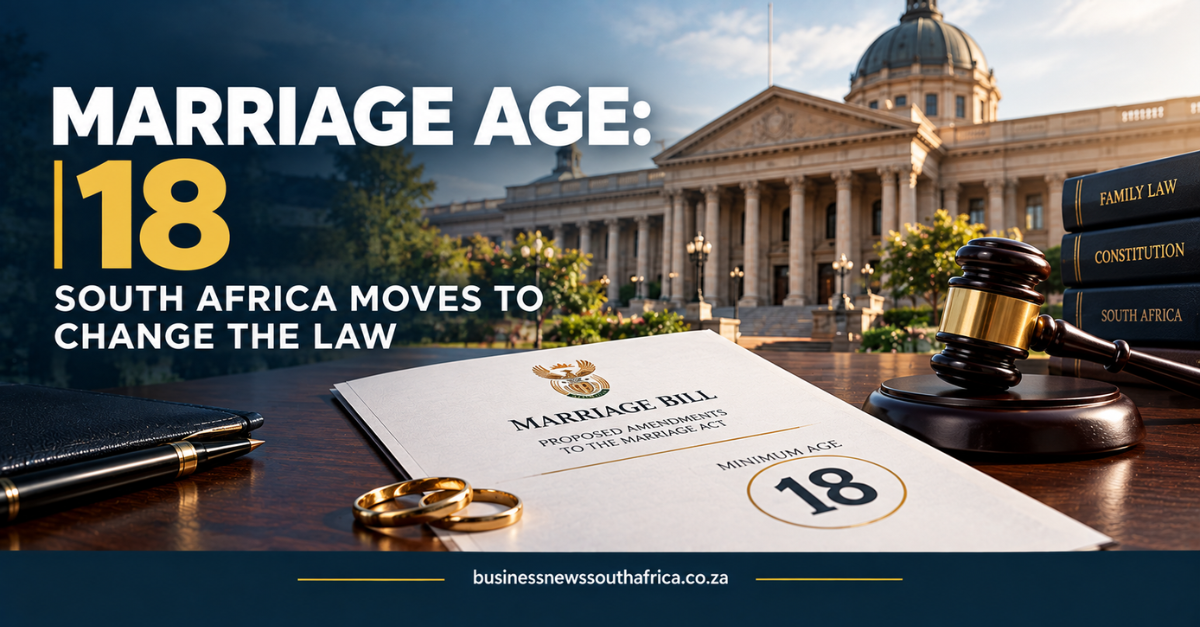
Women, Youth and Persons with Disabilities Minister Sindiswe Chikunga told parliament that the Department of Home Affairs is amending marriage legislation to set the minimum legal age for marriage at 18 years. She said the change will bring customary and civil marriage rules into line with the Constitution and remove any legislative inconsistencies.
The department’s statement is a claim until the revised law is formally enacted. The current law allows people under 18 to marry if their parents give written permission, a loophole that has been linked to forced marriages in parts of KwaZulu-Natal. National Assembly member Makoti Khawula raised concerns about girls as young as 13 being forced into marriage and highlighted the practice of “ukuthwala”, a traditional custom that can involve kidnapping or coercion.
Why the change matters for businesses
For small-business owners, the amendment will affect recruitment and HR policies. Employers will no longer need to verify parental consent for employees who are 18 or older, and they will have clearer guidance on age verification for roles that require a minimum age. The shift also reduces the risk of legal challenges related to child labour or early marriage that could disrupt workforce planning.
The amendment is part of the Marriage Bill, first introduced in 2023, lapsed after the 2024 elections and has now been revived. While the bill sets the floor at 18, some members of the public have asked for the age to be raised to 21, arguing that 18-year-olds are still in school and may not be financially ready for marriage. Parliament noted these submissions in a June 2025 press statement, but no amendment to raise the age has been confirmed.
What remains unknown is the exact timetable for the bill’s passage and when the new age limit will become enforceable. The Department of Home Affairs has not provided a date for the final vote.
For more detail on the legislative process, see the Parliament website. Ongoing updates will be covered in the Regulatory & Policy section.
During the parliamentary questioning, Minister Sindiswe Chikunga confirmed that the Department of Home Affairs is actively drafting amendments to set the marriage floor at 18, a move she said will bring customary and civil marriage rules into constitutional alignment, and she stressed that the process is already under way.
Under the existing framework, individuals under 18 may still contract marriage if a parent provides written consent, a loophole that has drawn criticism for enabling forced unions; the forthcoming amendment will close that gap by removing parental permission as a legal pathway for anyone below the new age threshold.
The practice of “ukuthwala”, highlighted by National Assembly member Makoti Khawula, is expressly prohibited when it involves kidnapping or coercion, and the current statutes already deem such instances illegal, reinforcing the government’s stance against forced marriage practices.
The Marriage Bill, first tabled in 2023, aims to consolidate South Africa’s disparate marriage statutes into a single piece of legislation, ensuring that both customary and civil marriages are governed by the same constitutional standards and eliminating contradictory provisions.
After the 2024 national elections caused the bill to lapse, lawmakers have revived the proposal, re-introducing it to parliament for further debate and eventual passage, signalling renewed legislative momentum on the issue.
In a June 2025 press statement, Parliament recorded public submissions urging that the minimum age be lifted to 21, with submitters arguing that 18-year-olds remain in school, lack financial independence and should focus on education rather than marriage.
The amendment process is being driven through the Marriage Bill, which seeks to bring together the country’s various marriage statutes into one coherent framework, according to the minister’s remarks in parliament. By consolidating customary and civil provisions, the bill aims to eliminate contradictory clauses that have previously allowed parental consent for under-18 unions. The Department of Home Affairs has confirmed that drafting work is underway, and the proposed text will be tabled for committee review before a full parliamentary debate. This step follows the bill’s initial introduction in 2023 and its subsequent lapse after the 2024 elections, marking a renewed legislative push.
Parliament’s June 2025 press statement highlighted that a segment of the public submitted written objections, urging that the minimum marriage age be raised to 21. Those submitters argued that individuals at 18 are often still completing secondary education and lack the financial capacity to support a household. Their comments were recorded by the parliamentary committee overseeing the bill, but no formal amendment to the age threshold has been lodged at this stage. The government’s response reiterated that the current focus remains on setting the floor at 18, with any further increase to be considered in future deliberations.
Under the existing legal framework, anyone over 18 can marry without external approval, while those younger must obtain written parental permission, a loophole that has drawn criticism for facilitating forced unions in certain provinces. The draft amendment will remove that parental consent provision entirely, meaning that no person below the new age limit can lawfully contract marriage, regardless of parental or guardian involvement. This change aligns with constitutional guarantees of equality and aims to close the gap that has allowed practices such as “ukuthwala” to persist when coercion is involved.
Once the bill passes its second reading, it will be referred to the Portfolio Committee on Home Affairs for detailed scrutiny, where amendments may be tabled and public submissions examined. After committee endorsement, the legislation will return to the National Assembly for a third reading and final vote. Should it be approved, the President will sign the act into law, after which the Department of Home Affairs will issue updated guidelines to registrars and employers, establishing the new compliance timeline. No specific date for the final vote has been announced, leaving the exact implementation schedule uncertain.