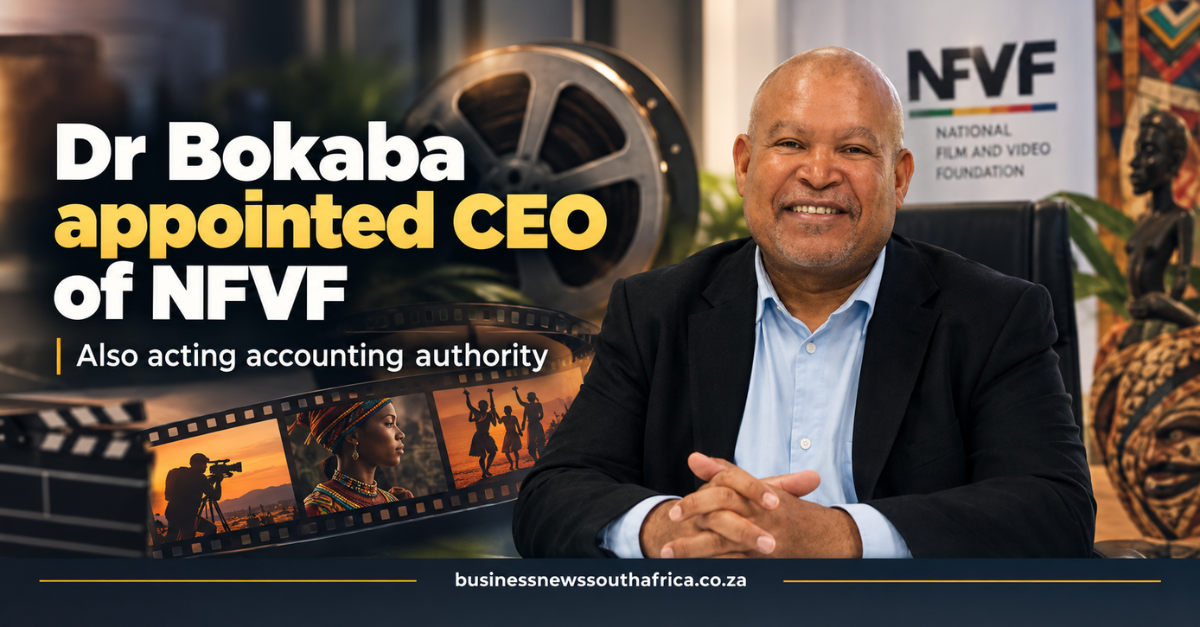
The National Film and Video Foundation (NFVF) has announced that Dr Bokaba will take up the role of chief executive officer, effective 1 October 2026. The announcement was made by the organisation and reported by Bizcommunity.
In addition to the CEO role, the Ministry of Sport, Arts and Culture has activated Section 49(3) of the Public Finance Management Act (PFMA). This emergency statutory mechanism allows the incoming CEO to serve as the Acting Accounting Authority for the public entity. As the designated Accounting Authority, the CEO can execute fiduciary sign-offs, meaning he can approve quarterly core funding allocations and disbursements from the Presidential Employment Stimulus Programme (PESP). The PFMA provision is explained on the Treasury website.
For independent film makers, production houses and crew members, many of whom operate as small businesses, the appointment is intended to prevent any cash-flow interruptions. The company secretary, Lindeka Moeng, said the mechanism “ensures that independent film practitioners, production houses, and crew members across the sector face zero financial delays or operational paralysis during this transitional phase”.
Dr Bokaba brings more than 25 years of leadership experience and over three decades in music, theatre, film, cultural policy and arts management. He holds an MBA and a PhD in Cultural Policy and Management. His background includes strategic planning, governance and stakeholder engagement in public-sector funding environments.
Speaking about his new role, Dr Bokaba said, “I am happy to be back and look forward to working with the NFVF to serve the film sector in South Africa. We must remember that the NFVF exists to serve filmmakers, and it will be key for us to strengthen our relationships with the sector.” He added that building a strong, collaborative team will be central to delivering the NFVF’s mandate.
What the appointment means for film SMEs
By combining the CEO and Accounting Authority functions, the NFVF can keep its funding pipelines, including PESP support for employment-linked projects, running without the administrative delays that sometimes affect public-sector payouts. For small production companies that rely on timely grants to cover pre-production costs, this continuity can be the difference between a project moving forward or being shelved.
The appointment also signals a focus on organisational stability and sound governance, which may improve confidence among private investors and international co-production partners. As the NFVF continues to allocate funds for development, production and distribution, SMEs in the audiovisual sector can expect clearer communication and steadier financial support.
For more coverage of financing and governance issues that affect small businesses, see our SME & Entrepreneurship section.