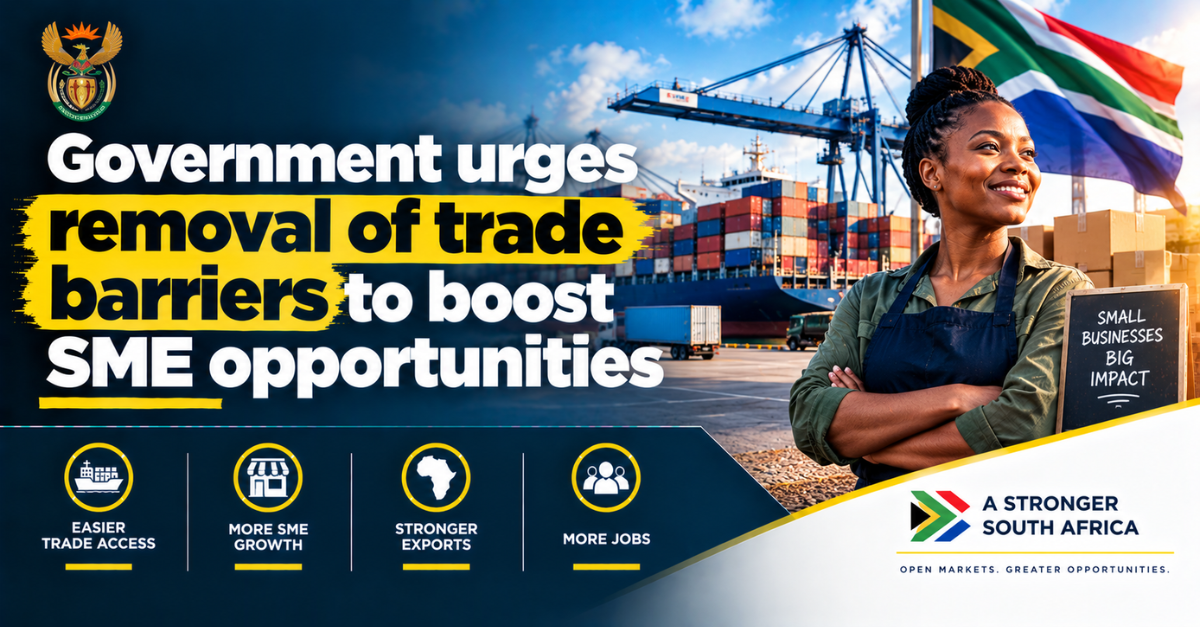
At a bustling warehouse on the outskirts of Johannesburg, a small furniture maker watches a truck linger at the border checkpoint. The delay adds days to delivery times and erodes profit margins, a familiar story for many South African exporters. It is the kind of friction at the centre of a call reported by the South African Government News Agency (SAnews) for BRICS countries to cut trade barriers and widen business opportunities.
The call came from Indian Prime Minister Narendra Modi, who told the BRICS Business Forum in New Delhi that BRICS countries should reduce trade barriers and expand opportunities for businesses, amid rising global protectionism. He asked the BRICS Business Council to identify the top 10 trade barriers among member countries and propose ways to remove them. Modi also said India has signed free trade agreements with nearly 40 countries since 2014. India hosts the 18th BRICS Summit from 12 to 13 September 2026.
According to SAnews, India’s BRICS presidency has focused on cooperation networks in agriculture, healthcare, skills and smart grids, aimed at connecting startups and small and medium-size enterprises (SMEs) to markets and finance. Modi named the BRICS Incubator Network, the BRICS MSME Portal and the BRICS Startup Innovation Fund, and stressed open supply routes, freedom of navigation and the safety of seafarers.
President Cyril Ramaphosa also addressed the forum. He urged BRICS to use the grouping to deepen investment and trade and to reshape economic patterns across the Global South. He argued that Africa should not keep supplying minerals while value addition happens elsewhere, and called for investment in manufacturing, beneficiation, industrial technology, energy, infrastructure and logistics.
Trade barriers are any policies that make it harder or more expensive to move goods across borders. They include tariffs, taxes on imported or exported goods, as well as non-tariff measures such as complex customs procedures, licensing requirements and standards that differ from one market to another. For an SME, each extra step can mean a significant cost increase or a delay that jeopardises a contract.
For South African entrepreneurs, the practical point is that this is a call for a report, not a change in rules. The Business Council has been asked to name the barriers and suggest remedies, and no list has yet been published in the coverage we found. Whether any member government acts on the findings will depend on negotiations among members, and nothing in the SAnews report commits South Africa to specific tariff or customs changes.
What SMEs can watch for
Businesses that trade with BRICS partners should follow the outcome of the BRICS Business Council’s report and any conclusions that feed into summit declarations and follow-up work plans on intra-BRICS trade, investment and MSMEs. The Department of Trade, Industry and Competition is the South African department most likely to be involved in any follow-through, and companies that already export may benefit from engaging with trade associations, which often act as intermediaries between the private sector and government.
In the meantime, SMEs can take proactive steps to mitigate existing barriers. Investing in compliance systems that streamline documentation, seeking certifications that meet multiple market standards, and building relationships with logistics providers can reduce the friction caused by current procedures.
The BRICS programmes Modi named for startups and MSMEs, such as the MSME Portal and the Startup Innovation Fund, are worth a look for firms interested in those markets, though SAnews does not describe eligibility or how South African firms would apply.
For related coverage of a different SME funding development, see this site’s report on the R500m startup fund.