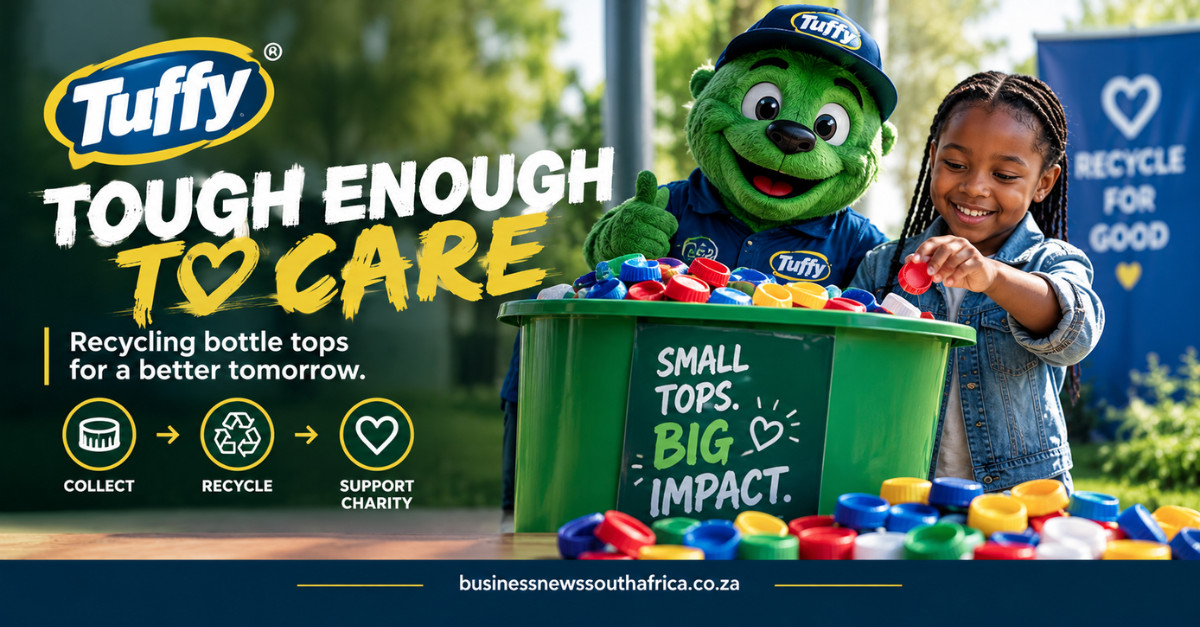
Tuffy, a South African refuse bag manufacturer, announced its “Tough Enough to Care” campaign, urging the public to collect plastic bottle tops and donate them to Operation Smile South Africa or the Sweethearts Foundation. The tops will be sold to plastic recycler Myplas, with the proceeds used to fund cleft-face surgeries and wheelchairs for underserved communities.
The campaign is driven by demand for recycled bottle-top material. According to the company, Tuffy now purchases over 20 tonnes of this raw material each month to blend into its 100% recycled black refuse bags. The product range, tested since November last year, is said to retain the same quality and integrity expected by consumers.
Tuffy’s effort was recognised at the 2026 South African Plastics Recycling Organisation (Sapro) Awards, where the brand received a gold award in the post-consumer resin demand champion category. Post-consumer resin refers to plastic that has been used, collected and re-processed into new products.
Rory Murray, Tuffy’s business unit lead, said the campaign “closes the loop” on bottle tops by giving them a second life in Tuffy’s products while improving quality of life for many people. Operation Smile South Africa executive director Sarah Scarth called each collected top a reminder that small actions can create extraordinary change. Sweethearts Foundation CEO Ashley Nel added that meaningful change does not always require large financial contributions, noting that a single bottle top could help a child attend school or an adult return to work.
For small businesses, the initiative demonstrates a practical way to combine environmental action with social impact. By partnering with recyclers and charities, companies can create a revenue stream from waste while supporting community health and mobility. The campaign invites schools, businesses, community groups and individuals to collect bottle tops and contribute to the cause.
More stories on sustainable business practices can be found in the SME & Entrepreneurship section.
Funds generated from the resin sales are earmarked for cleft-face surgeries and wheelchair provision in underserved and rural South African communities lacking specialist care. Sarah Scarth described each collected top as “a powerful reminder that small actions could create extraordinary change,” underscoring how the monetary contribution of a single top can translate into tangible medical interventions for children and adults who would otherwise have limited access to such services.
Schools, businesses, community groups and individuals are encouraged to use the campaign as a platform for both recycling education and charitable giving. Scarth highlighted that the initiative offers “an excellent way for schools, businesses, community groups and individuals to support a meaningful cause while promoting recycling and environmental awareness,” positioning the collection drives as practical classroom projects that link curriculum topics to real-world impact.
Ashley Nel emphasized that the partnership illustrates how “environmental action and social impact should not exist separately. When combined, they create sustainable change that benefits both people and planet,” reinforcing the message that modest behavioural shifts, such as not discarding a bottle top, can deliver significant social benefits when coordinated across organisations.