Eskom has told investors it expects to spend about R4 billion this financial year compensating solar and wind farms for electricity that it ordered them not to feed into the grid. The payment, known as a curtailment bill, will be made to independent power producers (IPPs) that are part of the government’s renewable-energy procurement programme.
Keith Bowen, senior manager, market operator at the National Transmission Company of South Africa (NTCSA), explained that the figure is a direct result of instructions to cut back generation when there is a surplus of power during daylight hours. The surplus occurs because an increasing number of households and businesses are using rooftop solar instead of drawing electricity from Eskom’s coal-fired stations.
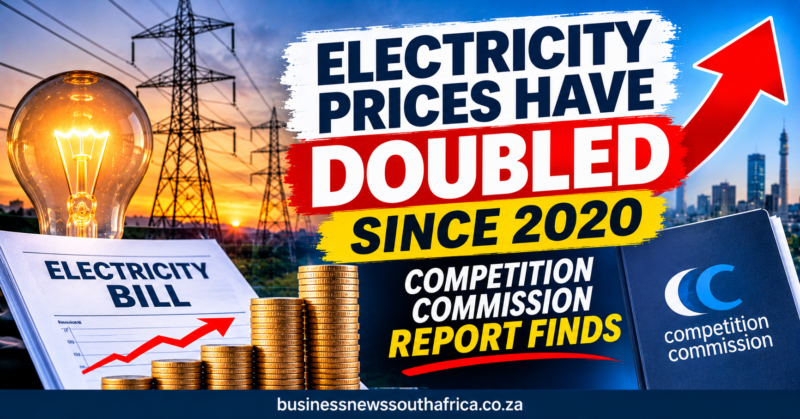
For the utility, the cost is not yet material compared with the R383 billion that the energy regulator (Nersa) allows it to recover from consumers through tariffs. However, Deon Conradie, an electricity-pricing specialist, warned that the curtailment bill could become a new driver of tariff increases if it continues to rise each year.
Why curtailment matters to businesses
When the grid has more electricity than it can safely handle, the system operator must ask solar and wind farms to reduce output. Eskom still has to pay the producers as if the electricity had been accepted, and it also loses the revenue it could have earned by selling that power. The practice is a technical necessity, without it the stability of the national grid could be threatened.
For companies that rely on predictable cash flows, the uncertainty around curtailment payments adds a financing risk. Olga Suchkova, associate director at consultancy Cresco, said banks look for certainty in a project’s revenue stream before committing funds. If curtailment instructions become more frequent, lenders may demand higher interest rates or additional guarantees.
Mamoso May, chief executive of Artemis Group Holdings, echoed the concern, noting that investors are now scrutinising curtailment clauses in every new renewable-energy contract. The lack of a uniform approach means that the party bearing the risk, either the IPP or the offtaker, depends on the negotiating power of the parties involved.
Historical parallels and future risk
Conradie pointed to Eskom’s diesel-generator spending as a cautionary tale. In the 2018 financial year the utility spent roughly R320 million on diesel to supplement supply during peak periods. By the 2024 financial year that outlay had ballooned to almost R24 billion, a rise that fed directly into higher electricity tariffs. He warned that a similar escalation could occur with curtailment payments if the underlying drivers are not addressed.
The drivers are clear: more rooftop solar installations, a growing pipeline of utility-scale solar farms slated to come online in the next two years, and a distribution network that is increasingly unreliable. Because Eskom keeps its coal-fired stations running at full capacity, they must be ready to supply power when the sun sets, the midday surplus is likely to persist.
Possible solutions and their hurdles
Panelists at a recent discussion hosted by Cresco and law firm Fasken suggested two technical fixes. The first is to build more gas-fired power stations, which can be ramped up or down quickly to absorb excess supply. The government’s latest gas-to-power procurement attempt failed because the source of gas remains uncertain.
The second option is to add battery storage, but commercial-scale projects are not expected to be operational for at least another two years. Bowen also advocated for a mid-day tariff reduction to encourage consumers to shift usage away from peak periods, thereby easing the surplus. However, he warned that obtaining approval from Nersa for any tariff change could take up to ten years.
In the meantime, the NTCSA has begun fast-tracking curtailment payments to ease cash-flow pressure on IPPs, a move that may provide short-term relief but does not solve the underlying imbalance.
For businesses that depend on stable electricity costs, the emerging curtailment bill signals a new variable to watch. While the current R4 billion figure is a small slice of Eskom’s overall cost base, the trajectory suggests that without policy or infrastructure adjustments, the expense could become a regular component of the utility’s tariff recovery model.
Readers can follow further developments on the Moneyweb report Eskom faces R4bn curtailment bill as solar power surges. For broader coverage of energy-sector policy, see our Energy & Infrastructure section.