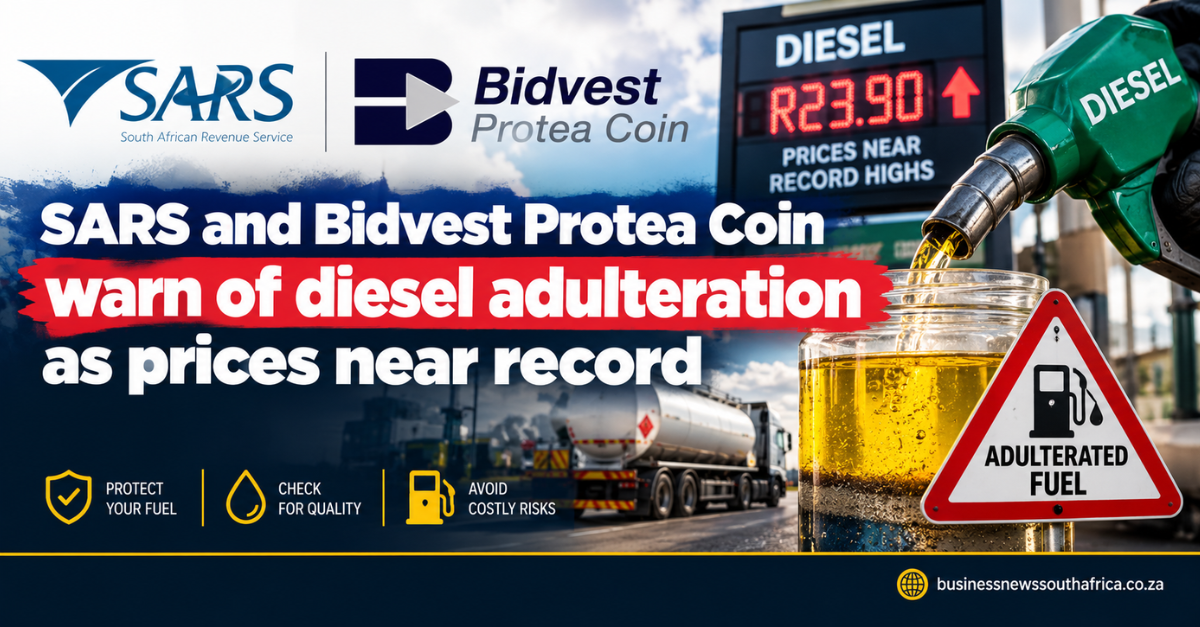
A suspected illicit fuel operation on a farm outside Potchefstroom in North West was uncovered by the South African Revenue Service (SARS) and Bidvest Protea Coin, according to a BusinessTech report of 4 October 2026. The report says the operation allegedly used a crude “wash plant” to strip chemical markers from illuminating paraffin; investigators believe the aim was to put the paraffin into the illicit fuel supply chain, where it could be blended with diesel. These are allegations; we found no report of charges or a court outcome.
Bidvest Protea Coin chief operating officer Waal de Waal said the case followed months of intelligence gathering and monitoring. On adulteration he said: “Mixing and blending have been around for years, but on a very small scale. But now these days it’s just getting out of hand.” He said the company had identified more than 100 suspected illicit fuel depots across several provinces. IOL reported, citing a Carte Blanche feature, that de Waal put the number of potential illegal depots in Gauteng alone at 188.
The incentive is a tax gap: illuminating paraffin is not subject to the same fuel taxes and levies as diesel, so mixing it in increases volumes and margins. BusinessTech notes diesel prices are not regulated, so retailers set their own, which can let operators using cheaper adulterated fuel undercut competitors.
According to IOL’s report of SARS figures, SARS says fuel adulteration costs the fiscus about R3.6 billion a year, based on statistics from the International Trade Administration Commission (ITAC). SARS also said adulterated diesel in some of its investigations contained up to 68% paraffin, and that a joint intelligence operation involving 23 targets across Gauteng, Mpumalanga and KwaZulu-Natal resulted in the detention of 953 515 litres of contaminated diesel, six non-compliant depots and assets and contaminated fuel worth about R367.3 million. BusinessTech dates that operation to June 2025 and says it also involved the seizure of about 2 million litres of adulterated fuel.
BusinessTech also cited Central Energy Fund data showing diesel under-recoveries of between R2.73 and R3.13 a litre at the time. Mineral and Petroleum Resources Minister Gwede Mantashe was quoted as saying the government cannot tackle illicit fuel trading alone and that industry cooperation is essential.
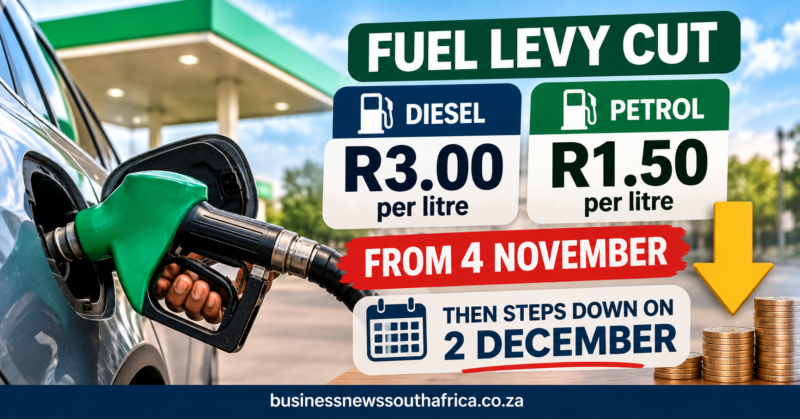
For transport operators and other businesses that buy diesel in bulk, the reported risk is supplier-side: adulterated fuel enters the formal market, and SARS says it is losing about R3.6 billion a year. A later development on pump prices: Fuel levy cut of R3 for diesel and R1.50 for petrol starts 4 November, then steps down on 2 December. Broader context: Illicit trade costs South Africa R68 billion a year, study finds.
Correction, 2 November 2026: an earlier version of this article said SARS and Bidvest Protea Coin warned on 4 October (that is the date of the BusinessTech report, not of a warning), attributed the R3.6 billion figure to ITAC rather than to SARS citing ITAC statistics, and added unsupported commentary on retailers’ market share. It has been corrected.