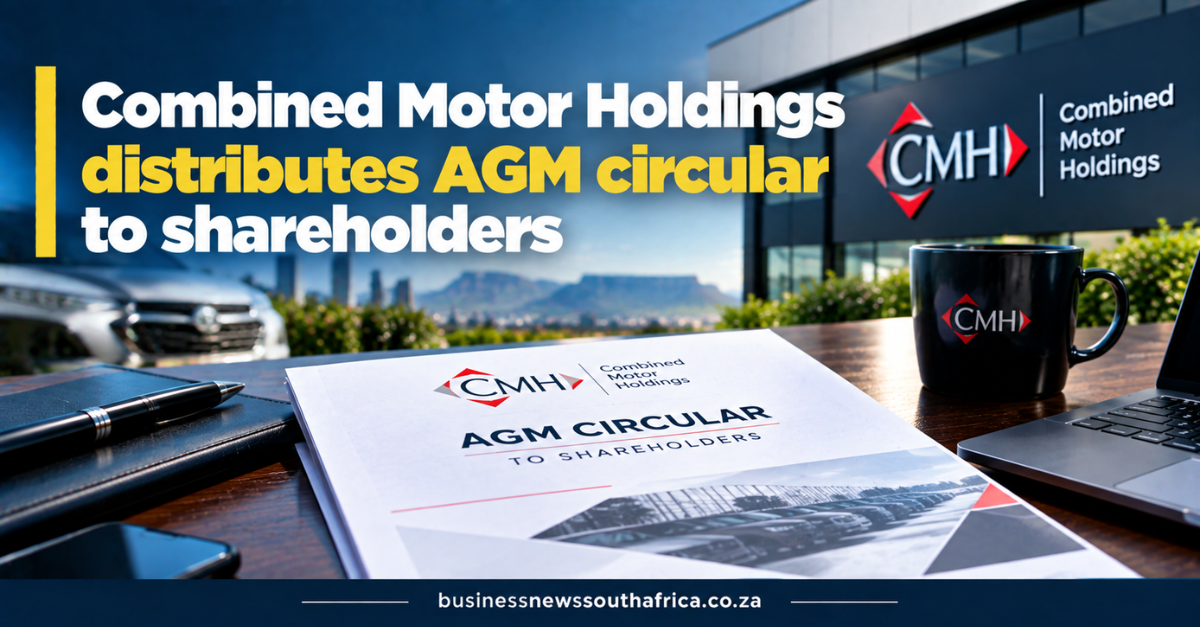
Moneyweb reported that Combined Motor Holdings Limited has issued a notice of distribution of its circular and general meeting. A circular is a document sent to shareholders that outlines the agenda, resolutions and any supporting information for the upcoming general meeting, where shareholders can vote on matters such as board appointments and dividend declarations.
Why a Circular Matters to Shareholders
The circular serves as the primary communication tool between a listed company and its owners. It provides the factual basis on which shareholders can form opinions, ask questions and ultimately decide how to exercise their voting rights. In the South African corporate environment, the distribution of a circular is a statutory requirement that ensures transparency and equal treatment of all investors, regardless of the size of their holdings. By receiving the circular well in advance of the meeting, shareholders have the opportunity to review the proposed resolutions, compare them with previous performance, and consider the strategic direction that the board is recommending.
For investors who hold shares through a broker or a custodial service, the circular is typically delivered electronically, although paper copies may still be used for certain institutional investors. The notice also includes instructions on how to submit proxy votes, which allow shareholders who cannot attend the meeting in person to have their voice counted. The proxy process is regulated to prevent undue influence and to protect the integrity of the voting outcome. In practice, the proxy form will ask the shareholder to indicate whether they support or oppose each resolution, and it may also provide space for additional comments.
Impact on Small-Business Owners and the Wider Market
The immediate impact is limited to the company’s shareholders, anyone holding CMH shares will receive the circular and will need to review it before the meeting date to decide how to vote. For most small-business owners who are not investors in CMH, the notice does not change day-to-day operations, but it does signal that the company is complying with its statutory reporting obligations, which can be a confidence indicator for suppliers and partners.
Compliance with reporting obligations is a cornerstone of market confidence. When a listed entity follows the prescribed disclosure timeline, it reassures counterparties that the business is operating within the legal framework and that its financial statements are subject to independent verification. This reassurance can affect credit terms, partnership negotiations and the willingness of other businesses to engage in joint ventures. In sectors where cash flow and credit availability are sensitive to macro-economic conditions, such as vehicle finance, the perception of stability can be as important as the actual financial results.
Combined Motor Holdings Limited in Context
Combined Motor Holdings Limited is a listed vehicle-finance provider that offers retail and fleet loans across South Africa. It is listed on the JSE under the code CMH and is regulated by the Financial Sector Conduct Authority (FSCA). The company’s performance is tied to the health of the automotive market and consumer credit conditions, both of which have been under pressure from higher interest rates and load-shedding.
The vehicle-finance sector in South Africa operates within a framework that balances the need for credit access with consumer protection. Lenders must assess borrowers’ ability to repay while also complying with responsible lending guidelines issued by the regulator. The sector is also influenced by the broader economic environment, including the cost of borrowing, employment trends and the availability of electricity. Load-shedding, which affects the reliability of power supply, can have indirect effects on vehicle sales and fleet operations, thereby influencing the demand for financing.
Within this environment, Combined Motor Holdings Limited has built a portfolio that includes both individual retail borrowers and corporate fleet customers. The dual focus allows the company to diversify its risk profile, as fleet contracts often provide more predictable cash flows compared to retail loans that are more sensitive to consumer sentiment. Nevertheless, both segments are exposed to macro-economic variables, and the company’s strategic decisions, which will be discussed at the upcoming meeting, are likely to reflect an assessment of these external pressures.
Regulatory Oversight and Governance Standards
The JSE imposes listing requirements that include timely disclosure of material information, adherence to corporate governance codes and the maintenance of a minimum level of public shareholding. Companies listed on the exchange are expected to follow the King IV Report on Corporate Governance, which emphasizes ethical leadership, stakeholder inclusivity and sustainability. The FSCA, as the prudential regulator for financial services, monitors compliance with licensing conditions, risk management practices and consumer protection standards. Together, these bodies create a regulatory ecosystem that aims to safeguard investor interests and promote market integrity.
When a company issues a circular, it does so under the supervision of these regulators. The content must be accurate, complete and free from misleading statements. Any material change that occurs after the circular has been distributed must be communicated through an interim announcement, ensuring that all shareholders remain equally informed. Failure to comply with these obligations can result in sanctions, including fines, trading suspensions or, in severe cases, delisting.
What Shareholders Can Expect from the Upcoming Meeting
Details such as the exact date of the meeting, the specific resolutions to be considered and any dividend payout were not disclosed in the brief notice. Those particulars will appear in the full circular once it is made publicly available. Until then, the information remains a claim by the company and has not been independently verified.
Typical resolutions that appear on the agenda of a vehicle-finance company may include the election or re-election of directors, the approval of the annual financial statements, the appointment of auditors and the authorization of remuneration policies. In some cases, shareholders may be asked to vote on strategic matters such as capital restructuring, acquisitions or the adoption of new corporate policies. While the exact items for Combined Motor Holdings Limited will be confirmed in the full document, the general categories follow a pattern that is common across listed entities.
Shareholders who wish to participate in the meeting in person should verify the venue, the time and any security protocols that may be in place. Those who cannot attend can submit a proxy form, either by post, fax or through an electronic portal, depending on the options provided by the company. The proxy form must be signed and returned before the deadline indicated in the circular, otherwise the vote will not be counted.
How Small-Business Owners Can Use This Information
Even if a small-business owner does not hold shares in Combined Motor Holdings Limited, understanding the mechanics of corporate disclosures can be valuable. Many small enterprises engage with larger corporations as suppliers, service providers or lenders. Knowing that a company adheres to rigorous reporting standards can influence decisions about credit terms, contract negotiations and partnership selection.
The vehicle-finance market has a direct impact on the cost of acquiring commercial vehicles, which are essential for logistics, delivery services and field operations. When interest rates rise, the cost of borrowing for fleet purchases can increase, prompting businesses to reassess their financing strategies. Load-shedding, by affecting operational reliability, may also lead companies to consider alternative energy solutions or to adjust maintenance schedules. By staying informed about the financial health and governance practices of a major lender, small-business owners can better anticipate changes in loan availability, interest rates and repayment conditions.
Resources for Interpreting the Circular and Voting
For shareholders who need help interpreting the circular or preparing proxy votes, the Markets & Finance section offers tools and guidance on corporate governance compliance. These resources typically include checklists for reviewing resolution language, explanations of voting rights, and contact information for investor relations teams. In addition, professional advisers such as accountants, legal counsel and financial planners can provide personalized advice, especially when the resolutions involve complex financial or strategic matters.
Investors may also consult independent research platforms that aggregate company filings, analyst reports and market commentary. While these platforms do not replace the official circular, they can help contextualise the information and highlight potential risks or opportunities. Engaging with shareholder forums, either online or through local investor clubs, can also provide peer insights and foster a broader understanding of the issues at stake.
Conclusion
The distribution of a circular by Combined Motor Holdings Limited marks a routine but essential step in the corporate governance process. It ensures that shareholders receive the information they need to make informed voting decisions and that the company remains accountable to its owners and to the broader market. Although the immediate impact is confined to those who hold CMH shares, the broader implications touch on confidence levels among suppliers, partners and other stakeholders who monitor compliance with JSE listing rules and FSCA regulations.
For small-business owners, the relevance lies in the indirect effects that the performance and governance of a major vehicle-finance provider can have on credit availability, financing costs and operational stability. By staying aware of the regulatory environment, the typical agenda of general meetings and the resources available for interpreting corporate disclosures, business leaders can better navigate the financial landscape and make strategic decisions that align with their growth objectives.