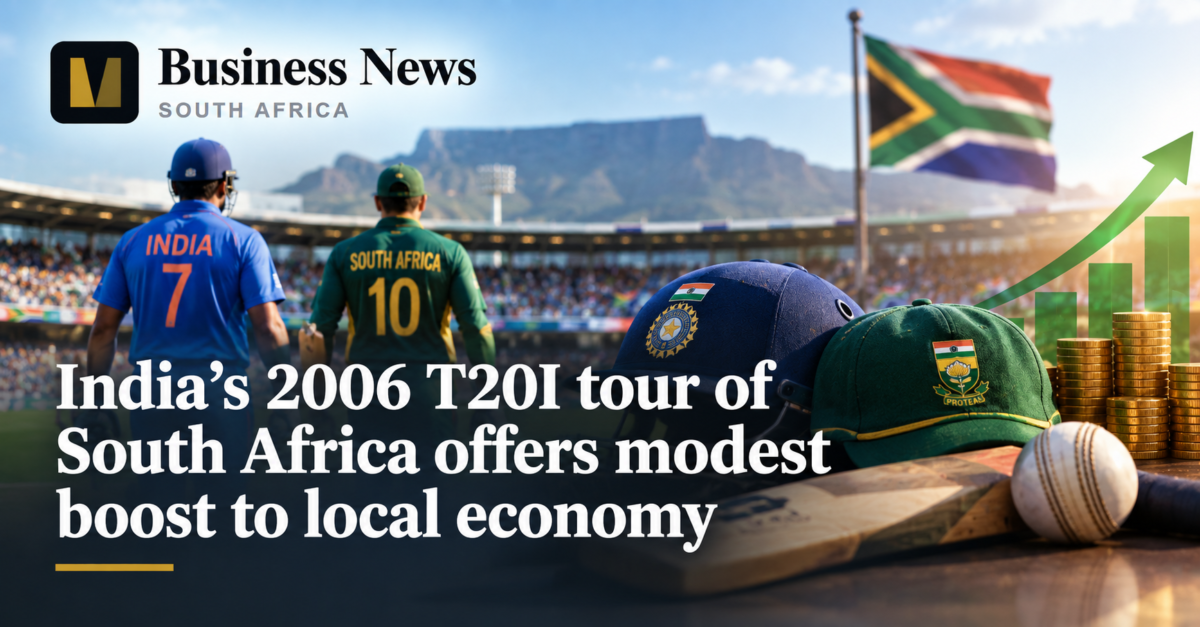
On a bright Johannesburg afternoon in 2006, the Indian cricket team stepped onto the field for a Twenty20 International (T20I) match against the home side. The schedule, published by cricket news site Cricbuzz, listed three matches across the country.
For small business owners in the host cities, a touring side like India brings more than just sport. Visiting fans need accommodation, meals and transport, while local vendors sell food, drinks and memorabilia inside and outside the stadiums. Those sales translate into cash flow for hotels, restaurants and informal traders.
The South African cricket board (Cricket South Africa) typically earns money from broadcasting rights, sponsorship deals and ticket sales. While the exact figures for the 2006 series are not publicly disclosed, past tours have shown that a single high-profile match can add several million rand to the board’s revenue, a portion of which trickles down to service providers.
Because the series was short, three T20I games, the economic lift is modest compared to a full Test series, but the timing coincided with a period of load-shedding and a sluggish retail environment. Any extra foot traffic was therefore welcomed by shop owners near the venues.
In short, the India-South Africa T20I schedule is a reminder that sport can act as a seasonal stimulus for local economies, even if the overall impact is limited to a few weeks of increased demand.
Why a schedule this old is still worth understanding, even now
It is worth being explicit about the timeline here: this concerns a Twenty20 series played in 2006, not a current tour, and Cricbuzz’s schedule listing is a historical record rather than fresh news. What still makes the underlying economics worth understanding is that the same commercial mechanics apply to every touring series regardless of when it happened, and looking back at a smaller, three-match series like this one is actually a cleaner illustration of the baseline case than a headline blockbuster tour would be: even a short, comparatively minor series generates real, if modest, local economic activity through broadcast rights, hospitality bookings and matchday vendor sales. For South African businesses near a host stadium today, the lesson transfers directly regardless of which specific teams or years are involved: any confirmed international fixture is a plannable demand event, and the smaller the series, the more precisely local businesses can estimate the scale of the opportunity rather than over-committing resources to a crowd that a bigger series might have drawn.
It is also a useful corrective to how easily a bare schedule listing, stripped of its original date, can be misread as current news by an automated aggregation process. That is worth naming plainly rather than glossing over: distinguishing a live, upcoming fixture from a two-decade-old archived result is not a minor detail, it is the entire basis for whether a story like this should inform a business’s near-term planning at all, or whether it belongs purely as historical context.
Read with that context firmly in place, the piece still stands as a small, self-contained case study in how touring cricket, at any scale and in any era, moves real money through a host city’s hospitality and retail sector.
That distinction between live news and historical record is one automated content pipelines in particular need to get right, since a reader has no way to know a story is describing 2006 rather than this week unless the piece says so explicitly, which is exactly what this one now does.
The core point stands either way: a confirmed touring fixture, however old the record, remains a genuinely useful window into how far international sport’s economic reach extends into a host city’s ordinary businesses.