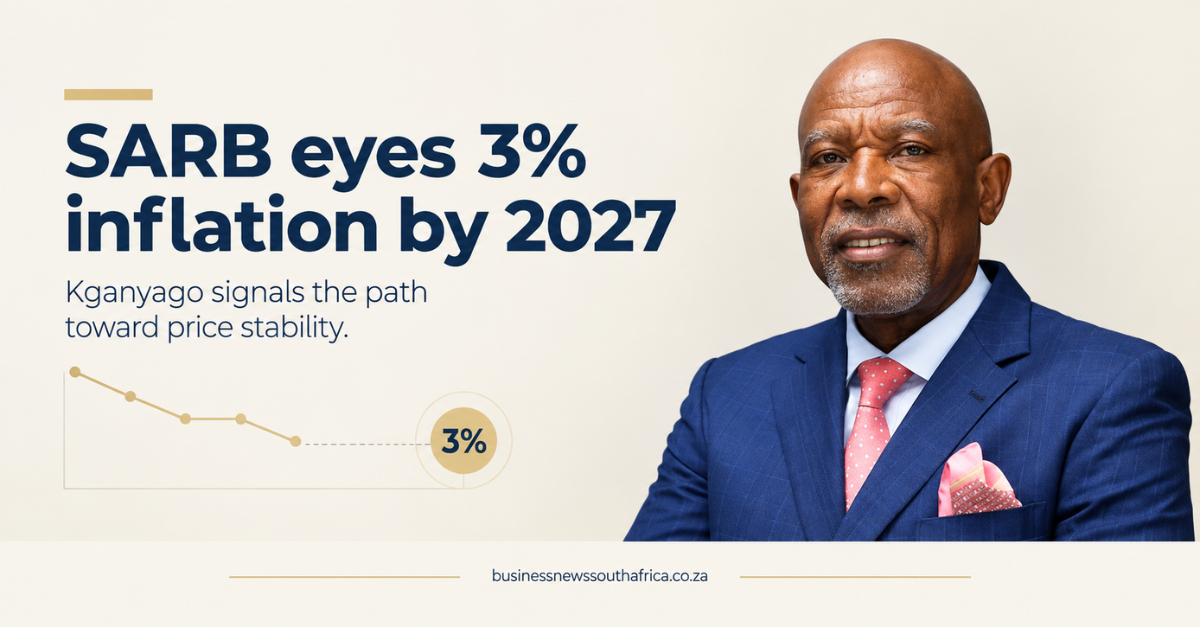
The South African Reserve Bank (SARB) expects inflation to cool sharply and return to its 3% target by the end of next year, Governor Lesetja Kganyago said in a speech on Monday, 28 September.
“We expect inflation to slow significantly next year, and we have increased our policy rate to make sure we get back to 3%,” he told the Mistra Forum in Johannesburg, according to his speech text. “We currently expect to get there around the end of next year.”
Why inflation is above target
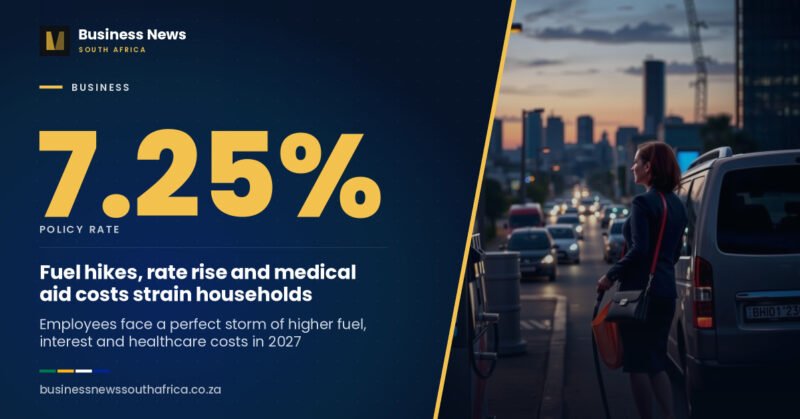
Kganyago said tighter monetary policy would help cool inflation that has been above the SARB’s goal since March, as supply constraints due to the wars in Ukraine and Iran keep energy prices high. The central bank raised the repo rate, the rate that guides the cost of borrowing across the economy, by 25 basis points (a quarter of a percentage point) to 7.25% last week, in a move Bloomberg described as well anticipated.
The Monetary Policy Committee’s decision was unanimous and took effect on 25 September, according to the SARB’s September statement. Headline inflation stood at 4.4% and is expected to move above 5% in late 2026 and early 2027 because of fuel prices, before returning to 3% around the end of 2027. The statement noted that petrol is rising again after easing between June and August, with an average under-recovery of R2.83 a litre. The committee named upside risks from the Middle East conflict and the Russia-Ukraine war, services inflation above target, and inflation expectations of around 4%, and warned of potential second-round effects that could entrench inflation.
The governor acknowledged the miss. “It has been about six months since we last hit our inflation target,” Kganyago said. “I am not happy that we are missing, but six months is a lot better than 67 months, which is the interval since US inflation was last at target.”
Growth and the rate outlook
The SARB cut its annual growth forecast to 1.2% from 1.4% after the economy contracted 0.2% in the second quarter, according to the same statement. Moneyweb noted that growth has averaged less than 1% a year over the past decade, and quoted Kganyago as saying reform progress is gradual even though electricity supply has improved after years of power cuts.
On what comes next, SAnews reported that the committee expects the policy rate to stay broadly stable for the rest of this year, with cuts possible later if inflation declines, and that decisions will be made meeting by meeting. Stats SA’s latest reading showed consumer prices unchanged month on month in August, with food inflation quickening for the first time in nine months and fuel inflation continuing to ease, the EWN report on the release said.
The 3% target and borrowing costs
The SARB adopted the 3% target last year, replacing a 3% to 6% range that had been in place since 2000. According to the report, the shift has helped shield South African assets from a global bond repricing that has seen US long-dated yields hit their highest levels since 2007 this year. “Because our country risk premium has fallen, our longer-term borrowing costs are not rising in line with rich country benchmarks,” Kganyago said.
What it means for small businesses
The rate rise lifts the cost of any borrowing linked to prime, which is what most business overdrafts and asset finance follow. On variable-rate debt, an extra 25 basis points adds about R21 a month for every R100,000 owed. The governor’s forecast is a central bank projection, not a promise, and it depends on energy prices behaving: the SARB’s own timeline points to the end of 2027, with fuel prices the main risk. For more on rates and inflation, see our Markets & Finance and SME & Entrepreneurship coverage, and the guides library. The full story is on Moneyweb.