At the edge of a dusty road in KwaZulu-Natal, the crumbling brick chimneys of the old Melville Sugar Mill stand like sentinels of a bygone era. Trees have sprouted through the arches, and schoolchildren chase falling stalks to suck out the sweet juice. “When I see this place it always breaks my heart,” says 56-year-old Kiki Mzoneli, a fifth-generation sugar farmer who still plants on land he fears losing to the Zulu royal household if he stops.
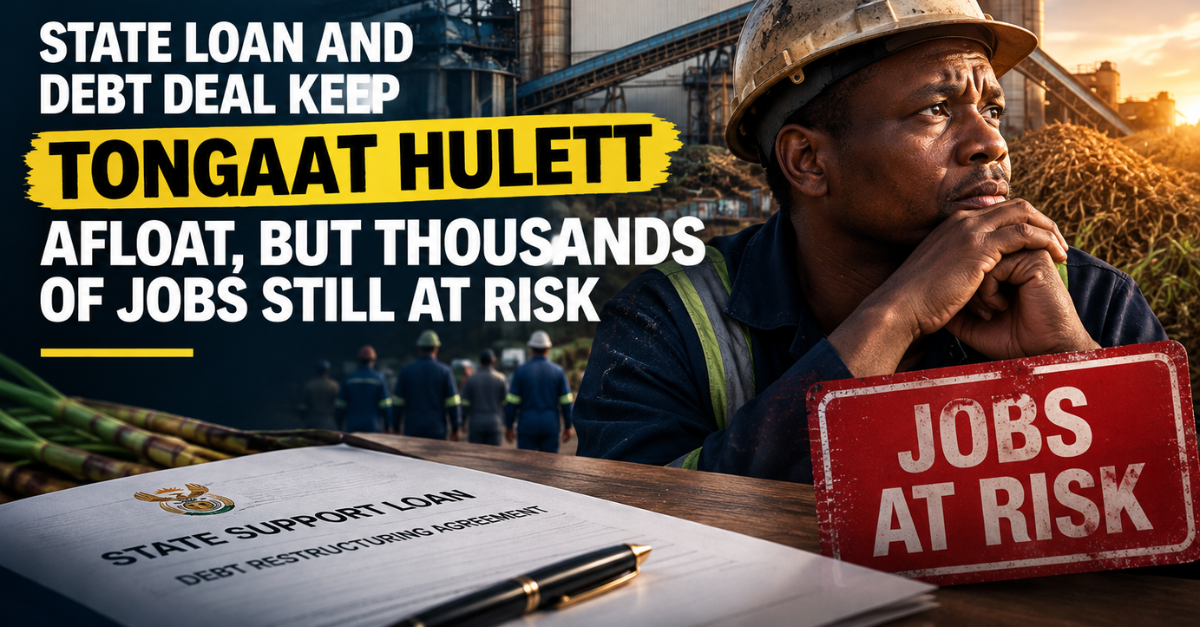
The scene is a stark reminder of a sector that once fed a nation but now teeters on the brink. Tongaat Hulett, which produces more than 40% of South Africa’s refined sugar, avoided liquidation in June after the state-owned Industrial Development Corp (IDC), a development finance institution, extended a R2.5 billion loan that will be converted into equity, i.e., an ownership stake. At the same time, Vision Group bought R11.7 billion of the company’s debt with the intention of negotiating control later. According to the rescue pact, the funding will keep Tongaat’s mills running until the end of September.
The immediate effect, according to Rute Moyo, a Zimbabwean businessman who controls Vision together with South African entrepreneur Robert Gumede, is the preservation of roughly 250 000 livelihoods across the sugar value chain. “It averted liquidation, it preserved approximately 250 000 livelihoods,” he said. Yet the rescue is a band-aid, not a cure. The sugar association still lists more than 14 000 jobs at risk, and many small towns that grew up around mills face an uncertain future.
Understanding the stakes requires a look at the industry’s size. The sector generates about R24 billion ($1.5 billion) a year and sustains more than a million South Africans, providing 270 000 direct and indirect jobs in a country where one in three people is unemployed. However, imports have surged: in the first six months of this year, 124 594 tons of sugar arrived, compared with just 1 619 tons in the same period of 2022, according to the Congress of South African Trade Unions. Much of the influx comes from Brazil, India and Thailand, where producers benefit from state subsidies and established ethanol industries.
Cheap imports are only part of the problem. Low labour costs in neighbouring Eswatini undercut South African producers, and two decades of indecision on industrial policy have failed to create a reliable domestic market for sugar. The sector also carries the baggage of a past accounting scandal in which senior executives inflated profits and asset values, leading to arrests and ongoing criminal cases. Both Tongaat and its rival Illovo Sugar, owned by Associated British Foods Plc, have closed mills in the last six years, and more closures are possible.
For small and medium-size enterprises that rely on locally produced sugar, the turbulence translates into price volatility and supply uncertainty. RCL Foods, a smaller producer, told reporters on 31 August that the flood of imports forced it to sell sugar on international markets at less than half the price it could have fetched locally. Gavin Dalgleish, Tongaat’s chief executive, warned that “import volumes remain exceptionally high, the domestic market has contracted and producers continue to face pressure on volume and margins.” Confectioners, beverage makers and small-scale processors therefore face higher costs or must source from abroad, eroding the competitive edge that South African sugar once offered.
What the rescue means for small businesses
SME owners should watch three developments closely. First, the IDC loan is tied to equity conversion, meaning the state will own a slice of Tongaat and may influence future strategic decisions, including potential asset sales. Second, Vision Group’s debt purchase signals a possible shift in control that could reshape the company’s supply contracts, affecting who gets priority for cane deliveries. Third, the ongoing import surge suggests that without a clear government response, such as lower electricity tariffs, better rail logistics or anti-dumping measures, the price gap between local and imported sugar will likely widen, squeezing margins for downstream users.
Cosatu, the major trade union federation, has called for lower electricity costs, improved rail service and a crackdown on imports. While the state’s rescue shows willingness to intervene, the union’s statement makes clear that without broader policy action the sector’s decline will continue, taking more jobs and hurting the many SMEs that depend on a stable sugar supply.
In short, the lifeline keeps Tongaat Hulett from collapsing this month, but it does not resolve the structural challenges that threaten the entire sugar ecosystem. For entrepreneurs in the food processing chain, the next few months will be a test of resilience: can they absorb higher input costs, diversify suppliers or lobby for policy changes before the next mill shutters its doors?