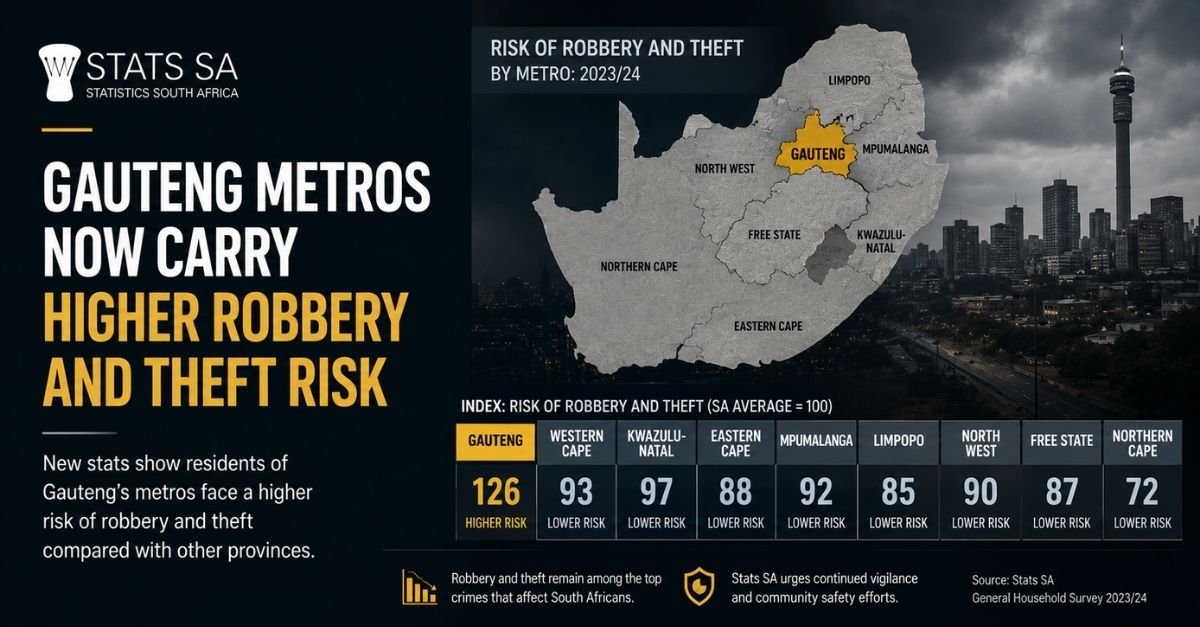
Stats SA, South Africa’s official statistics agency, released a brief that puts Gauteng‘s three metros, Johannesburg, Tshwane and Ekurhuleni, at a higher risk of robbery and theft than before. The agency did not give exact percentages in the release, but the wording makes clear that the trend is upward and that the metros now sit above the national average.
For owners of small and medium enterprises, the headline is more than a statistic. A rise in street-level crime usually translates into higher security expenses, steeper insurance premiums and, in the worst case, loss of stock or even harm to staff. Those costs can squeeze profit margins that are already tight because of load-shedding, rising input prices and a competitive market.
Why the numbers matter to SMEs
Robbery, in plain terms, is the unlawful taking of property by force or threat of force. Theft is the unlawful taking of property without force, for example, shoplifting or break-ins. Both crimes are recorded by the police and fed into Stats SA’s crime database, which is then used to calculate risk levels for each province and metropolitan area.
When a metro’s risk rating climbs, insurers typically respond by raising premiums for businesses that operate there. A small retailer that previously paid R3 000 a month for a basic security package might now be asked for R4 500 or more, depending on the insurer’s assessment of the local threat. Likewise, logistics firms that move goods through the metros may need to invest in GPS tracking, armed escorts or more secure warehousing, all of which add to operating costs.
Beyond the direct financial hit, there is a softer, but equally important, impact on employee morale and customer footfall. Workers who feel unsafe travelling to or from work are more likely to call in sick or look for jobs elsewhere. Customers may avoid shopping districts that have a reputation for crime, reducing sales for retailers and hospitality venues.
For entrepreneurs planning to set up new ventures in Gauteng, the data serves as a reminder to factor security into the business plan from day one. That could mean budgeting for CCTV, hiring security personnel, or even choosing a location in a suburb with a lower reported crime rate.
Wider context
The rise in robbery and theft in Gauteng comes at a time when South Africa’s overall crime statistics have been mixed. While some categories, such as homicide, have shown modest declines in recent years, property-related crimes remain stubbornly high. The government has pledged additional police resources to the metros, but budget constraints and staffing shortages have limited the speed of implementation.
From a macro-economic perspective, higher crime risk can deter foreign investment and slow the expansion plans of larger firms, which in turn reduces the spill-over benefits that SMEs often enjoy, such as supplier contracts, shared infrastructure and a larger pool of potential customers.
In the short term, the most actionable step for small business owners is to conduct a risk assessment. This involves reviewing past incidents in the immediate neighbourhood, consulting with local police liaison officers, and comparing insurance quotes. Some industry bodies, such as the Small Business Development Agency, offer free security audits that can help pinpoint the most cost-effective measures.
While the Stats SA release is brief, its implication is clear: Gauteng’s metros are becoming less safe for everyday transactions. Business owners who ignore the signal risk being caught off guard by a robbery, a theft or a sudden jump in insurance costs. Proactive planning, even if it means a modest increase in overheads now, could protect the bottom line and keep staff and customers feeling secure.