In a busy port warehouse on the outskirts of Durban, containers marked for the United States sit idle as workers wait for clearance. The silence is not just about paperwork, it reflects a looming uncertainty that could ripple through South Africa’s export-driven sectors.
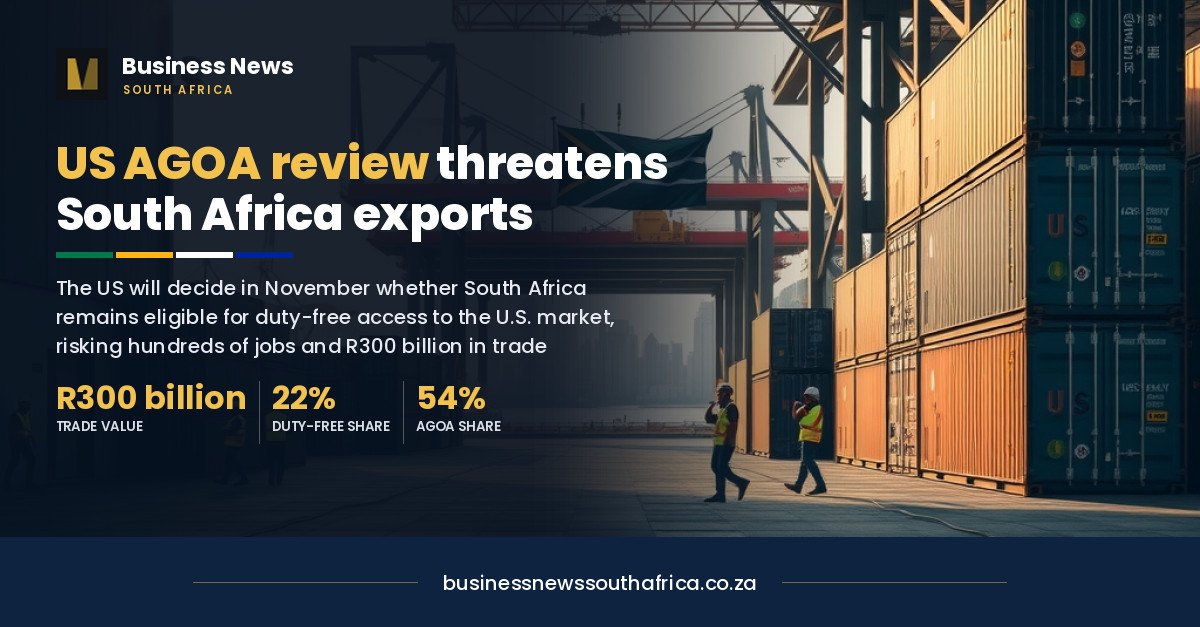
Trade union Solidarity’s public liaison, Jaco Kleynhans, told reporters that the United States is expected to announce its decision on who remains eligible for the African Growth and Opportunities Act (AGOA, a programme that grants duty-free access to the US market for qualifying African countries) “within weeks” and likely at the start of November. He warned that South Africa should not assume the recent extension of the programme to the end of 2028 guarantees continued eligibility.
“Although AGOA has been extended until the end of 2028, the White House determines eligibility on an annual basis,” Kleynhans said. “There is a good reason to fear that South Africa will be excluded next year.” The union’s claim is that exclusion would cause “immense damage”, hundreds of thousands of jobs, billions of rands in trade, and hundreds of businesses could be at risk.
South Africa has been the programme’s biggest beneficiary since its launch in 2000. Over its lifetime, the country accounted for 54% of all AGOA-related exports to the United States. Currently, about 22% of South African exports to the US enjoy duty-free status under AGOA, translating into roughly R300 billion in trade between 2019 and 2024. Economist estimates suggest half a million jobs depend on the arrangement, with agriculture, auto manufacturing and chemicals sectors feeling the strongest impact.
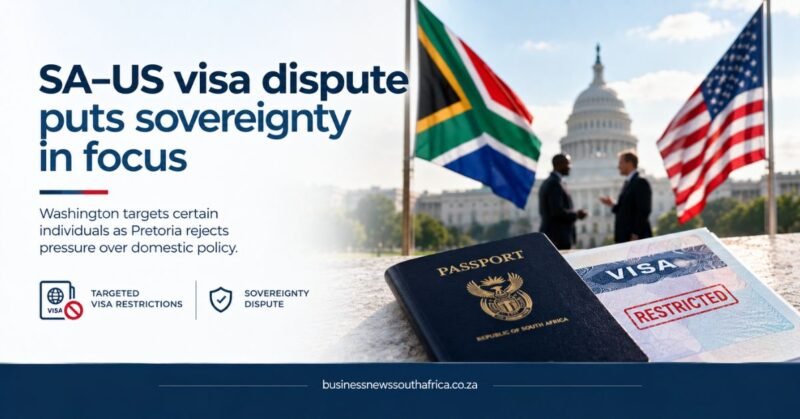
The timing of the review is especially precarious. Diplomatic relations with Washington have recently hit a low point. US Secretary of State Marco Rubio announced visa restrictions on certain South African individuals and families over policies such as Black Economic Empowerment (BEE) laws, expropriation without compensation, and the country’s stance on farm security. US Ambassador to South Africa Leo Brent Bozell warned of “a series of escalatory measures” and hinted that removal from AGOA could be one of them.
For small- and medium-sized exporters, the stakes are concrete. A textile maker in Gauteng that relies on duty-free US shipments could see its margins shrink dramatically if tariffs are re-imposed. An auto parts supplier in the Eastern Cape, which counts US-based OEMs among its top customers, would face longer lead times and higher costs, potentially forcing layoffs. Even businesses that are not direct exporters feel the knock-on effect, logistics firms, freight forwarders and local service providers all depend on the flow of goods.
While Solidarity urges the government to “set politics aside” and make a final case for remaining in AGOA, some analysts argue the programme’s importance may be overstated. The recent two-year extension to 2028 is seen by some as insufficient to restore investor confidence, with calls for a longer 10- to 15-year horizon. Moreover, tariffs imposed by the United States on certain goods can offset the duty-free advantage.
Oxford Economics analyst Jervin Naidoo offered a broader perspective, noting that the United States also benefits from keeping South Africa in the scheme. “The US needs South Africa in AGOA as much as South Africa wants to remain, as part of receiving preferential access to the US market,” he said, adding that the partnership helps counterbalance China’s growing trade presence and secures access to critical minerals.
For entrepreneurs and SME owners, the immediate question is how to prepare for a possible outcome. Diversifying export markets, exploring regional trade agreements, and engaging with government trade bodies are practical steps. The SME & Entrepreneurship section offers tools such as the commercial funding suite to help businesses navigate financing challenges that may arise from shifting trade dynamics.
As the November deadline approaches, the next few weeks will be decisive. If the United States decides to exclude South Africa, the ripple effects could be felt across factories, farms and offices alike. If the country remains on the list, the relief may be short-lived unless broader diplomatic issues are addressed.
Under South African law the Department of Trade, Industry and Competition prepares an annual compliance dossier that is sent to the United States Trade Representative for review. The dossier must demonstrate that the country meets the AGOA criteria, which include respect for the rule of law, market-based economic policies and the absence of discriminatory trade practices. The United States then issues a notice of eligibility, usually within a few weeks of the submission deadline, and publishes its decision in the Federal Register. For exporters, the timing of this process is critical because customs authorities need the official status before duty-free treatment can be applied to shipments.
When duty-free status is at risk, many South African firms turn to export credit agencies such as the Export Credit Insurance Corporation for short-term financing that can bridge higher tariff costs. Banks also tighten loan covenants for companies heavily reliant on AGOA, prompting businesses to renegotiate payment terms with overseas buyers. Supply-chain managers therefore start to map alternative routes, secure forward contracts and build inventory buffers. These steps help preserve cash flow and protect profit margins while the eligibility outcome is still uncertain.
The sectors most exposed to an AGOA decision, agriculture, automotive components and chemicals, have already begun to broaden their market base. Exporters are increasing sales to the European Union under the EU-South Africa Economic Partnership Agreement and to neighbouring SADC members through the African Continental Free Trade Area. Such diversification reduces dependence on a single market and spreads risk, but it also requires compliance with different standards, certification regimes and logistics networks, which can add complexity for small and medium enterprises.
Business leaders should monitor three key signals in the weeks ahead: any formal statements from the United States Trade Representative, changes in US visa policy that may hint at broader diplomatic pressure, and the release of the final AGOA eligibility list in early November. Trade associations will likely issue guidance on contingency planning, while the Department of Trade, Industry and Competition may launch a rapid response task team if exclusion is confirmed. Keeping abreast of these developments will allow companies to adjust production schedules, renegotiate contracts and, if necessary, activate alternative export strategies before the new trade regime takes effect.