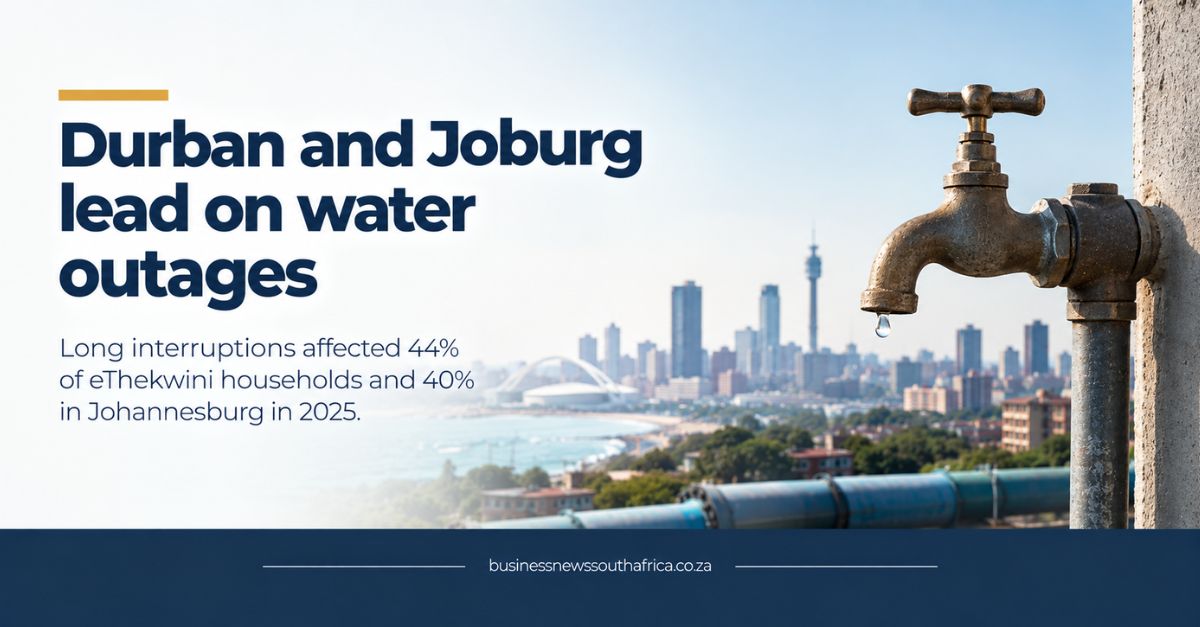
According to a Moneyweb report, eThekwini (Durban) and Johannesburg recorded the longest water outages among South Africa’s metros in 2025, with 44% and 40% of households respectively experiencing cuts of two days or more.
The national household survey by Stats SA shows that 76% of South Africans now have a tap inside their home or on their property, but more than a third of all households suffered prolonged outages. The eight metros performed slightly better than the national average, with 30% of households reporting long cuts. Cape Town fared best at 8%, while eThekwini and Johannesburg were the worst.
The report attributes the problem mainly to old, poorly maintained pipes that leak and burst. In water-utility terms, this is called non-revenue water, water that is lost before it can be billed. In eThekwini, the Auditor-General estimates that 61% of water is lost to leaks, illegal connections or non-billing. By contrast, the Department of Water and Sanitation puts the loss in Cape Town at about 25%.
Financially, the impact is huge. The latest review by National Treasury found that the metros together lost nearly R8.7 billion worth of water in the 2023/24 financial year. Nationwide, the share of water lost or never paid for rose from 37% in 2014 to 47% in 2023, according to the No Drop report. The international average sits around 30%.
Why the outages matter for businesses
For small and medium enterprises that rely on water, from restaurants and laundries to manufacturing units, a two-day cut can halt production, force staff to work from home or require costly temporary water supplies. The added expense of bottled water, generators for pump stations or extra staffing for manual cleaning erodes profit margins. In a tight credit environment, these unexpected costs can strain cash flow and limit growth plans.
What remains unclear is the timeline for large-scale upgrades and the exact amount of capital that will be mobilised. Until the pipe networks are modernised, businesses in the hardest-hit metros will have to continue planning for water disruptions as a regular operational risk.
For more analysis on how municipal water challenges intersect with regulatory policy, see our Regulatory & Policy coverage.