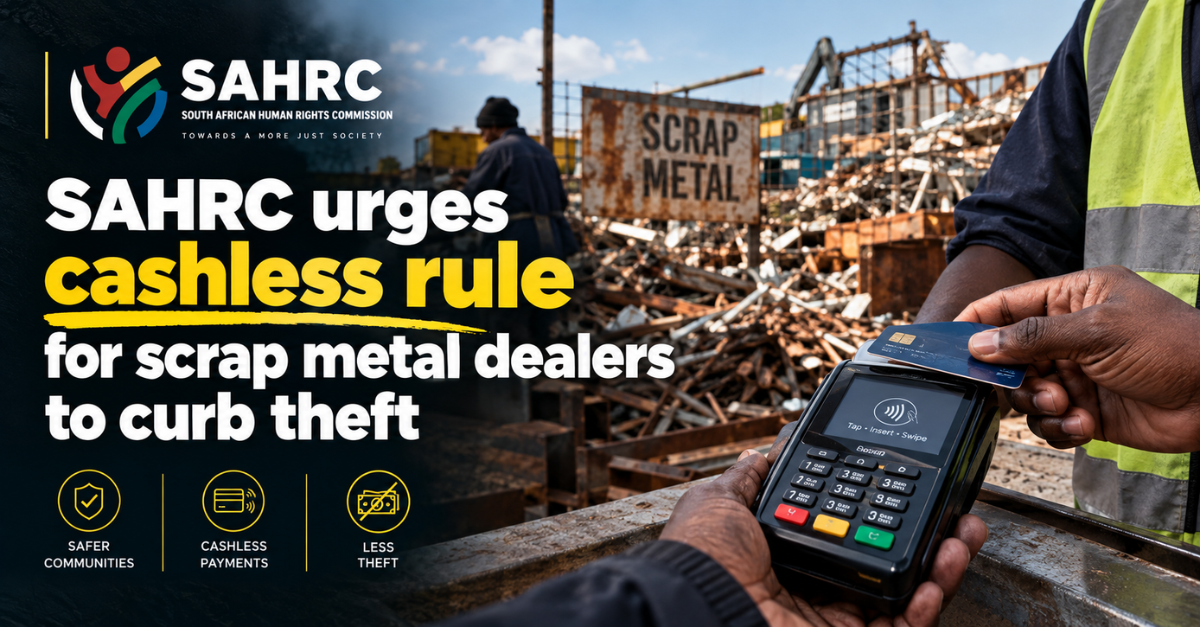
In townships across the country, copper cables are ripped from power poles, water pumps are stripped and whole neighbourhoods are left without electricity or clean water. The loss is not only a cost to the state, it is a breach of the rights that the constitution guarantees to every South African.
According to a policy brief published this week by the South African Human Rights Commission (SAHRC), the theft and illegal trade of scrap metal should be treated as a human rights crisis. The commission argues that when the state fails to prevent foreseeable harm, it may be held constitutionally responsible for the damage suffered by communities that already live on the edge of service delivery.
The brief estimates that the theft of metals from public infrastructure costs the fiscus roughly R45 billion a year. Thousands of kilometres of copper cable have been stolen from state entities such as Eskom and Transnet, resulting in hundreds of millions of rands in direct losses. A 2026 crime intelligence report flagged 121 tonnes of suspected stolen copper being moved across borders.
Why cash matters
The commission says cash transactions are a key weak point because they leave little paper trail. “Cash transactions reduce traceability and can facilitate the movement of stolen metal through apparently legitimate transactions,” the SAHRC wrote. To close that gap, it proposes that all scrap metal dealers must use cashless payments, electronic transfers, card payments or other digital methods, and keep records for at least five years.
Cashless payments, in plain language, mean paying with a bank transfer, debit or credit card, or any other electronic method that creates a digital record. The Financial Intelligence Centre would be tasked with monitoring suspicious patterns in these transactions and reporting them to the South African Police Service and the International Trade Administration Commission.
For small scrap metal dealers, the shift could mean buying a point-of-sale device, setting up a business bank account or learning new software. Those costs are not trivial, especially for informal operators who rely on cash to keep daily cash flow moving. At the same time, the commission argues that the broader benefit, fewer power cuts, restored water pumps and a reduction in the R45 billion annual loss, outweighs the short-term expense.
The SAHRC also points to the Second-Hand Goods Amendment Bill, which is currently open for public comment but has not yet been gazetted. The bill would amend the original Second-Hand Goods Act to tighten oversight of the scrap metal trade, including the proposed cashless requirement. The commission urges Parliament and the relevant portfolio committees to recognise infrastructure vandalism as a human rights issue and fast-track the bill.
For entrepreneurs in the recycling sector, the proposal signals a regulatory shift that could level the playing field. Operators who already run fully electronic businesses may find new opportunities, while those who continue to rely on cash could face penalties or lose market access. The change also aligns with broader government efforts to digitise the informal economy, a trend that has been gaining momentum in recent years.
Stakeholders who want to prepare can start by reviewing their payment processes, consulting with banks about low-cost electronic solutions, and keeping detailed transaction logs. The SAHRC’s brief includes a call to action for businesses in the metal value chain, dealers, recyclers, transporters and exporters, to ensure their operations do not contribute to human rights harm.
While the commission’s recommendations are not yet law, they set a clear direction for policymakers. If adopted, the cashless rule could become a new compliance requirement for anyone buying or selling scrap metal in South Africa.
For small business owners who need help drafting compliance documents, the Compliance Document Generator can provide a starting point.
BusinessTech reported that the SAHRC frames the problem starkly. “the illicit scrap metal economy cannot be addressed through criminal enforcement alone” the commission said, arguing instead for a mandatory cashless payment requirement for every copper scrap transaction rather than criminal enforcement alone. It also stresses that the Second-Hand Goods Amendment Bill, open for public comment but not yet gazetted, must be amended to embed this cashless requirement in the original Act. By insisting on electronic records kept for at least five years, the SAHRC hopes to close the loophole that lets stolen metal move through apparently legitimate channels.
The mechanism works by obligating every dealer to process sales through bank transfers, debit or credit cards, or other electronic platforms that automatically generate transaction data. This data is then accessible to the Financial Intelligence Centre, which flags irregular patterns and forwards them to the South African Police Service and the International Trade Administration Commission. For a South African business owner, the shift means that cash-only operations will lose market access, while those already using digital tools can demonstrate compliance and avoid penalties. The next step to watch is the formal gazetting of the amendment, which will turn the guidance into enforceable law.
Under South African law, an amendment to the Second-Hand Goods Act must be published in the Government Gazette before it becomes binding. The SAHRC notes that, although the bill is open for public comment, no gazetted publication has been identified, creating a window for stakeholders to influence the final wording. Once gazetted, the amendment will give regulators the authority to require electronic payment records and to impose fines or revoke licences for non-compliance. Business owners should therefore monitor the Gazette and the portfolio committees’ deliberations, as any delay or change could affect the timing and scope of the cashless mandate.
For operators in the recycling chain, practical preparation involves more than buying a point-of-sale device. They should engage with their banks to negotiate low-cost transaction fees, integrate simple accounting software that archives records for the required five-year period, and train staff on recognising suspicious transaction patterns. Keeping detailed logs will not only satisfy the Financial Intelligence Centre’s monitoring role but also provide evidence if an audit is triggered. As the amendment moves toward finalisation, owners who adopt these steps early will be better positioned to maintain supply contracts and avoid disruption when the cashless rule becomes a statutory requirement.