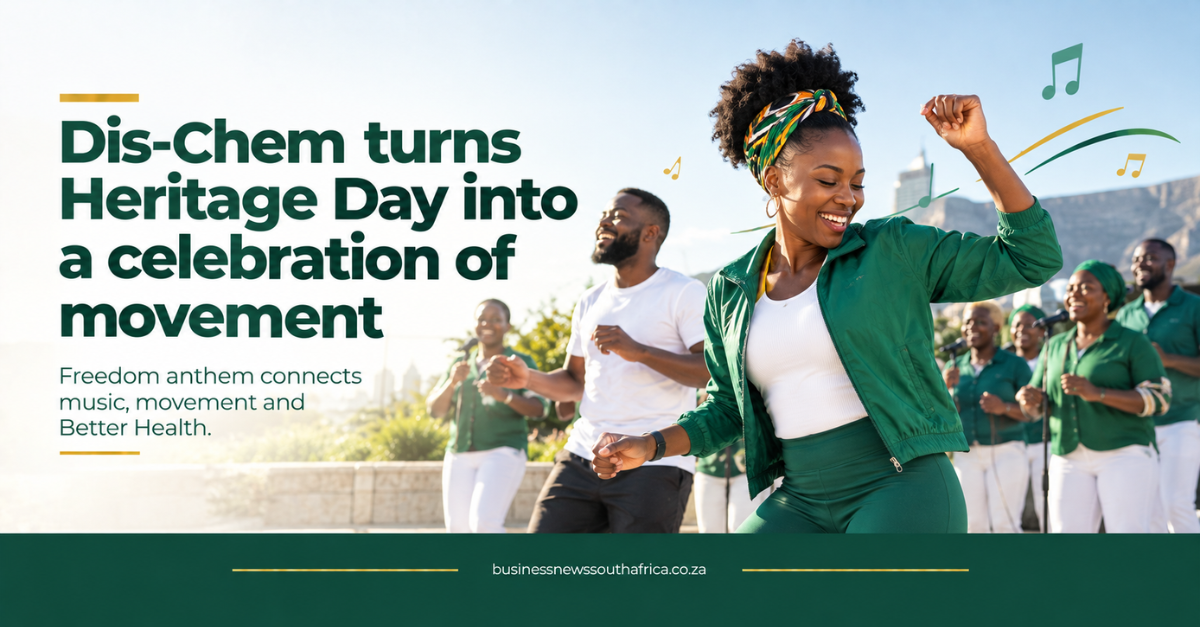
According to a press release on Bizcommunity, Dis-Chem unveiled an original anthem called “Freedom” on Heritage Day, 24 September. The song is meant to celebrate movement and reinforce the retailer’s broader health and wellness proposition.
The campaign began with a simple question posted to Dis-Chem’s social media followers: “What does Better Health mean to you?” The collection of answers formed the creative brief for acclaimed South African conductor, composer and producer Ralf Schmitt, who interpreted the responses as a song about freedom.
Dis-Chem chief marketing officer Megan Kim de Vroeg said the retailer started 2026 with a strong belief that encouraging South Africans to move even five minutes a day can bring health benefits. Rather than attaching the Better Health message to an existing track, the company built a cultural asset from the community’s own words.
The “Freedom” choir was assembled from more than 100 employee auditions and now includes 40 staff members, 32 from Gauteng, three from the Western Cape and five from KwaZulu-Natal. Choir member Glen Sefularo, a merchandiser at the Tambotie Mall branch in Randfontein, said the song reflects the individuals who created it and the wider South African response.
For the commercial release the choir was joined by Mi Casa frontman J’Something, Amapiano vocalist Thatohatsi and hip-hop MC Early B. Schmitt, who also co-founded the Ndlovu Youth Choir, said the collaboration adds a lifestyle and entertainment dimension that could carry the Better Health message beyond the retailer’s traditional channels.
The move mirrors a broader shift in lifestyle marketing, where retailers are looking for ways to build relevance beyond products and promotions. Small and medium-size retailers can see a lesson in how Dis-Chem used employee participation and community-generated content to create an authentic brand story that resonates with consumers. The anthem is now available on Spotify, Apple Music and other major streaming platforms, and the video is on Dis-Chem’s YouTube channel.
While the launch coincided with national conversations about freedom, safety and dignity, Dis-Chem chose to release the song, positioning freedom of movement and safe spaces as part of its vision for a healthier society. The campaign demonstrates how a retail brand can turn a health message into a cultural experience that encourages participation, shares, and potentially drives foot traffic to stores.
Bizcommunity reported that the Freedom track made its debut internally in April when the newly formed Dis-Chem Freedom Choir performed it at the retailer’s Leadership Summit. The live rendition was used to rally senior staff around the Better Health agenda before the public launch on Heritage Day. Executives noted that the early performance helped fine-tune the arrangement and gave employees a sense of ownership, turning a marketing idea into a shared organisational experience. By showcasing the song at a high-visibility internal event, Dis-Chem created momentum that spilled over into the external rollout, reinforcing the link between leadership commitment and employee engagement.
Bizcommunity reported that the accompanying music video was choreographed by Cape Town-based jazz-funk and hip-hop choreographer Rudi Smit, adding a visual layer of dance and physical movement to the campaign’s narrative. The choreography blends street-style steps with more fluid movements, mirroring the song’s theme of freedom and encouraging viewers to imitate the routines on social media. This creative partnership extends the brand’s message beyond audio, positioning Dis-Chem as a catalyst for active lifestyles. The video’s release on the retailer’s YouTube channel provides a shareable asset that can be repurposed across digital channels, amplifying reach without additional advertising spend.
Bizcommunity reported that Mi Casa frontman J’Something was drawn to the campaign because of its purpose, stating that Dis-Chem’s passion for improving lives “can either be seen as marketing jargon, or it can be understood as the genuine purpose behind the business.” He added that he hopes the Heritage Day launch will “revive the acknowledgement and awareness of our freedom, whether it’s freedom to move or freedom to express.” The retailer also considered delaying the release in light of national conversations about women’s safety, but ultimately chose to proceed, linking safe spaces to its vision of a healthier society. This decision underscores how brands weigh social context against marketing timelines.
For South African business owners, collaborations that fuse culture, music and employee participation operate as multi-channel brand extensions. By converting a health message into an original anthem, a retailer creates intellectual property that can be streamed, shared and monetised independently of traditional advertising. The process typically involves gathering consumer insights, engaging creative talent, and integrating internal stakeholders to ensure authenticity. Because the content lives on platforms such as Spotify, Apple Music and YouTube, it continues to generate impressions long after the initial launch, offering a cost-effective way to sustain brand relevance and foster community loyalty.
Going forward, companies should monitor streaming metrics, social engagement and foot-traffic data to gauge the impact of cultural campaigns. Tracking playlist placements, video views and user-generated content can reveal how well the message resonates with target audiences. In addition, retailers may look to replicate the model by pairing future product launches with bespoke creative assets, leveraging employee choirs or local artists to deepen connections. Observing how Dis-Chem integrates the anthem into in-store promotions or health-related events will provide clues on scaling such initiatives across sectors, helping businesses decide when to invest in similar cultural-driven strategies.
For more on retail and consumer brands, see our Retail & Consumer coverage.