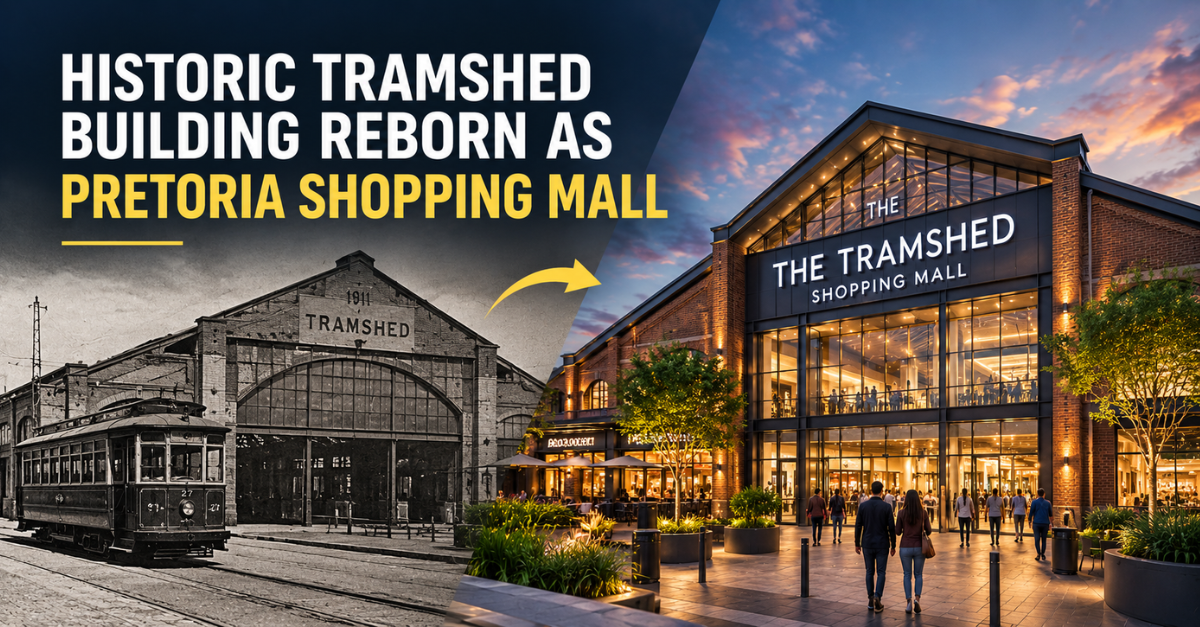
Redbrick walls and a metal roof that once sheltered electric trams now frame a bustling retail centre in the heart of Pretoria. For small retailers and service providers, the Tramshed Mall represents a rare blend of heritage ambience and modern foot traffic.
Originally built in 1912 as a depot for the city’s tram system, the structure has been transformed into a mall that houses anchors such as Pick n Pay, Dischem and Virgin Active, alongside a range of clothing, beauty and banking outlets. The centre provides roughly 12 800 m² of lettable space, that is, area that can be rented out to tenants, and sits close to major roads and public-transport hubs on Francis Baard Street.
For entrepreneurs looking for a physical storefront, the mall’s size and location mean access to a steady stream of shoppers without the need to build a new premises from scratch. The presence of a Capitec Bank branch and government offices also draws regular visitors, creating cross-traffic that can benefit smaller shops.
The tram network that once ran from Church Street to the Union Buildings operated for almost four decades before its final run in 1939. After the trams were replaced by trolley buses, the depot survived while much of the original track disappeared. Its survival makes it one of the few tangible links to Pretoria’s early public-transport history.
The Tramshed Mall is owned and operated by Emira Property, a JSE-listed real estate investment trust (REIT). A REIT is a company that owns income-producing property and distributes most of its earnings to shareholders. Emira’s portfolio includes other South African malls such as Ben Fleur, Randridge and Wonderpark, as well as residential and commercial assets at home and in the United States.
Repurposing historic buildings for retail is a growing trend in South Africa, offering developers a way to preserve cultural landmarks while meeting contemporary demand for shopping space. Such projects can stimulate local economies by creating jobs, attracting tourists and providing affordable premises for small businesses.
Until the end of 2025 the monthly Market at the Sheds event brought food, music and craft vendors to the site, but no public market has been held there since December 2025. The organisers now focus on private events and collaborations, meaning the mall’s open-air areas remain available for bespoke functions.
Why developers convert heritage buildings rather than demolish them
Adaptive reuse, converting an industrial or heritage building to a new commercial purpose rather than demolishing it, has become an established strategy for property developers globally, and increasingly in South Africa. The economics are straightforward: a structure like the Tramshed already has the bones, load-bearing walls, roof structure and a recognisable street presence, so a developer saves substantially on raw construction cost compared with building new, while gaining a building with genuine character that is difficult and expensive to replicate. Heritage status can also carry legal obligations that shape what a developer is permitted to change, which is part of why conversions like this tend to preserve visible structural elements, exposed brick and roof trusses in Tramshed’s case, rather than concealing them behind conventional mall finishes.
For a real estate investment trust like Emira, a converted heritage asset also functions as a point of differentiation in a retail property market where most malls compete on the same anchor-tenant formula, a supermarket, a pharmacy chain, a gym and a cluster of national retail brands. A building people recognise and have an emotional connection to can generate foot traffic independent of its tenant mix, an advantage a purpose-built shopping centre in a business park typically cannot claim.
Whether the Tramshed model gets repeated elsewhere in the city will likely depend on how few comparable heritage structures remain available for conversion, since Pretoria, unlike some older industrial cities, has a relatively small stock of large-footprint buildings from the tram and early-industrial era still standing and structurally sound enough to redevelop.