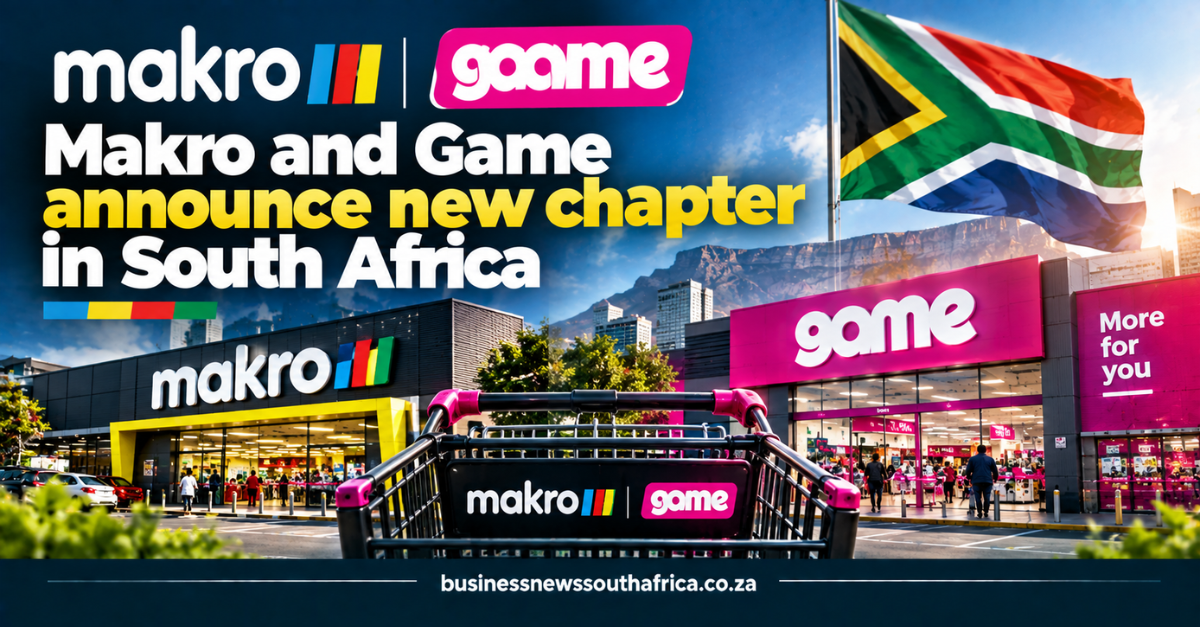
Newsday reported that Makro and Game, the two large-format retail chains owned by Massmart, are entering a new chapter in South Africa. The brief announcement did not spell out the exact nature of the change, but the wording suggests a significant strategic move.
Both Makro and Game have been mainstays of the wholesale and discount retail space for decades. Makro operates as a cash-and-carry wholesaler serving small businesses, while Game focuses on low-price consumer goods for the broader public. Their parent, Massmart, is listed on the JSE and is majority-owned by Walmart, the global retail giant.
For small and medium-sized enterprises (SMEs) that rely on Makro for bulk purchases, any shift in store format, pricing policy or supply chain could affect cash flow and inventory planning. Game’s discount model also influences the margins of local manufacturers that sell through its shelves. A change, whether a re-branding, a consolidation of locations or a new digital platform, will likely ripple through these supplier relationships.
South Africa’s retail sector has been under pressure from several fronts: high inflation, load-shedding interruptions, and the rapid rise of online shopping. Both chains have previously experimented with e-commerce pilots, but the pace of digital adoption remains uneven. If the announced “new chapter” involves expanding online ordering or integrating click-and-collect services, it could offer SMEs a more reliable channel to reach consumers despite power cuts.
What the change could mean for the market
Analysts have noted that Massmart has been reviewing its store portfolio to improve profitability. A consolidation of under-performing outlets, or a shift toward smaller, more flexible formats, would align with trends seen in other markets where large retailers trim excess space to cut costs. For suppliers, this could mean tighter negotiations and a greater focus on fast-moving items.
Conversely, if the “new chapter” signals an investment in store upgrades or a partnership with local producers, it could open new shelf space for South African brands. The outcome will hinge on the specifics that Massmart has yet to disclose.
Until more details emerge, businesses that depend on Makro or Game should monitor official communications from Massmart and be prepared to adjust purchasing strategies. Keeping an eye on any changes to credit terms, delivery schedules or promotional calendars will help mitigate risk.
Massmart, majority owned by Walmart, has previously outlined plans to bring exclusive Walmart private-label products, ranging from toys and snacks to baby care items and bulk American breakfast cereals, into Makro, Game and Builders stores, part of a strategy Massmart’s chief merchandise officer Herman Venter has described publicly. Separately, the group has been weighing the closure of roughly 20 Game stores across Gauteng, the Western Cape and KwaZulu-Natal, with some sites potentially redeveloped into standalone Walmart-branded stores, subject to engagement with affected employees. Massmart’s own investor and corporate disclosures carry further detail on the store network changes as they are finalised. For related coverage, see this site’s Retail and Consumer coverage.
Massmart’s own supplier engagement plans, including a summit aimed at attracting local manufacturers and growers, point to Walmart’s broader playbook of pairing an international private-label push with continued local sourcing commitments, a balance the group will need to strike carefully given how politically sensitive foreign retail expansion into township and township-adjacent markets has historically been in South Africa.
Analysts covering the discount retail sector have noted that a successful Walmart-style private label rollout depends heavily on price positioning relative to existing store brands, since South African shoppers in this segment are typically highly price sensitive and quick to switch if a new private label costs more than the generic alternative it replaces.
The wholesale side of Makro’s business faces a separate competitive pressure from smaller, more agile cash-and-carry operators that have opened closer to the informal traders and spaza shops Makro traditionally serves as customers.