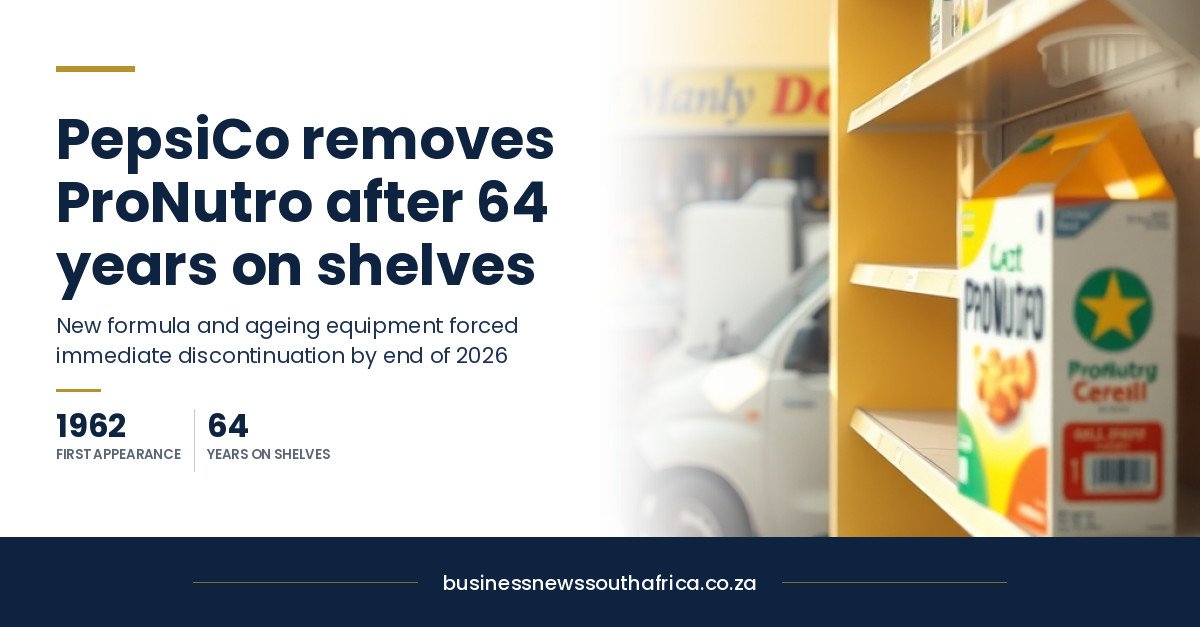
Empty cereal aisles in townships and suburbs alike now tell a familiar story: a product that has been on South African shelves since 1962 is gone. For small grocers, the loss of ProNutro means one less staple that draws regular foot traffic, and for long-time shoppers it removes a breakfast option that many grew up with.
According to a statement from PepsiCo’s customer-care team, the decision to stop production was driven by two factors. First, a new formulation introduced earlier this year sparked a wave of complaints about taste and texture. Second, the machinery used to make the original cereal had become unreliable, and the company judged that replacing the equipment would not solve the mixability issues that consumers highlighted.
PepsiCo said the new formulation was intended to modernise the product, but social media users described the taste as “off” and the texture as “strange”. The company apologised and noted that while the new production process would not fully resolve texture challenges, it would continue to work through feedback. The customer-care line confirmed that the discontinuation is immediate and that no further batches will be produced for the remainder of 2026.
Why the brand mattered
ProNutro was marketed as a nutraceutical cereal, a food that also provides health benefits beyond basic nutrition. In the 1960s the South African Institute for Medical Research helped develop the brand to combat widespread protein deficiency. The original high-protein version offered plant-based protein, 13 vitamins and four minerals, and over the decades the range expanded to include chocolate, banana and strawberry flavours.
For many small retailers, ProNutro occupied a niche that attracted health-conscious buyers and families looking for a quick, fortified breakfast. Its removal may force shop owners to replace it with other, possibly more expensive, imported alternatives, squeezing margins in an already tight retail environment.
The story fits a broader pattern in the consumer-goods sector where legacy brands are retired when production lines become costly to maintain or when reformulations fail to win over loyal customers. While larger manufacturers can absorb the shock, independent retailers often feel the impact more acutely because they have less bargaining power to negotiate new product lines.
PepsiCo’s statement is a claim from the company; there has been no independent verification of the equipment issues or of any cost-benefit analysis that led to the final decision. What is clear is that the brand will not return in its original form, and the company says it will use the feedback to improve future products.
For SME owners, the episode underscores the importance of staying alert to supply-chain changes. When a long-standing product disappears, it can be an opportunity to introduce a local alternative or to renegotiate shelf space with other suppliers. Keeping an eye on consumer sentiment on social media can also give early warning of potential disruptions.
More details can be found in the original report from BusinessTech. For further reading on how product discontinuations affect small retailers, see our Retail & Consumer coverage.
In South Africa, the withdrawal of a long-standing SKU such as ProNutro typically triggers a formal notice to distributors under the Consumer Protection Act, which requires retailers to be informed of any change that could affect consumer choice. The notice period is usually 30 days, but manufacturers may invoke a “force-majeure” clause when equipment failures make continued production unfeasible. For small shop owners this means they must quickly adjust inventory plans, renegotiate terms with existing suppliers and seek alternative products that meet the same nutritional claims. The speed of the communication often determines whether a retailer can maintain shelf space without a costly gap in stock.
South African retailers have increasingly turned to local manufacturers to mitigate the risk of imported product disruptions. The Department of Trade, Industry and Competition offers incentives for producers that source raw materials domestically and meet the Broad-Based Black Economic Empowerment (BBBEE) criteria, which can lower the cost of new product introductions. By partnering with a local cereal mill, a shop can benefit from shorter lead times, reduced freight expenses and the ability to co-brand a product that fills the nutritional niche left by ProNutro. Such collaborations also align with government goals to boost domestic food processing capacity.
Products marketed as nutraceuticals must comply with the Foodstuffs, Cosmetics and Disinfectants Act and the associated regulations on health claims. In practice, any cereal that advertises added vitamins, minerals or protein benefits must be backed by laboratory analysis approved by the South African Health Products Regulatory Authority. When a brand is discontinued, the regulatory file is closed, but the data remains on record, allowing new entrants to reference the same standards when developing a replacement. Understanding these requirements helps retailers evaluate whether a proposed substitute truly matches the health profile that consumers expect.
Looking ahead, SME owners should monitor the upcoming CIPC filings that often reveal new product launches or the re-registration of existing brands under different company names. The Retail Price Index, published monthly by Statistics South Africa, will also show whether replacement cereals are entering the market at higher price points, signalling potential margin pressure. Finally, keeping an eye on consumer sentiment through platforms such as Twitter and local forums can provide early warning of taste or texture issues before they become widespread, giving retailers a chance to act before a product is withdrawn.