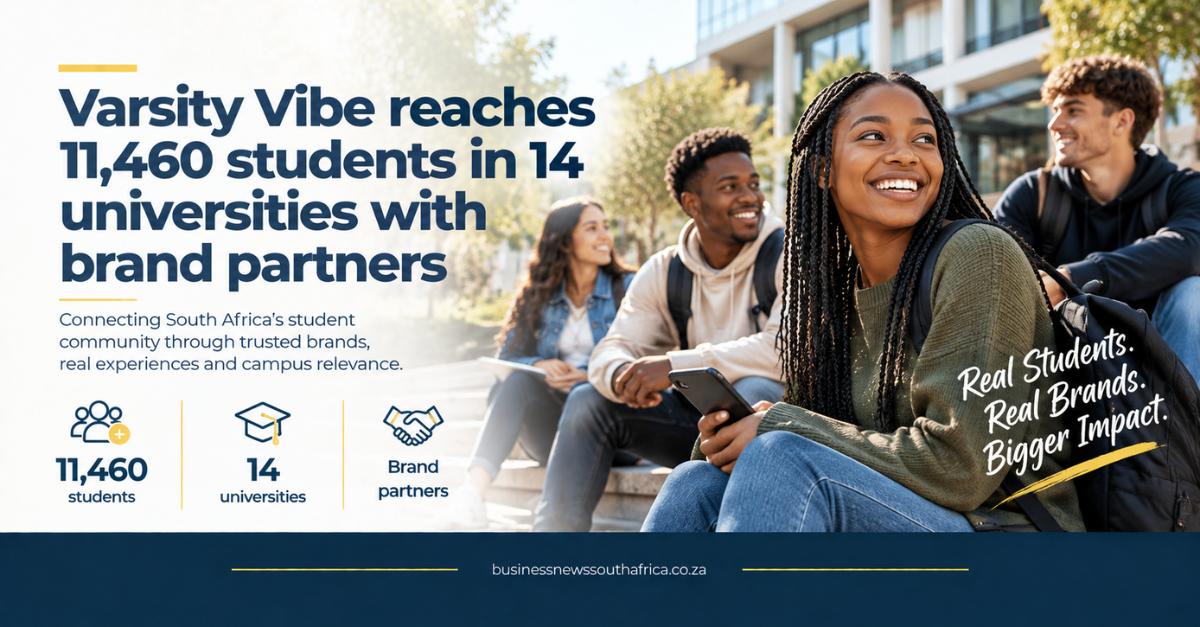
According to a press release on Bizcommunity, Varsity Vibe, a platform that connects students with brand experiences, says its second semester activations reached just over 11,460 students across seven provinces.
In marketing speak, an activation is a short-term event that lets a brand interact directly with a target audience. Varsity Vibe ran these activations at 14 universities and 16 campuses, including TUT Pretoria, TUT Polokwane, the University of the Free State, CUT Bloemfontein, North West University, Wits University, the University of Pretoria, the University of Johannesburg, UKZN Westville, UKZN Howard, Nelson Mandela University, the University of Cape Town, Stellenbosch University and the University of the Western Cape.
The platform highlighted eight brand partners that funded the events: Standard Bank, Virgin Active, Krispy Kreme, The FIX, Samsung, Side Step, H&M and Uber. The release states that none of the reach would have been possible without these partners.
Two new campuses joined the roster this semester, Vaal University of Technology and Eduvos Tygervalley, bringing the total number of activation sites to 14 universities and 16 campuses.
The first semester activations earned a commendation for the Best Short-Term Marketing Campaign at the Loyalty Awards held in the second week of September, according to the company.
Why the numbers matter for brands and small businesses
Students represent a sizable consumer segment with growing purchasing power. For brands, especially small and medium enterprises that lack national advertising budgets, campus activations offer a cost-effective way to build awareness and trial among young adults. The press release suggests that the Varsity Vibe model can deliver measurable reach, over 11,000 students, in a short period, which may encourage other firms to consider similar partnerships.
In an economy where many consumers feel the squeeze, the platform frames its work as a way to support students who might otherwise miss out on brand offers, while giving brands a channel to demonstrate social responsibility.
As Varsity Vibe expands its membership and brand network, the company says its goal remains to extend the advantages of its platform to as many students as possible, a claim that will need to be watched as the next semester unfolds.
For more stories on student-focused marketing and SME opportunities, visit our SME & Entrepreneurship section.
Bizcommunity reported that Varsity Vibe thanked its eight brand partners, Standard Bank, Virgin Active, Krispy Kreme, The FIX, Samsung, Side Step, H&M and Uber, for making the second-semester reach of just over 11,460 students across seven provinces possible. The statement highlighted that the activation roster now includes two new campuses, Vaal University of Technology and Eduvos Tygervalley, expanding the footprint to 14 universities and 16 campuses. It also noted that the organisation has marked seven activation rounds since its inception, adding to “over a dozen campus appearances” over the years. This cumulative experience underpins the platform’s claim to extend its advantages to as many students as possible.
According to the same source, the growth in membership and brand partnerships has translated into a broader impact, with the platform now operating in seven provinces and engaging students at institutions such as TUT Pretoria, TUT Polokwane, the University of the Free State and CUT Bloemfontein. The release emphasised that the added campuses and the steady stream of activations reinforce the team’s “hard work, sacrifice, perseverance and consistency”. By maintaining a presence at both established sites like the University of Cape Town and newer locations, Varsity Vibe demonstrates a scalable model that can adapt to diverse campus environments.
The source material also stressed that the first-semester activations earned a commendation for the Best Short-Term Marketing Campaign at the Loyalty Awards held during the second week of September. This accolade was presented as evidence of the platform’s ability to deliver measurable outcomes for partners while supporting students in an economic climate that “frequently leaves the majority behind”. By positioning brands as supporters of student needs, the programme seeks to align commercial objectives with social responsibility, a narrative the release described as a privilege.
In practice, a short-term activation involves a brand funding a campus event that provides product samples, experiential activities or digital engagement in exchange for direct contact with students. For a South African business owner, this arrangement offers a low-cost entry point to a youthful demographic that is otherwise difficult to reach through traditional media. The key metrics typically include headcount, brand recall and post-event sales lift, all of which can be tracked through on-site registration and follow-up surveys. Companies should watch for the timing of university calendars and the availability of partner venues, as these factors influence activation scheduling and overall effectiveness.
Looking ahead, businesses interested in replicating this model should monitor the platform’s upcoming semester plans, particularly any announcements of new university partners or expanded brand line-ups. Changes in university enrolment patterns or shifts in provincial economic conditions could affect student availability and purchasing power. Keeping an eye on future award recognitions or industry benchmarks will help gauge whether the activation approach continues to deliver the promised reach and brand equity for participating firms.