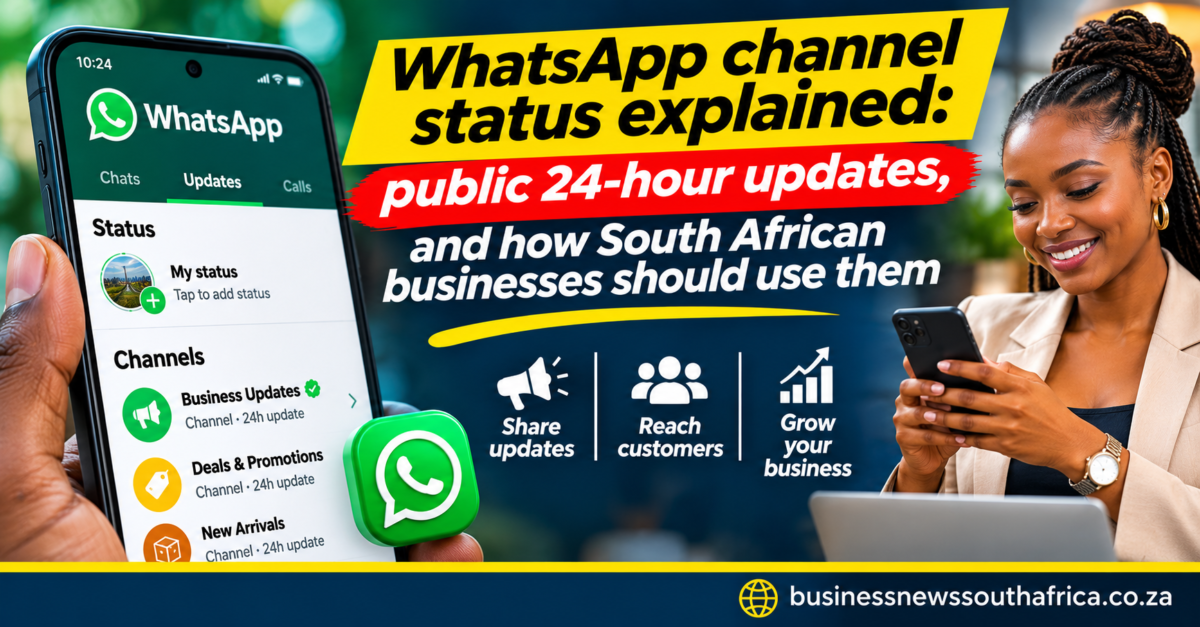
WhatsApp channel status is now showing up for South African channel admins. On Wednesday 18 November 2026, WhatsApp displayed an “Introducing channel status” prompt to the admin of a channel run from South Africa, telling them they can post statuses that disappear after 24 hours and that anyone can see. WhatsApp’s own Help Center now has an article on it, but we could not find a press release, blog post or launch date from WhatsApp or Meta, and no South African outlet appears to have covered it yet.
What WhatsApp channel status is
According to WhatsApp’s Help Center article “About channel status”, a channel admin can share channel statuses that last 24 hours. For people who follow the channel, they appear alongside other statuses. People who do not follow the channel can also see them, in the Channels directory or by visiting the channel. Each one is labelled “Channel status” and shows the channel’s name, so it is easy to tell apart from a friend’s status.
The in-app prompt makes three points, which match the Help Center:
- It expires. Statuses “disappear after 24 hours”.
- It is public. “Anyone can view, react or reshare.”
- You stay private. Viewers see the channel, not you: they cannot see your phone number, profile picture or name.
People can like a channel status, forward it to a chat, reshare it to their own status, or hide or report it. As the admin, you cannot see who viewed or reacted. WhatsApp says you can only see the total number of views and reactions for each status. An admin can also forward another channel’s status to their own channel, where it is labelled “Forwarded” and links back to the original.
The Help Center carries a warning that matters: WhatsApp says it is “building and testing out new features that may not be available to you yet”, and recommends keeping the app updated.
When did it reach South Africa?
There is no South African launch date, and WhatsApp has not published one for anywhere. The feature appears to be switched on channel by channel, not country by country, and admins cannot apply for it. The independent tracker WABetaInfo reported a first rollout to select channels on about 27 May 2026, and a later report said WhatsApp was expanding it to more channels around 28 September. We found nothing newer. A South African channel could therefore have had it at any point since late May, and gets it when WhatsApp enables it for that channel. The prompt we saw on 18 November is a confirmed local sighting, not a launch date.
The audience is already there. About 93.3% of South African internet users aged 16 and over used WhatsApp in the past month, the highest of any platform listed in DataReportal’s Digital 2027 report for South Africa, which uses GWI data from the second quarter of 2026. Meta said in June 2025 that the Updates tab, where channels and statuses live, is used by 1.5 billion people a day worldwide.
How a business can use channel status
Channel status suits things that expire today. Our suggestions, built on the limits above, not WhatsApp’s advice:
- Time-limited offers and changes: a daily special, a restock, today’s opening hours or a closure, a pop-up location, an event reminder.
- Countdowns and openings: a same-day diary slot, a closing date, a funding window opening.
- A pointer to the lasting post. A normal channel update stays in the channel and supports polls and reactions. A status disappears, so use it as the reminder and keep the full detail in a channel update or on your own page.
A few practical habits are worth testing: one message per status with a clear image or short clip, a fixed time each day for two weeks before you judge it, and a distinct link or code on each post so you can count what actually results. Check on your own channel whether a link inside a status can be tapped, because WhatsApp’s article does not say.
For measurement, WhatsApp’s guidance for the WhatsApp Business app says channel insights show 30 days of growth and reach, accounts reached, top regions, and follows and unfollows, plus reactions and poll results. For a status itself, you get view and reaction totals only.
The rules to respect
- Everything is public. WhatsApp warns that anyone can screenshot or record channel content, and deleting a channel does not delete copies other people hold. Do not post customer details or anything you would not put in a shop window.
- A channel is a one-way broadcast. Followers cannot reply, and WhatsApp does not give you a customer list. For statuses you cannot see who viewed or reacted, only totals.
- Marketing contact is a separate step under POPIA. The rule that matters is section 69 of the Protection of Personal Information Act: electronic direct marketing is prohibited unless the person has consented or is an existing customer. The Information Regulator’s guidance note on direct marketing says silence is not consent, a non-customer may be approached only once to ask for consent, and every message must identify the sender and offer a way to stop. The safest route is to let people message your business number first through a link or QR code, then ask for permission. Do not buy or scrape numbers. Our guide to the POPIA response plan covers what else the Act expects of a small business.
- Keep promises honest. A 24-hour offer should actually end after 24 hours.
What we still do not know
WhatsApp has not said which channels get the feature next, whether a link in a channel status can be tapped, or which formats are supported beyond what trackers have reported (photos, video, text and stickers). Channel subscriptions and promoted channels are available only “in some countries”, according to WhatsApp, and we could not confirm whether South Africa is one of them. If your channel has the feature, WABetaInfo reports that you will see a create-status option at the top of the Updates tab or inside the channel. If it does not yet, keep the app updated and use normal channel updates in the meantime.
This article is general information. It describes WhatsApp features that WhatsApp says it is still testing, so check your own app before you plan around them.