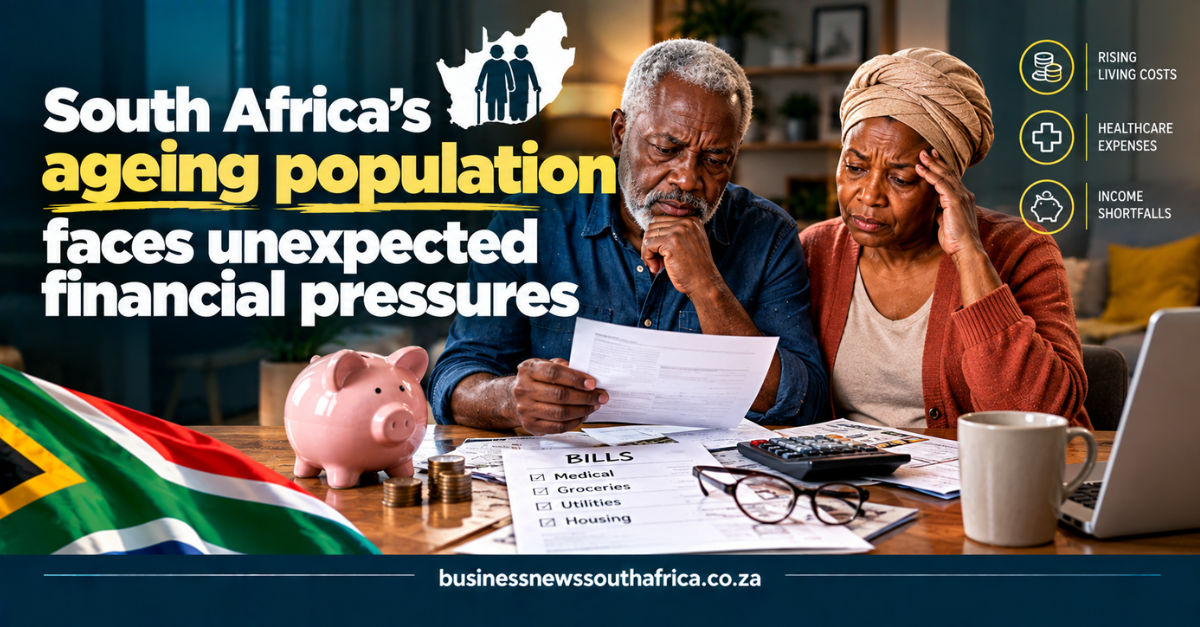
According to a recent article titled “The ageing in South Africa: What older people never expected” published by sapeople.com, older South Africans are confronting financial realities that differ from what they imagined when they entered retirement. The piece does not provide detailed data, but its headline alone signals a shift that could affect pension schemes, health-care costs and the cash flow of small enterprises that serve an older clientele.
For small-business owners, the stakes are clear: a growing cohort of retirees may need more affordable services, from home-care to financial advice, while also tightening discretionary spending. If older consumers are forced to stretch their limited resources, demand for non-essential goods could wane, putting pressure on retailers and service providers that rely on this market segment.
South Africa’s demographic trends are well documented. Statistics South Africa reports that the proportion of people aged 60 and over is projected to rise from 9% in 2020 to about 15% by 2040. This ageing curve is faster than in many comparable economies, meaning the pension-fund landscape will need to adapt quickly.
One term that often crops up in these discussions is “dependency ratio”, the number of people of working age compared with those who are retired or otherwise not in the labour force. A higher dependency ratio can strain public pension systems and increase the tax burden on businesses that contribute to these funds.
While the sapeople.com article does not specify the exact challenges, industry observers have warned that rising health-care costs and longer life expectancy could push retirees to draw down savings earlier. For entrepreneurs, this could translate into a need to redesign product offerings, perhaps focusing on low-cost, high-value solutions that appeal to a cash-conscious older market.
Regulators are also watching the trend. The South African Reserve Bank has highlighted the importance of sustainable pension fund management in its recent financial stability reports. Small businesses that provide retirement planning services may find new opportunities, but they must also navigate stricter compliance requirements.
In short, the ageing of South Africa’s population is not just a social issue; it carries concrete financial implications for both retirees and the businesses that serve them. Companies that anticipate these shifts and adjust their strategies now may avoid being caught off-guard as the demographic tide rises.
South Africa’s retirement funding gap has been a persistent theme in the country’s own pension industry research, with most surveys finding that the large majority of retirees are unable to sustain their pre-retirement standard of living on their accumulated savings, a shortfall driven by a combination of low preservation rates when people change jobs, rising healthcare costs in retirement, and life expectancy improvements that stretch a fixed pool of savings further than most retirement plans originally assumed. The Financial Sector Conduct Authority’s own retirement fund oversight tracks these trends across the industry. For related coverage, see this site’s Markets and Finance coverage.
Financial advisers who specialise in retirement planning have increasingly recommended that clients model a longer retirement horizon than official life expectancy tables suggest, since those tables reflect an average across the whole population rather than the longer lifespans typically seen among people who have already reached a comfortable retirement age with access to good healthcare.
The gap between expected and actual retirement income has also pushed a growing number of older South Africans back into part-time or consulting work well past the traditional retirement age, a trend that has, in turn, shaped how some financial advisers now structure retirement plans around a phased reduction in working hours rather than a hard stop.
Medical scheme contributions have been cited as one of the fastest-growing costs facing older South Africans specifically, since premiums for the same cover typically rise with age even as income from employment falls away entirely after retirement.