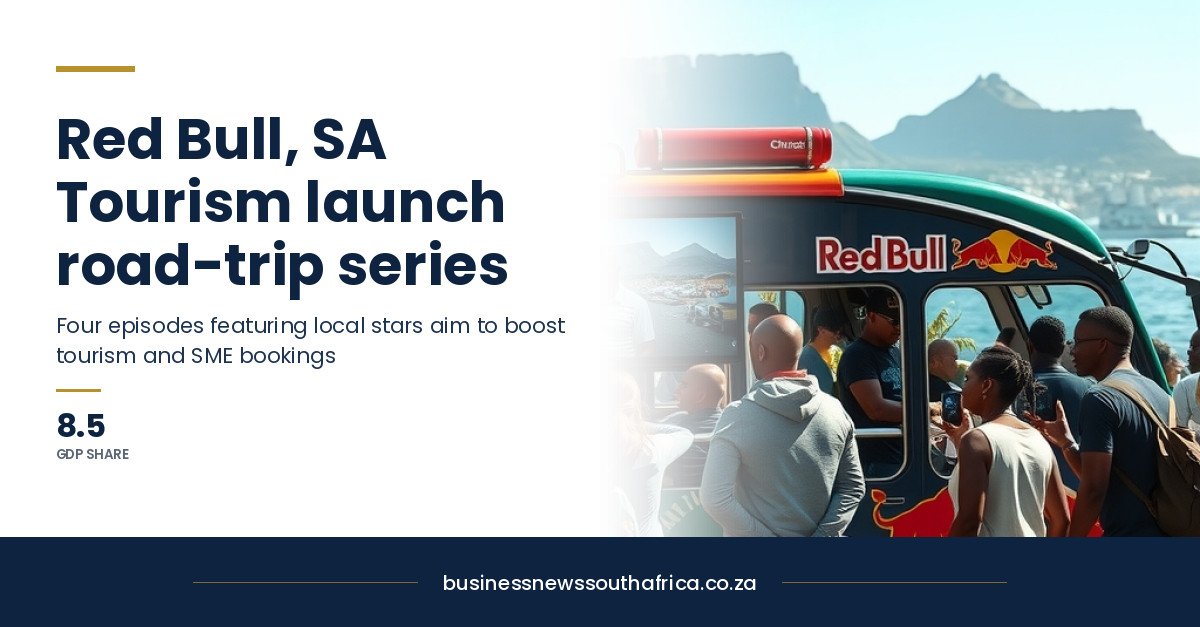
According to a press release on Bizcommunity, Red Bull South Africa and South African Tourism have launched a collaborative series called What We Know. The partnership is described as a way to combine Red Bull’s global reach in sport, culture and storytelling with the tourism board’s mandate to showcase the country as a destination.
Sithembile Ndaba, chief marketing officer at South African Tourism, said the value of the collaboration lies in using stories that already engage audiences to create a deeper connection with the destination. She added that South Africa’s greatest asset is its people, and the series will let them tell their own stories.
Series format and schedule
The series is hosted by comedian, actor, presenter, producer and storyteller Eugene Khoza. Over four 24-minute episodes, Khoza travels across the country, meeting athletes, gamers, musicians, influencers and everyday South Africans. Episode 1 aired on SABC 1 and SABC+ on 24 September 2026, with subsequent episodes scheduled for 1 October, 8 October and 15 October.
Each episode weaves together diverse landscapes, cultures and communities, aiming to show how people and place are linked. The format is designed to be easily shared on social media, where Red Bull already has a strong following.
Why does this matter for local businesses? Tourism contributed roughly 8.5 % of South Africa’s gross domestic product in recent years and supports a large number of small and medium-size enterprises, from accommodation providers to tour operators and craft sellers. By highlighting lesser-known destinations and the stories of local creators, the series could drive visitor interest that translates into bookings for these SMEs.
Red Bull’s involvement brings production quality and a global audience that South African Tourism may not reach on its own. The brand’s experience in creating high-energy content is expected to raise the profile of the series beyond traditional travel marketing channels.
What remains to be seen is how the series will affect actual travel behaviour. The press release does not provide projected viewership numbers or a timeline for measuring impact on tourism bookings. Those metrics will likely be tracked by the tourism board after the series completes its run.
For entrepreneurs in the tourism sector, the collaboration underscores the growing importance of storytelling as a marketing tool. Small operators may consider partnering with content creators or leveraging similar formats to reach new audiences.
Read more about tourism trends in South Africa on our SME & Entrepreneurship page.
Bizcommunity reported that the partnership leverages Red Bull’s global strength in sport, culture and storytelling together with South African Tourism’s mandate to showcase the country through authentic, compelling stories. The collaboration is also being promoted on Instagram by Red Bull South Africa, where the @redbullza account shares behind-the-scenes clips and stills from the road-trip. By posting short teasers and interactive polls, the brand aims to keep the conversation alive between the four 24-minute episodes. This social-media push is designed to reach younger audiences who follow Red Bull’s high-energy content, extending the series beyond traditional broadcast windows.
“The opportunity for us is to tell the destination story in a way that feels authentic,” Ndaba explained, adding that South Africa’s greatest asset is its people. The series therefore focuses on individuals who have achieved on the world stage, using their personal journeys to highlight the communities that shaped them. This narrative angle differentiates the programme from conventional tourism advertising, which often relies on scenic footage alone. By foregrounding resilience, creativity and achievement, the content seeks to spark curiosity that could translate into a desire to experience the country first-hand.
In deals of this type, the tourism board typically provides access to locations, permits and local contacts, while the media partner supplies production expertise, talent and distribution channels. The agreement often includes revenue-sharing clauses for advertising slots, as well as joint ownership of the final footage for future reuse. Because the episodes air on SABC 1 and SABC+, both parties benefit from national reach and the ability to repurpose clips on digital platforms. Such structures allow the tourism authority to tap into Red Bull’s production budget without shouldering the full cost, while the brand gains exclusive content that reinforces its lifestyle positioning.
For South African business owners, especially those in hospitality or experiential services, the collaboration demonstrates how storytelling can amplify brand visibility. By aligning with a high-profile series, small operators can attract visitors who discover niche destinations through the episodes. The format’s emphasis on shareable moments encourages viewers to post their own experiences, creating a ripple effect that can boost bookings without traditional advertising spend. Companies should therefore consider developing short-form video assets that can be inserted into similar campaigns or pitched to content creators looking for authentic local narratives.
Looking ahead, the tourism board will likely monitor audience metrics such as viewership peaks on the broadcast dates of 24 September, 1 October, 8 October and 15 October, as well as social-media engagement on the Instagram posts. These data points will inform whether the series drives measurable increases in inbound travel or online searches for featured locations. Stakeholders will also watch for any follow-up collaborations that might extend the format into additional seasons or partner with other brands, signalling a longer-term strategy for content-driven tourism promotion.