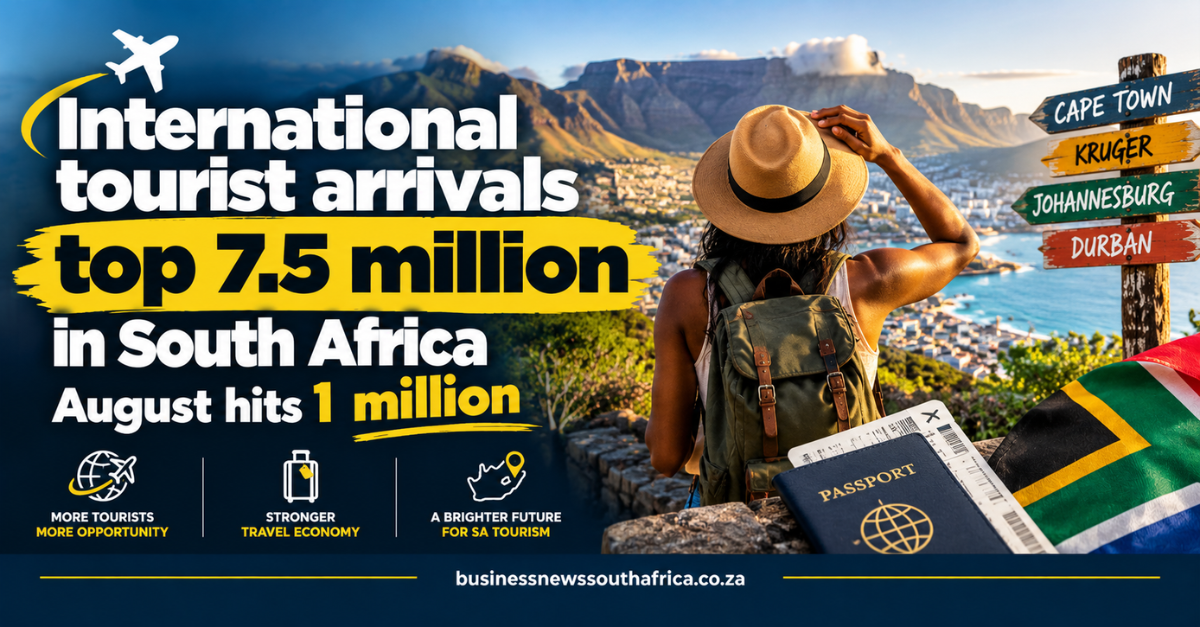
According to MoneyWeb, South Africa recorded more than one million international tourist arrivals in August 2026, a 7.4% increase on the same month a year earlier. The Department of Tourism data also show that total arrivals between January and August 2026 topped 7.5 million, up from the comparable period in 2025.
International tourist arrivals refer to visitors who cross the border for leisure, business or other short-term purposes. The rise means more foreign-exchange flowing into the country, but the real test for small-business owners, from boutique hotels and guest houses to tour operators and Airbnb hosts, is whether that traffic translates into steady revenue and new jobs.
Tourism Minister Patricia de Lille highlighted the need to move beyond visitor numbers. “Welcoming more than one million international tourists in August demonstrates the demand that exists for South Africa,” she said, adding that the priority now is to convert that demand into investment, jobs and economic opportunities for communities.
The United States remained the largest overseas source market in August, delivering 37 134 visitors, followed by the United Kingdom with 25 749 and Germany with 14 731. The figures sit within a broader trend identified by UN Tourism, which reported a 12% growth in international arrivals for the first half of 2026 compared with the same period in 2025. UN Tourism also placed South Africa among the top 20 best-performing destinations globally for the first half of the year.
To harness the momentum, the government is hosting the South African Tourism Infrastructure Investment Summit. The event aims to bring together investors, tourism operators and infrastructure providers to discuss new products, experiences and facilities that can broaden the sector’s appeal and deepen its economic impact.
What is confirmed: the arrival figures released by the Department of Tourism and the United Nations World Tourism Organization’s growth percentages. What remains a claim: the minister’s assessment that the current surge will lead to increased investment and jobs, a goal that will depend on how quickly the private sector can develop new offerings and attract capital. The data provide a clear signal for SMEs that the market is expanding, but turning that signal into profit will require strategic investment in services, marketing and workforce training.
For small-business owners in the tourism value chain, the message is straightforward: more visitors are arriving, and the policy focus is on converting that footfall into sustainable income streams. The upcoming summit could be a venue to pitch new experiences, secure financing and network with potential partners. Those who act now may capture a larger slice of the growing market.
Read more about how tourism trends affect small enterprises in our SME & Entrepreneurship coverage.