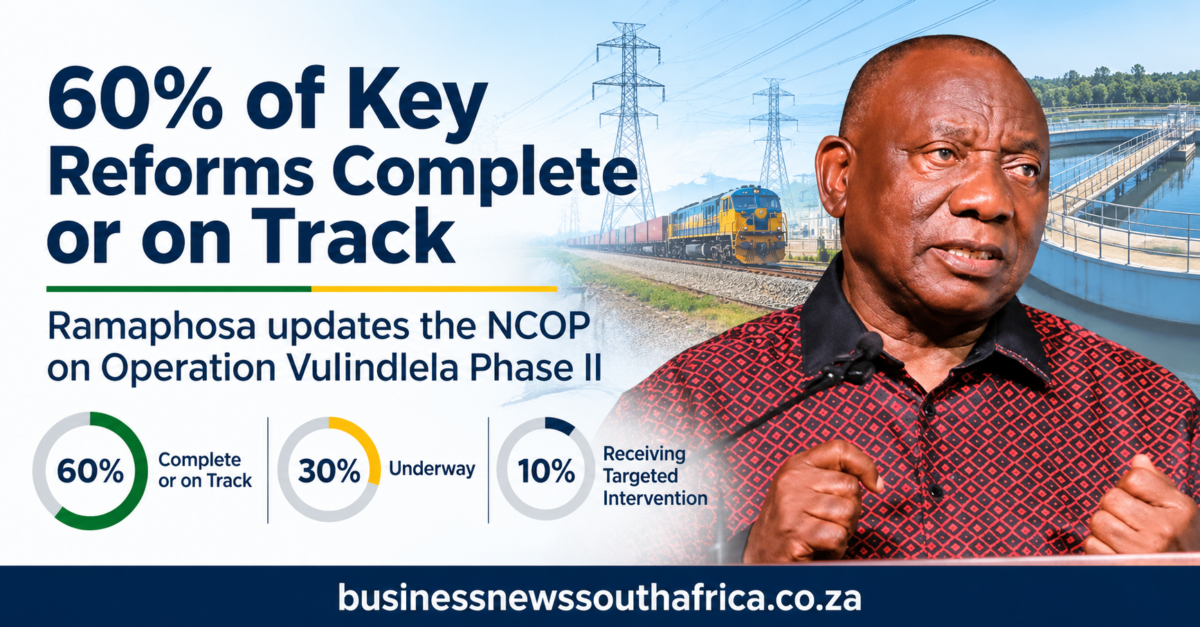
Of the 30 reform actions in the second phase of Operation Vulindlela, 60 percent are complete or on track, 30 percent are underway and progressing well, and the remaining 10 percent are receiving targeted intervention, President Cyril Ramaphosa told the National Council of Provinces on 24 November. SAnews reports that he was answering an oral question, and that he pointed to energy, logistics and local government as the sectors where bottlenecks are being cleared. This article sets out the figures and dates he gave, because several of them decide when business can expect change.
Electricity: the numbers and the next steps
The President said Eskom’s power system has gone more than 550 consecutive days without load shedding since May last year, with plant performance about 15 percentage points better than in 2022 and two consecutive years of profitability. Private capacity has grown alongside: more than 7 GW of new generation has been connected to the grid, households and businesses have installed more than 9 GW of rooftop solar, and a further 36 GW of projects are in the grid connection process.
- New capacity: a Ministerial Determination issued in October paves the way for 4,600 MW of battery storage and 5,000 MW of gas power.
- Transmission: private capital is due to enter grid expansion through the Independent Transmission Projects Programme.
- Independent operator: in August the President approved the first report of the Eskom Restructuring Task Team, which paves the way for a Transmission System Operator separate from Eskom. A detailed implementation plan is expected by the end of January. He said it must protect Eskom’s financial position while letting the new operator invest in expanding the grid.
- Wholesale market: a competitive wholesale electricity market is advancing toward an early launch next year, following external testing of its trading platform.
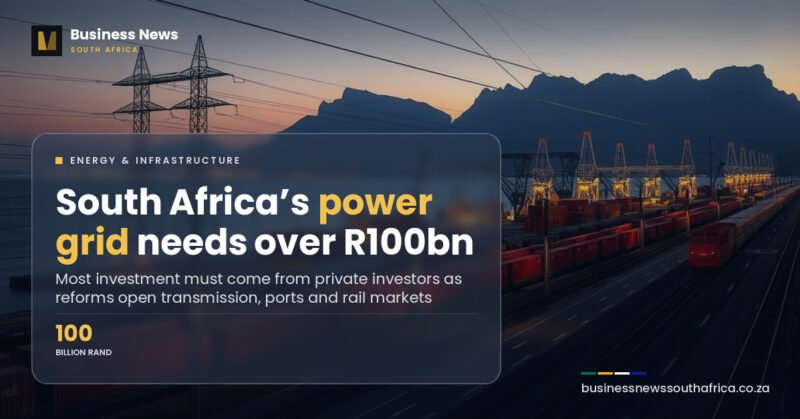
Our earlier report on Treasury’s R100 billion grid estimate covers the transmission funding gap these steps are meant to close.
Freight and logistics
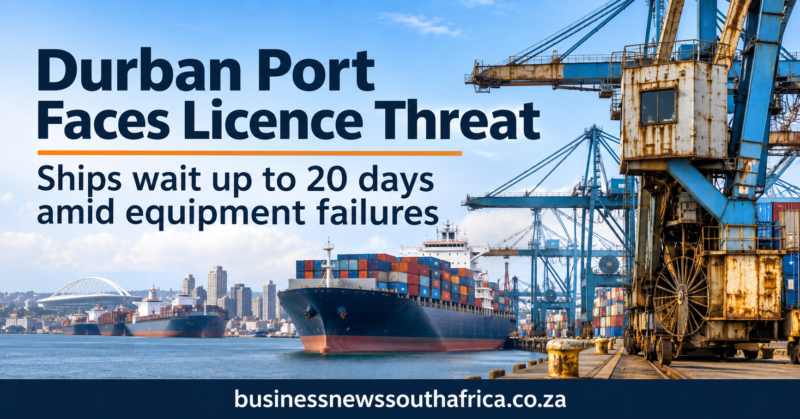
The President said the decline in Transnet’s performance has been reversed, with volumes recovering and the company returning to profitability last year. Cabinet has approved the approach to an independent, state-owned National Ports Authority, and the first private train operators are expected to begin running on the rail network in 2027. Transnet is pursuing private investment in rail and port infrastructure while keeping strategic assets in public ownership. For exporters and importers living with delays at Durban, our coverage of the Durban port backlog and its cost to exporters shows what is at stake.
Municipal water and electricity
Following the launch of the White Paper on Local Government last month, the proposed reforms would require municipal water and electricity providers to hold operating licences and ring-fence service revenues for reinvestment in infrastructure. Alternative providers would step in if a municipality fails to meet its licence conditions. Where reforms are delayed, the President said a dedicated workstream on municipal electricity debt and distribution reform has been set up under the Eskom Restructuring Task Team, and a task team of the Presidency, National Treasury and the Department of Transport will drive the creation of the Rail Infrastructure Manager as an independent entity.
How progress is tracked, and the growth claim
Every Operation Vulindlela reform is tracked quarterly, so that bottlenecks are escalated and resolved quickly. The President said the reforms are raising investment and confidence and will enable higher growth next year and beyond, approaching a target of 3 percent by the end of the decade. That is his projection, not a forecast we have tested.
What it means for businesses
- Energy buyers and developers: the October determination and the 36 GW queue point to where new supply will come from. The end-of-January plan for the independent transmission operator is the next date to watch.
- Firms that move goods: private train operators from 2027 and a separate National Ports Authority are the structural changes behind freight costs. The timetable beyond the 2027 start was not given.
- Anyone who depends on municipal services: licensing and ring-fenced revenue would change how failing municipalities are handled, but these are proposals that follow a White Paper, not yet law.
This article reports a government statement and is general information, not financial advice.