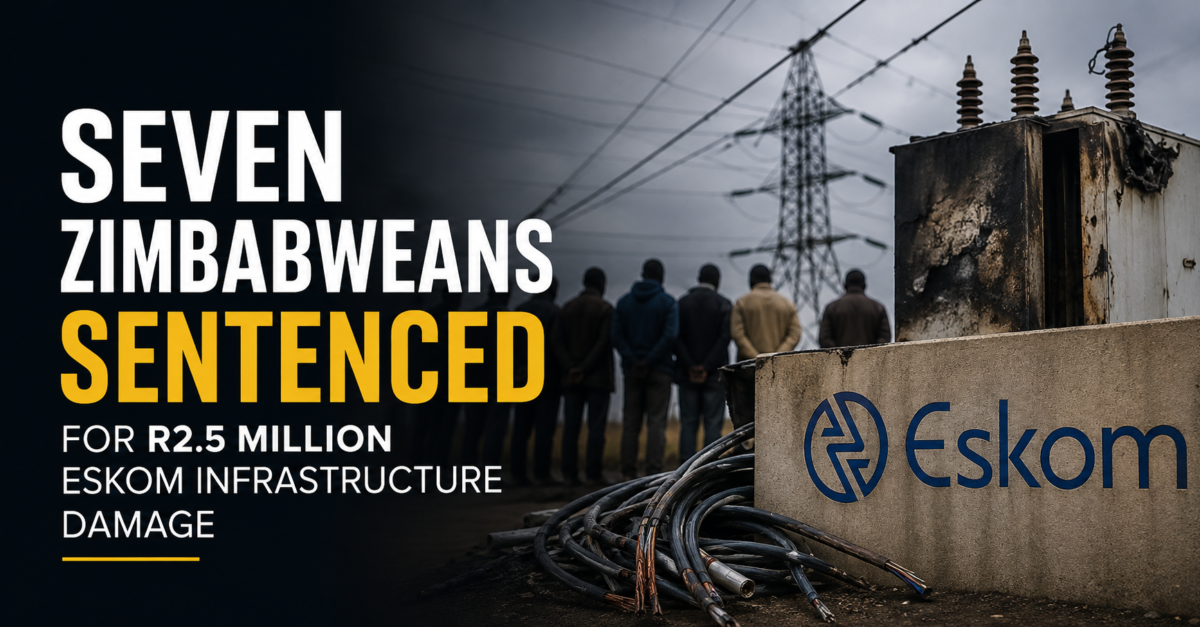
Seven Zimbabwean nationals have learned that stripping copper wire from Eskom’s infrastructure comes with a court date attached, after a South African court sentenced them for damaging the utility’s equipment and stealing metal worth roughly R2.5 million. According to novanews.co.za, the theft directly cost Eskom, the state-owned power utility, in two ways at once: the value of the stolen equipment itself, and the outages that follow when copper disappears from a substation.
Infrastructure damage here means the physical harm inflicted on power lines, substations or other assets that deliver electricity, while the theft itself typically targets copper wiring and other metal components that can be sold on to scrap dealers or, ultimately, the black market. Both actions do the same thing to the grid: disrupt supply and force Eskom into repair spending that has a habit of eventually showing up in consumer tariffs.
A crime with a nationwide price tag
Eskom has repeatedly flagged sabotage and metal theft as major contributors to the load-shedding cycles that have shaped South Africa’s economy for years. Every cut power line or stolen transformer component pulls resources toward emergency repairs and away from planned maintenance, and that maintenance backlog is itself part of why the grid stays fragile. For small and medium enterprises already operating on thin margins, an unexpected power interruption is rarely just an inconvenience: it means lost production, spoiled stock, and missed deadlines that a generator can only partly paper over.
The sentencing is a genuine signal that law enforcement is pursuing these crimes, but it does not fix the underlying security challenge on its own. Critics have long argued the problem is systemic rather than opportunistic, involving organised networks that target high-value metal across the country with a level of coordination that a single conviction does little to dismantle. Eskom’s own response has leaned on surveillance, fencing and community-engagement programmes, an unglamorous but necessary layer of physical security around infrastructure that was never originally built to withstand deliberate targeting.
Cable theft is not unique to Eskom or even to South Africa. Utilities across the world with valuable copper infrastructure and porous physical security face the same economics: scrap metal has real resale value, enforcement is patchy, and the cost of stolen infrastructure is almost always higher than the scrap value the thief actually receives, since replacing a substation component costs vastly more than the metal inside it is worth on a scrap yard scale. That mismatch is part of why utilities increasingly favour prevention, fencing, alarms, aluminium alternatives where feasible, over relying on the courts alone.
For business owners, the practical takeaway has not changed: the cost of power disruption remains a real and ongoing risk factor, sentencing or no sentencing. Continue assessing the reliability of the electricity supply feeding critical operations, weigh the case for backup solutions such as generators or battery storage, and factor potential tariff increases into budgeting rather than treating them as a surprise. Accountability through the courts is a step, not a solution, and the broader task of securing the grid remains a joint job for Eskom, regulators and the private sector alike.
Cross-border dimensions like this one, South African infrastructure crime prosecuted with foreign nationals as the accused, tend to attract more public attention than a purely domestic case would, and that attention cuts both ways. It can help build political pressure for tougher enforcement and better cross-border cooperation on organised metal-theft networks that, by their nature, do not respect national boundaries any more than the scrap metal they steal does. It can equally slide into scapegoating a handful of individuals for a problem that is, by every credible account, structural and decades in the making. The more useful long-term signal to watch is not this single sentencing but whether Eskom’s reported theft and vandalism incidents actually trend down over the following year, which is the only real measure of whether stories like this one change anything beyond the seven people directly involved.