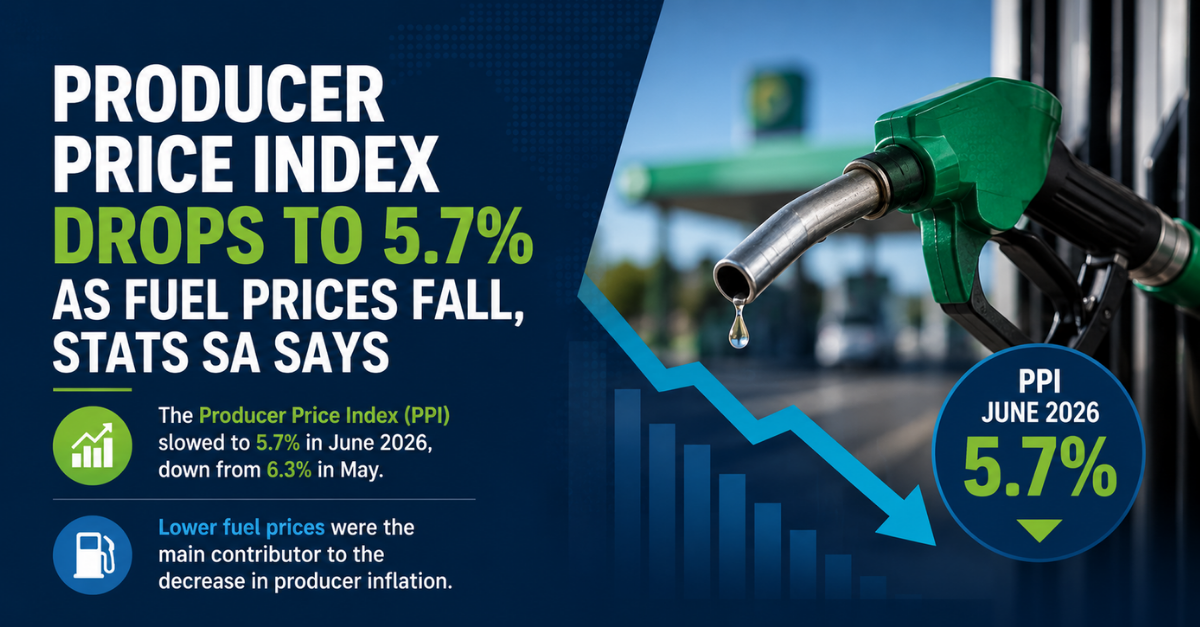
For a small manufacturer or a retailer buying in bulk, a single headline number can matter more than any speech about the economy: a lower Producer Price Index, PPI, a measure of price changes at the wholesale level, can translate into cheaper input costs and, eventually, lower prices for customers. Stats SA announced on 20 August 2026 that the PPI fell to 5.7% in the most recent reporting period, citing a drop in fuel prices as the main driver.
The PPI is not the same as the consumer price index that tracks what shoppers pay at the checkout. It instead measures the price producers receive for their goods before taxes and retail margins, and a decline suggests the cost of raw materials, energy and other inputs is easing, a small breathing space for businesses in a climate of high interest rates and frequent power cuts.
Why fuel specifically drives so much of this number
According to Stats SA, fuel, covering petrol, diesel and kerosene, saw a noticeable price reduction over the month, and because fuel is a key input for transport and running machinery, its price feeds directly into the cost structure of sectors from agriculture to construction. When fuel costs fall, the wholesale price of many other goods tends to follow close behind.
For SMEs operating on thin margins, even a fraction of a percentage point in input cost can move profitability. The 5.7% figure is lower than the 6.4% recorded the previous month according to the agency’s own historical releases, meaning this downward pressure is not a one-off blip but part of a modest, genuinely easing trend rather than statistical noise.
Stats SA’s release is, as with any official statistic, a claim based on the data the agency has compiled, with independent context coming from sector surveys and the South African Reserve Bank, which monitors wholesale price trends as part of its own monetary policy toolkit. The central bank has not indicated whether this PPI dip will influence its next interest-rate decision, but a sustained reduction in wholesale inflation could plausibly give it more room to pause rate hikes than it currently has.
South Africa has been wrestling with high inflation, volatile exchange rates and recurring load shedding all at once, and lower fuel prices have been a rare genuine positive in that macro-environment, though one linked to global oil market dynamics that can shift quickly in the other direction if international crude prices rise again, erasing the current relief just as fast as it arrived. Businesses that rely heavily on fuel, logistics firms, mining operations, large farms, may see immediate cost savings, while retailers likely feel the effect more indirectly as suppliers pass on lower wholesale prices over time. SMEs should watch supplier invoices for any sign of adjustment and consider whether the current environment allows for modest price reductions to stay competitive, while keeping in mind that the next PPI reading, due in the coming weeks, will show whether 5.7% is the start of a real trend or simply an outlier month.
It is worth understanding the lag built into a figure like this one. Producer prices typically move ahead of consumer prices by a matter of weeks to a few months, since wholesale cost changes need time to work their way through distribution and retail markups before shoppers actually notice a difference at the till. That lag is precisely why a PPI reading gets watched closely by anyone trying to anticipate where consumer inflation, and therefore interest-rate policy, might be heading next, rather than simply reacting once the change has already fully arrived. Businesses that price their own goods and services with an eye on where wholesale costs are heading, rather than only where they currently sit, tend to make steadier pricing decisions than those reacting purely to what suppliers are charging them this specific month.