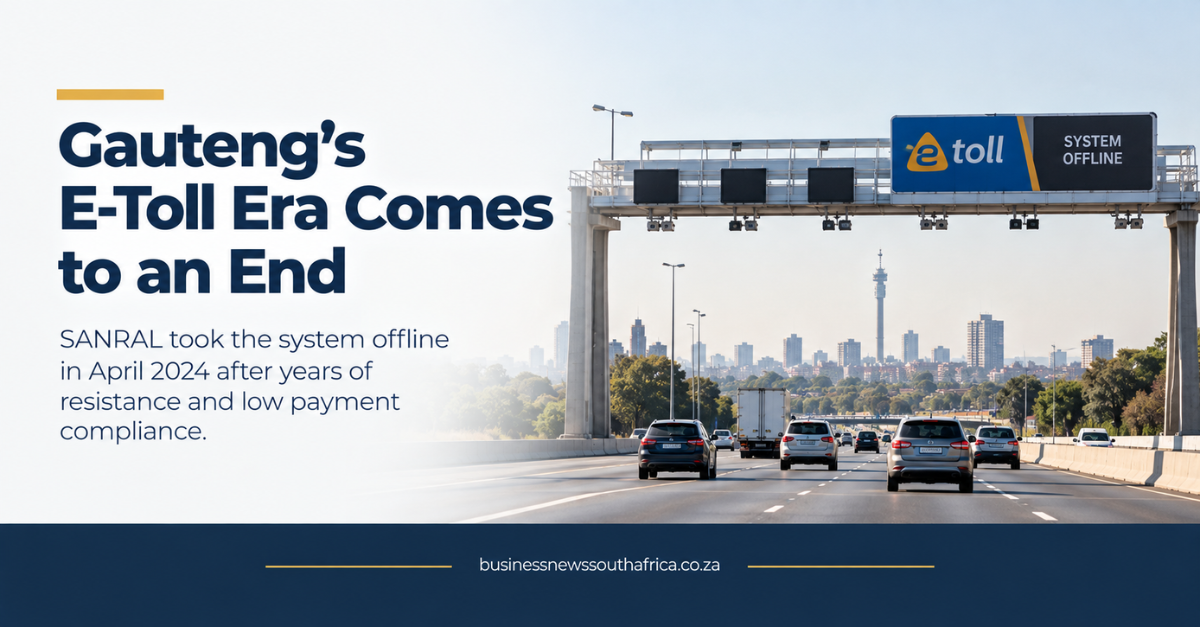
On 11 April 2024 SANRAL switched off the electronic toll (e-Toll) system that had operated on Gauteng freeways since 2013. The move ends a programme that consistently fell short of its financial goals and sparked a decade of legal challenges.
e-Toll was an electronic collection method that used large metal gantries to read vehicle tags and charge drivers for using certain highways. The system was introduced to fund the Gauteng Freeway Improvement Project, but compliance, the share of drivers actually paying, never rose above 40 per cent in 2014 and fell to roughly 20 per cent by 2019. According to the Opposition to Urban Tolling Alliance (OUTA), the scheme therefore generated only between R55 million and R70 million a month, far below the amounts projected when the tolls were first announced.
The low take-up rate reflected widespread public opposition. An economic impact assessment commissioned by the Gauteng provincial government in 2014 recorded that 98 % of responding businesses and community groups opposed e-Toll, describing it as unaffordable, inequitable and overly bureaucratic. The assessment concluded that the toll system placed a disproportionate burden on low- and middle-income households while offering limited benefit to the provincial economy.
OUTA, founded by former Avis CEO Wayne Duvenage, led a series of court actions against SANRAL and the National Treasury. The Supreme Court ruled against OUTA in 2012 and again in 2013, but the latter judgment allowed individual motorists to challenge summonses in court. This legal avenue enabled OUTA to represent non-paying motorists and to encourage broader non-compliance.
In March 2019, just months before national elections, SANRAL announced it would stop issuing summonses for unpaid e-Toll debts. Duvenage described that decision as the “deathblow” for the scheme, suggesting the government wanted to avoid further voter backlash.
With the system offline, drivers and businesses no longer need to budget for monthly e-Toll charges. However, the shutdown also removes a revenue stream that was intended to fund road upgrades, leaving SANRAL to seek alternative financing methods for the Gauteng Freeway Improvement Project.
Read more about the regulatory context in our Regulatory & Policy coverage.