According to a report on businesstech.co.za, South African-born internet entrepreneur Martin Moshal has given R118 million to political parties over the past five years. Moshal, who co-founded the online gaming firm Microgaming and backed Betway, is described as a billionaire despite the lack of a public net-worth figure.
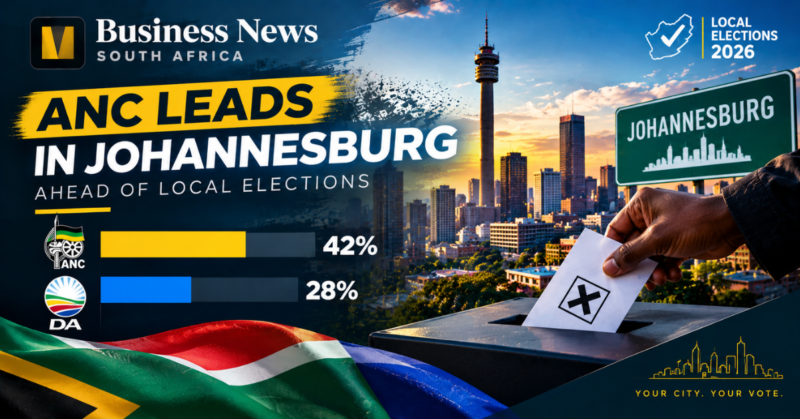
Moshal’s contributions are split almost evenly between three parties. He donated R48 million to the Democratic Alliance (DA), making him the party’s second-largest donor, and added another R5 million ahead of the 2026 local government elections. He gave R47 million to ActionSA, the largest single donation that party has received, plus a further R5 million for the upcoming elections. The Build One South Africa (BOSA) movement received R15.5 million, also the biggest donation it has recorded, while the Inkatha Freedom Party (IFP) got R7.5 million.
Why the money matters
The Electoral Commission of South Africa (IEC), the body that monitors elections and party funding, publishes a Political Party Funding report that lists all direct private donations. Direct private donations are funds given straight from an individual or trust to a party, without an intermediary. The IEC report for the 2024/25 financial year shows that parties disclosed R230,956,140 in such donations across 79 declarations, with most of the amount reported in the first quarter.
Moshal’s donations sit alongside contributions from other high-net-worth individuals, such as Jonathan Oppenheimer’s R30 million and the Batho Batho Trust’s R25 million to the African National Congress (ANC). Corporate donors also appear, with Exxaro Resources giving R25 million and Standard Bank R2.5 million.
What makes Moshal’s giving noteworthy is his background in online gambling. He holds patents for the world’s first online progressive jackpot slot game, a type of slot machine that builds a growing prize across many players, and his firm powers Betway, a platform that offers sports betting, online casinos, poker and bingo. The Democratic Alliance, which received the second-largest share of Moshal’s money, opposes a total ban on online gambling. The party argues that a ban would push users toward illegal operators, similar to the problems seen with tobacco and alcohol prohibitions. Instead, the DA calls for an updated National Gambling Act, the law that governs gambling in South Africa, to tighten regulation and improve consumer protection.
Critics say that large donations from a gaming entrepreneur could create a conflict of interest. If parties that rely on his money are less inclined to support stricter gambling bans, the regulatory environment may stay favourable to online operators. That could affect not only multinational platforms but also smaller South African firms that provide ancillary services such as payment processing, marketing and software development for the gambling sector.
Regulatory backdrop
The IEC now has enhanced authority to issue directives and levy administrative fines on parties that fail to meet reporting deadlines or provide incomplete disclosures. This stronger oversight aims to increase transparency in a political financing system where a small group of wealthy donors accounts for a large share of private funding.
For small and medium-sized enterprises (SMEs) operating in the retail and consumer space, the key question is whether the current regulatory stance will change. A shift toward tighter gambling rules could mean higher compliance costs for businesses that rely on online betting revenue, while a more permissive approach could keep the market open but also maintain the risk of illicit competition.
At present, Moshal’s donations do not guarantee any policy outcome, but they illustrate how private wealth can intersect with public decision-making. SME owners should watch the upcoming parliamentary debates on the National Gambling Act, as any amendment could ripple through the broader digital entertainment ecosystem.