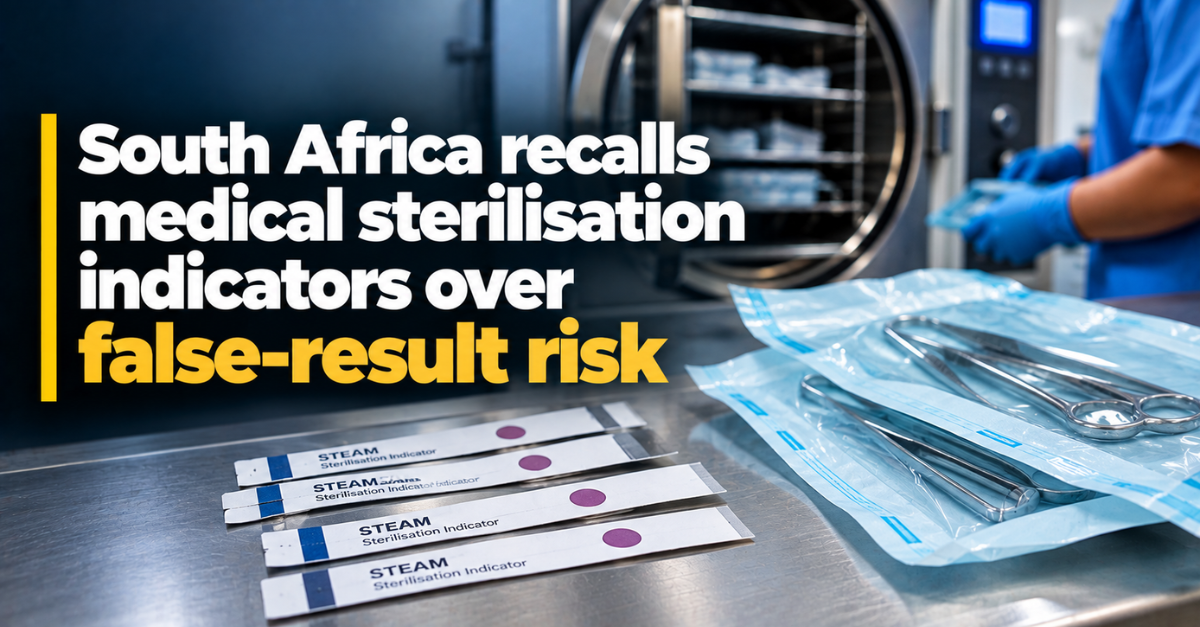
According to Newcastillian News, South African health authorities have issued a recall of medical sterilisation indicators because the devices may give false-positive results. A false-positive means the indicator could show that an instrument has been properly sterilised when, in fact, it has not.
For a private clinic or a small-scale sterilisation service, the stakes are clear. If an instrument that has not been fully sterilised is used on a patient, the risk of infection rises sharply. The recall therefore forces providers to halt the use of the affected indicators, verify the status of any stock they hold and source replacements, all of which can add cost and delay to routine procedures.
Why the devices matter
Sterilisation indicators are test strips or chemical markers that change colour when exposed to the temperature and pressure conditions of an autoclave cycle. They are not a substitute for a full validation of the sterilisation process, but they give a quick visual check that the cycle reached the required parameters. When an indicator gives a false-positive reading, it creates a false sense of security.
The recall does not target the autoclaves themselves, only the indicators that accompany them. The devices are classified as medical devices under the South African Health Products Regulatory Authority (SAHPRA), which is the body that oversees product safety and recalls. SAHPRA’s role is to protect patients by ensuring that any product that could compromise health is removed from the market promptly.
SAHPRA has not released a detailed statement in the source material, so the exact number of units recalled, the manufacturers involved and the timeline for the recall remain unclear. What is clear is that any health-care provider that uses these indicators must treat the recall as a compliance issue.
For small and medium-sized enterprises (SMEs) that run private clinics, dental practices or contract sterilisation services, the impact can be twofold. First, there is the immediate cost of discarding the recalled stock and purchasing new indicators. Second, there is the operational disruption while staff verify that all instruments have been correctly sterilised using alternative methods, such as biological indicators or repeat autoclave cycles.
Many SMEs operate on thin margins, so an unexpected expense can strain cash flow. Some may be able to negotiate credit terms with suppliers, while others might need to tap short-term financing. The recall also highlights a broader issue for the sector: reliance on imported medical consumables that may not always meet local quality expectations.
Local manufacturers of sterilisation indicators have been lobbying for greater market access, arguing that domestically produced devices could reduce supply-chain risks. The current recall could give those manufacturers a short-term boost if providers look for alternatives that are already vetted by SAHPRA.
From a risk-management perspective, the recall serves as a reminder that compliance programmes should not rely solely on a single type of indicator. Best practice in infection control recommends a layered approach: chemical indicators, biological indicators that use spore testing, and regular maintenance logs for autoclaves. SMEs that have not yet adopted such a layered system may need to review their protocols.
While the recall is a setback, it also offers an opportunity for providers to tighten their sterilisation audit trails. Updating standard operating procedures, training staff on the limitations of chemical indicators and documenting each step can improve overall patient safety and may reduce liability in the event of an infection outbreak.
Health-care providers are advised to check the official SAHPRA website or contact their supplier for a list of the specific product codes that are affected. Until the recall is fully resolved, the safest course is to suspend use of the recalled indicators and rely on alternative verification methods.