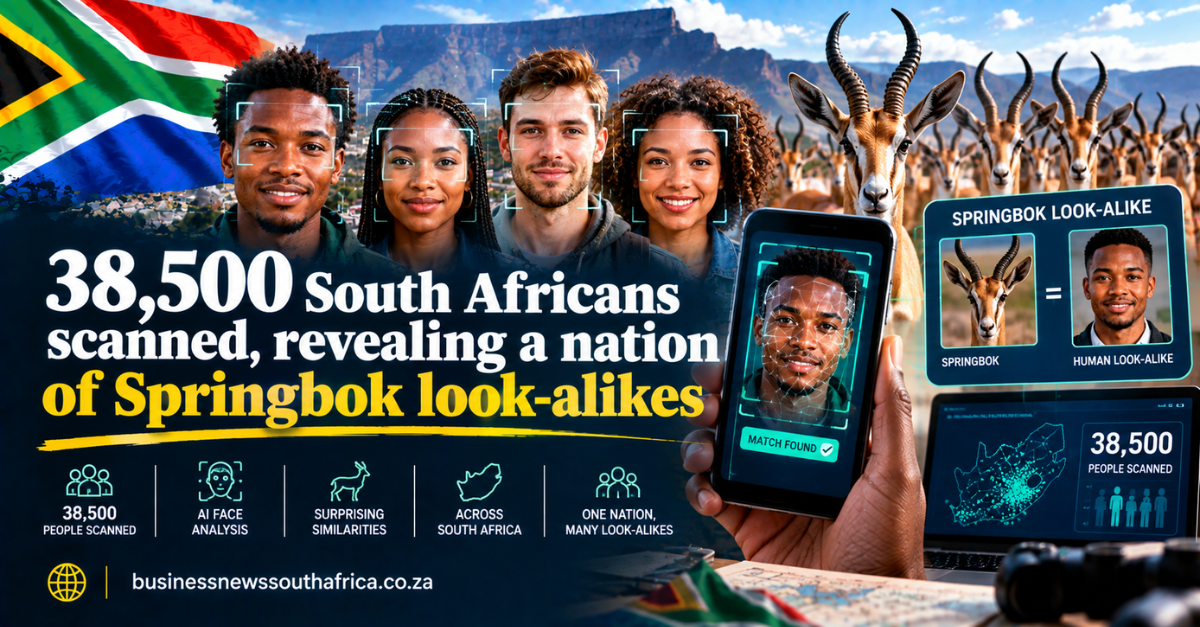
Klipdrift has run 38,500 face scans since June, and the results are a better marketing case study than they are a rugby story.
The brandy brand’s “Same Same but Klippies” activation asks supporters to upload a photograph and tells them which Springbok they most resemble, using facial-similarity matching. Neethling Fouché came out as the country’s most-matched player with 1,885 look-alikes, ahead of Lood de Jager on 1,577 and Wilco Louw on 1,469. Gauteng generated almost half of all scans, with the Western Cape second. Roughly 95% of participants were in South Africa; the United Kingdom was the next largest source, which is its own quiet comment on where the diaspora watches rugby from.
Klipdrift marketing head Donné Wolk said the campaign had become “something much bigger” than the brand expected, crediting rugby’s reach across generations and provinces.
Why the mechanic works
Strip out the rugby and what is left is a well-built engagement loop. The participant supplies the content, receives a personalised result, and is handed something inherently shareable, all in one interaction. The brand gets reach it did not buy and a first-party dataset it could not otherwise assemble. Nearly 40,000 completed interactions is a serious number for a category that usually competes on shelf space and sponsorship boards.
It also lands on an occasion. Brandy in South Africa is a social-drinking category, rugby is a social-viewing occasion, and the campaign attaches the product to the moment rather than to a product claim. That is harder to copy than a discount.
The part every SME should read twice
A photograph of a face, processed to identify or match a person, is biometric information under the Protection of Personal Information Act. Section 26 classes biometrics as special personal information, and processing it is prohibited unless an exception in section 27 applies, of which the practical one for a marketing campaign is the data subject’s consent.
That raises the bar above a tick box at the bottom of a landing page. Consent under POPIA must be voluntary, specific and informed, which means telling participants what happens to the image, whether a facial template is generated, how long it is retained, whether any third-party processor touches it, and how to withdraw. The Information Regulator has been increasingly willing to act, and biometric processing is exactly the category it has signalled it is watching.
The practical points for a smaller business tempted by the same mechanic:
- Do not retain the image by default. If the match can be computed and the photo discarded, discard it. Data you do not hold cannot leak, and cannot be the subject of a complaint.
- Name your operator. If a third-party API does the matching, that vendor is an operator under POPIA and you need a written contract under section 21. Check where it processes, because a transfer outside South Africa brings section 72 into play.
- Write the retention period down before you launch, not after someone asks for it.
- Separate the consents. Consent to be scanned is not consent to be added to a mailing list. Bundling them is the most common way a campaign like this goes wrong.
These obligations sit alongside the sector rules that already apply to alcohol marketing, and none of them are optional because the campaign is light-hearted. A novelty tone does not lower the standard of processing; if anything it raises the reputational cost of getting it wrong, because the story writes itself.
Businesses that need the underlying paperwork can generate a POPIA-compliant privacy notice and consent wording with our compliance document generator, and the website terms and privacy policy templates in the commercial contracts suite cover the operator clauses. More on how consumer-facing brands are using technology in our retail and consumer coverage.
The Klipdrift campaign is a reminder that the cheapest marketing technology available to a South African business right now is also the most heavily regulated category of personal data in the Act. Both things are true at once.