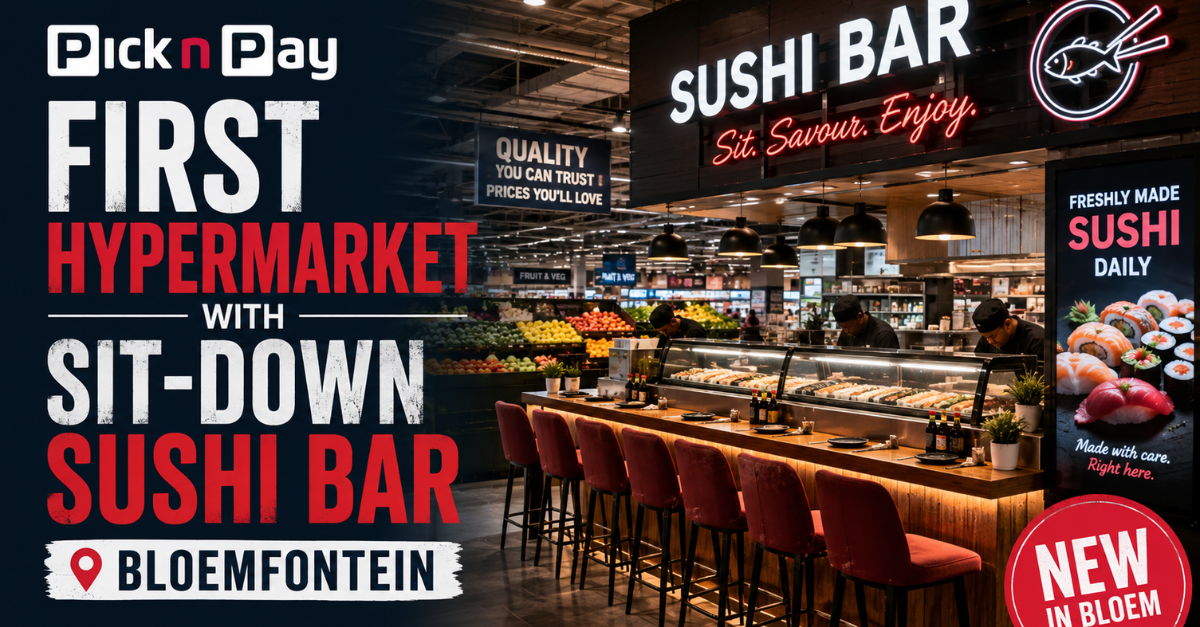
Walking into the newly relaunched Pick n Pay Hypermarket on the Southern Centre mall in Bloemfontein, the first thing that catches the eye is a small, polished sushi counter. The counter, called Sue Shi Sushi, offers a sit-down sushi experience, a first for the retailer’s hypermarket format.
Pick n Pay said the store is a “new-generation concept” that expands the product range beyond the usual grocery list. In addition to the sushi bar, shoppers will find a sit-down TiMe coffee area, a larger selection of fresh produce, an expanded cheese aisle, a gourmet butchery, a bakery, DIY items, tech gadgets and bulk cleaning products. The retailer describes the format as a one-stop destination where a family can buy groceries, pick up a power tool and enjoy a meal without leaving the building.
For owners of small food producers, local bakers or niche suppliers, the new layout could open a direct line to a high-traffic store. The sit-down dining concept means that suppliers of ready-made meals, coffee beans or sushi ingredients may see a larger shelf-space allocation and the chance to showcase products to shoppers who are already in a buying mood.
The Bloemfontein hypermarket originally opened in 1977. It is the fourth store to be revamped under Pick n Pay’s store-reset programme, which began after a series of closures aimed at turning around a struggling business. The retailer closed 56 stores across South Africa in the financial year to March 2026, cutting both company-owned and franchised outlets. Turnover in the core Pick n Pay business fell 1.6% that year, reflecting the impact of those closures.
Despite the closures, Pick n Pay reported signs of improvement. Company-owned supermarkets recorded like-for-like sales growth of 3.9%, up from 3.3% in the previous year, and internal selling-price inflation was kept at 1.9%, well below the national food inflation rate of 4.4%. In a trading update covering the 20-week period to July, the group noted an upward trajectory for its key segments, although it warned that “much remains to be done” to hit its break-even profit target.
What does the new hypermarket mean for the average shopper? The expanded range means fewer trips to specialised stores, a family can pick up a DIY tool, a pet care product and a sushi roll in one visit. For small-scale retailers that supply the hypermarket, the increased floor space could translate into higher order volumes, but it also raises the bar for product quality and consistency.
Pick n Pay operates 23 hypermarkets out of a total of 992 group-owned stores recorded on 1 March 2026. The hypermarket format has been part of the retailer’s history for more than 50 years, with the first store opening in Boksburg in 1975. The recent revamps, three at the end of 2025 and a new store in Pietermaritzburg, suggest the company is betting on the format as a cornerstone of its turnaround.
For entrepreneurs looking at the retail landscape, the story offers two clear take-aways. First, large retailers are still willing to experiment with new concepts, even while trimming their overall footprint. Second, the focus on fresh foods and sit-down dining signals a shift towards experience-driven retail, an area where small suppliers can add value if they can meet the scale and quality expectations of a national chain.
While the sushi bar may seem like a novelty, it is part of a broader strategy to make the hypermarket a destination rather than a simple grocery stop. Whether the concept will boost footfall enough to offset the broader market challenges remains to be seen, but for now the Bloemfontein store stands as a tangible example of Pick n Pay’s attempt to reinvent its large-format offering.