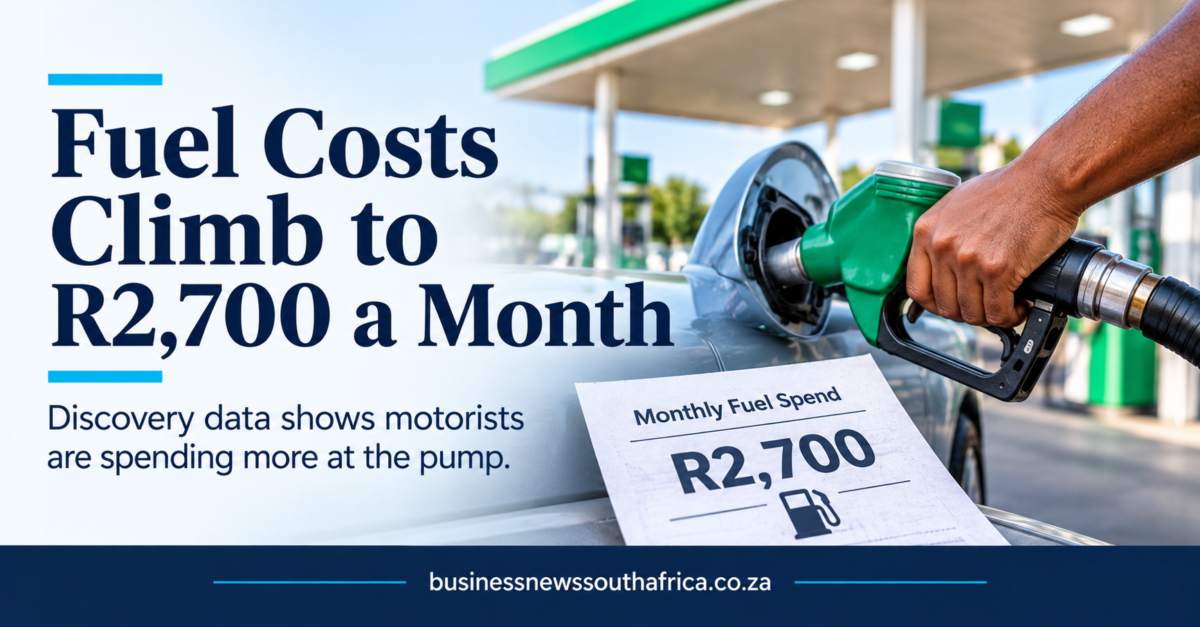
Discovery Insure says its clients now spend an average of between R2,500 and R2,700 a month on fuel, up from about R1,750 at the start of 2025, a rise of 43% to 54%. The figures come from Discovery’s own release, published on 2 November 2026, which analysed fuel transactions and telematics data from more than 200,000 Discovery Insure clients.
What it means for your business: the data describes Discovery Insure clients, who are insured drivers with telematics, not every South African household. Even so, it shows that fuel is behaving like a fixed cost for commuters, while fleets, delivery businesses and retailers face higher running costs and customers with less left over after the pump.
What Discovery reported
According to Discovery, fuel purchases among its Insure clients fell 33% in volume in October after the price increase took inland 95 unleaded petrol above R30 a litre for the first time. Volumes are measured in litres, not rands, and the October analysis compares purchases before and after the increase on 7 October 2026.
The headline figure of up to R950 more a month is simple arithmetic on Discovery’s numbers: R2,700 less R1,750. Discovery itself describes the rise as an increase of between 43% and 54% over a little more than a year, and says the average amount bought per transaction has fallen from about 36 litres to 31 litres in months with larger price increases.
Smaller, more frequent fill-ups
Discovery says purchases of less than 20 litres now account for around 36% of transactions in 2026, up from 25% in 2025. Between the 25th and the end of the month, in periods of significant price movements, these small purchases make up nearly 40% of transactions, compared with about 20% normally.
Motorists are also visiting stations more often ahead of price changes, with average monthly visits rising from 2.4 to just over three. Discovery notes that the shift to smaller purchases happens whether prices are rising or falling, which it reads as drivers adjusting how they fill up in anticipation of increases, rather than always rushing to buy before one.
Panic buying still happens. Discovery reports that fuel purchasing volumes surged by 300% before midnight on Tuesday, 6 October, with diesel up 400%. In May the surge was 300% for fuel and 450% for diesel, compared with about 200% in a typical price-hike month.
Driving has barely changed
The release separates how people buy fuel from how much they drive. In April, trips fell by 10% and kilometres travelled by 9%, and by 8% for both after excluding the Easter weekend. By May, motorists were travelling 9% less than before the increases, but Discovery says the reductions were hard to sustain. From June to September 2026, trips and kilometres were slightly higher than in the same period of 2025. After the October increase, trips fell by 6% and kilometres by 7%.
What motorists have cut is discretionary travel: Discovery recorded a 30% decline in long-distance trips during the winter months, while everyday commuting stayed relatively the same. Discovery Insure CEO Robert Attwell is quoted in the release saying: “There’s a difference between buying less fuel and needing less fuel.”
The price backdrop
The October increase is confirmed by the Minister of Mineral and Petroleum Resources’ statement on gov.za: 95 petrol rose by 333 cents a litre, 93 petrol by 312 cents, and diesel by 284.38 and 324.38 cents a litre depending on sulphur grade. The department attributed it to a higher average Brent crude price, up from US$87.89 to US$101 a barrel in the period under review, amid US and Iran tensions and uncertainty about oil flowing through the Strait of Hormuz.
Discovery adds that inland 95 petrol went from R20.75 a litre in January 2026 to R30.25 in October, a 46% rise, or R475 more for a 50-litre tank. It also cites Statistics South Africa figures showing transport costs up 10.8% year on year against overall inflation of 4.5%, and producer prices up 6.2% in September from 5% in August. We have not independently checked those Statistics South Africa numbers; our own report covers the September inflation print.
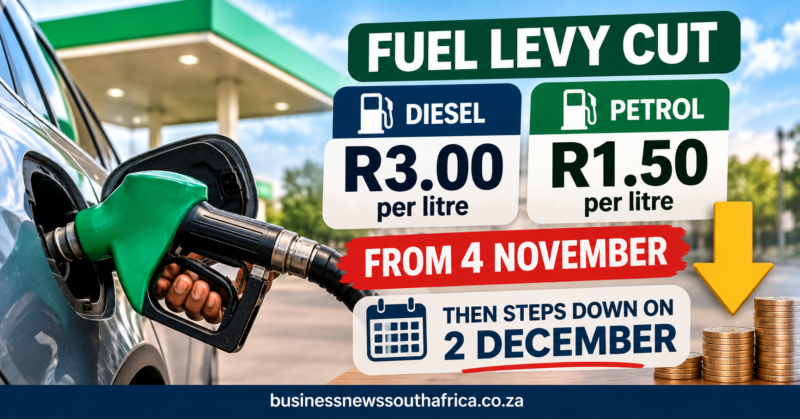
Relief is coming at the pumps. Finance Minister Enoch Godongwana told Parliament in the Medium-Term Budget Policy Statement that the fuel levy falls by R3 a litre for diesel and R1.50 for petrol from 4 November until 1 December 2026, then by R1.50 and R1 until 5 January 2027, according to SAnews. The official November price adjustment had not been published when this article was written. Our explainer sets out how the levy cut works and when it steps down.
What to do
- Budget fuel on the current price, not January’s. Discovery’s data puts a 50-litre fill-up R475 higher than at the start of the year.
- Plan fleet refuelling around the monthly adjustment instead of the last day before it. Discovery’s data shows panic buying spikes of up to 450% for diesel.
- Treat the levy relief as temporary. It steps down on 2 December and ends on 5 January 2027, so build pricing and cash-flow forecasts without it.
- Expect customers’ budgets to stay tight. Discovery quotes economist Sfiso Skenjana of ESG Analytics saying that lower and middle-income households spend between 15% and 22% of their income on transport.
For earlier coverage of the price shock, see our report when petrol hit R30 a litre.